TCI E0177 N-Ethyl-o-toluidine is a secondary aromatic amine built from a toluene ring bearing an ethyl-substituted amino group, with the methyl group positioned ortho to the nitrogen. The compound is a liquid that serves in the laboratory as a synthetic intermediate, particularly in the preparation of dyes and other aromatic nitrogen compounds. The presence of a secondary N–H group provides one clearly defined reaction site for subsequent alkylation or acylation, allowing researchers to build tertiary amines or aromatic amides in stages with good control over each step.
The characteristic that makes this material a preferred choice is the influence of the ortho position of the methyl group, which introduces steric hindrance around the nitrogen atom. This hindrance lowers the rate of some reactions at the nitrogen while simultaneously directing substitution on the aromatic ring toward particular positions, so the ortho isomer is often selected precisely when a researcher wants selectivity that differs from what the meta or para isomer would give. As an aromatic amine, the compound behaves as a weak base and dissolves readily in common organic solvents, which makes it straightforward to introduce into standard reaction media.
In Indonesian laboratories the material is typically used as a building block on the research and development bench, where synthetic routes toward dyes and aromatic nitrogen compounds are assembled step by step. Because it tends to darken slowly on exposure to air and light through surface oxidation, working practice normally involves drawing the required volume for a given experiment and returning the container promptly to protected storage, keeping the remaining stock in usable condition across a series of runs.
- Dye synthesis intermediate: the secondary aromatic amine framework is a recognised entry point into dye chemistry, where the nitrogen is elaborated into the chromophore-bearing structures the route requires.
- Preparation of aromatic nitrogen compounds: the compound supplies a substituted aniline-type core that can be carried forward into a broad family of nitrogen-containing aromatic targets.
- Selective N-alkylation to tertiary amines: the single secondary N–H site gives one unambiguous point of attack, so the alkylation can be driven to a tertiary amine without competing reactions elsewhere on the molecule.
- N-acylation to aromatic amides: the same N–H group reacts with acylating agents to form amides, letting researchers install a protected or modified nitrogen in a controlled, stepwise fashion.
- Steric and regiochemical comparison studies: the ortho methyl group makes this isomer useful when work requires reduced reactivity at nitrogen or ring substitution directed differently from the meta and para isomers.
| Brand | TCI |
|---|---|
| CAS number | 94-68-8 |
| Molecular formula | — |
| Purity | — |
| Category | Chemistry > Building Blocks > Non-Heterocyclic Building Blocks |
| Pack sizes | available in the standard TCI catalogue pack sizes; please confirm the size required when ordering |
| Physical form | liquid |
| Storage | keep tightly closed and protected from air and light, as the material darkens slowly through surface oxidation |
Store the container tightly closed in a cool, well-ventilated place, away from light and unnecessary exposure to air, since surface oxidation causes the liquid to darken over time. Original manufacturer packaging or amber glass bottles with well-sealing closures are suitable; transfer only what is needed for the experiment and reseal promptly. Handle in a fume hood as a matter of routine practice for aromatic amines, wearing gloves, safety glasses and a laboratory coat, and avoid skin contact and inhalation of vapour. Keep the material away from incompatible reagents such as strong oxidising agents, and consult the manufacturer's safety data sheet before first use.
—
Produk Terkait
-
N-(2-Aminoethyl)-N-ethyl-m-toluidine TCI A1284
Regular price Rp 4.001.550,00Regular price -
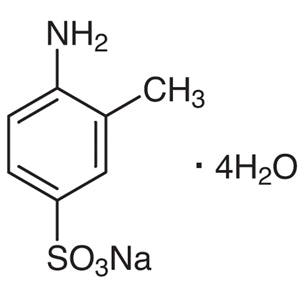
o-Toluidine-4-sulfonicAcidSodiumSaltTetrahydrate TCI T0304
Regular price From Rp 505.050,00Regular price -
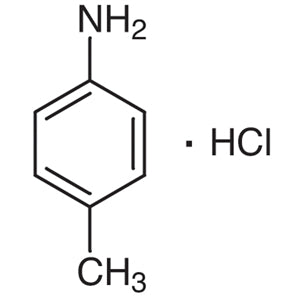
p-ToluidineHydrochloride TCI T0303
Regular price From Rp 477.750,00Regular price -
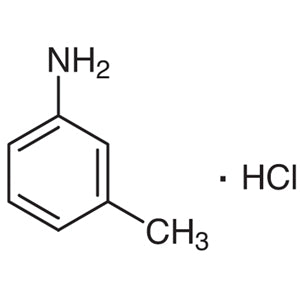
m-ToluidineHydrochloride TCI T0301
Regular price Rp 4.161.150,00Regular price -
p-Toluidine TCI T0300
Regular price From Rp 769.650,00Regular price -
o-Toluidine TCI T0299
Regular price From Rp 505.050,00Regular price -
m-Toluidine TCI T0298
Regular price From Rp 505.050,00Regular price -
N-Methyl-p-toluidine TCI M1315
Regular price From Rp 2.174.550,00Regular price