N-Methyl-p-toluidine is a chemical compound widely used in various chemical reactions, particularly in the synthesis of organic compounds. As a strong base, it serves as a reagent or catalyst in numerous chemical processes. In laboratory settings, it is commonly found in experiments related to the formation of aromatic compounds or substitution reactions. Its reactivity makes it an essential component in organic chemistry research. This compound is valued for its molecular stability and ability to interact with different functional groups. Its solubility in organic solvents makes it ideal for reactions requiring non-aqueous solvents. Due to its unique chemical properties, it is frequently selected for the synthesis of complex compounds that demand high reactivity.
N-Methyl-p-toluidine is preferred for its strong basicity, which facilitates a wide range of chemical transformations. Its ability to act as both a reagent and a catalyst enhances its versatility in synthetic pathways. The compound’s stability under various reaction conditions ensures consistent performance in laboratory experiments. Its solubility in common organic solvents such as ethanol and dichloromethane further supports its use in diverse chemical applications. These properties make it a reliable and effective choice for chemists working on organic synthesis and related fields.
In Indonesian laboratories, N-Methyl-p-toluidine is commonly used in organic chemistry research, especially in pharmaceutical and material science applications. It is an essential tool for researchers developing new compounds or modifying existing ones. Its widespread use highlights its importance in both academic and industrial chemical research in Indonesia.
- Organic synthesis reactions where strong basicity is required for deprotonation or nucleophilic substitution processes.
- Aromatic compound formation through electrophilic substitution reactions, where N-Methyl-p-toluidine acts as a base or intermediate.
- Development of pharmaceutical compounds, as it is used in the synthesis of various drug molecules and derivatives.
- Material science research involving the creation of polymers and functional materials through chemical modification.
- Analytical chemistry applications where it serves as a reagent for the detection or quantification of certain compounds.
| Brand | TCI |
|---|---|
| CAS number | 623-08-5 |
| Molecular formula | — |
| Purity | — |
| Category | Chemistry > Building Blocks > Non-Heterocyclic Building Blocks |
| Pack sizes | 250g, 1kg |
| Physical form | Liquid |
| Storage | Store in a cool, dry place away from moisture and direct sunlight. |
N-Methyl-p-toluidine should be stored in a cool, dry place, away from moisture and direct sunlight to maintain its chemical integrity. It is recommended to use airtight containers made of glass or polyethylene to prevent contamination and evaporation. Due to its strong basicity, it should be handled with appropriate personal protective equipment, including gloves and safety goggles. It is important to ensure proper ventilation in the laboratory to avoid inhalation of vapors. Avoid contact with skin and eyes, and in case of exposure, rinse thoroughly with water. This compound is not flammable but should be kept away from incompatible materials such as strong acids. Proper labeling and storage practices are essential to ensure safe handling and use in laboratory environments.
—
Produk Terkait
-
N-(2-Aminoethyl)-N-ethyl-m-toluidine TCI A1284
Regular price Rp 4.001.550,00Regular price -
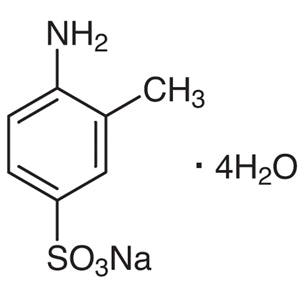
o-Toluidine-4-sulfonicAcidSodiumSaltTetrahydrate TCI T0304
Regular price From Rp 505.050,00Regular price -
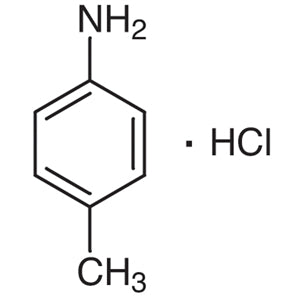
p-ToluidineHydrochloride TCI T0303
Regular price From Rp 477.750,00Regular price -
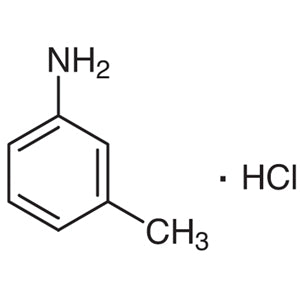
m-ToluidineHydrochloride TCI T0301
Regular price Rp 4.161.150,00Regular price -
p-Toluidine TCI T0300
Regular price From Rp 769.650,00Regular price -
o-Toluidine TCI T0299
Regular price From Rp 505.050,00Regular price -
m-Toluidine TCI T0298
Regular price From Rp 505.050,00Regular price -
N-Methyl-m-toluidine TCI M0446
Regular price From Rp 1.353.450,00Regular price