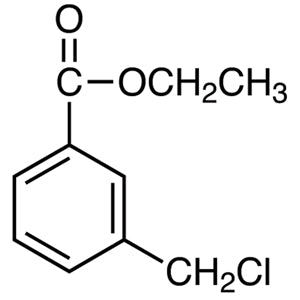
Ethyl 3-(Chloromethyl)benzoate from TCI is an ethyl ester of benzoic acid that carries a chloromethyl group at the meta position relative to the ester group. The molecule combines two distinct centres of reactivity within a single aromatic framework: a benzylic chloride that is highly susceptible to nucleophilic attack, and an ester group that can be hydrolysed, reduced, or transformed into an amide. In the organic synthesis laboratory, this compound serves as a bifunctional linker that allows researchers to install a meta-substituted benzene ring into a target molecule in a stepwise and controlled manner.
The main reason for choosing this reagent is the ease with which its reactivity can be directed selectively. The benzylic chloride reacts rapidly with amines, thiols, phenols, or carboxylates under mild temperatures, while the ester group remains intact and available for elaboration at a subsequent stage. The meta substitution pattern provides an angular geometry that differs from that of the para isomer, and this difference in geometry frequently determines the final shape of a molecular framework, particularly in the design of ligands, macrocycles, and branched compounds.
As a relatively easy-to-handle liquid, the compound is also convenient to transfer with a micropipette or a syringe during reaction set-up. In Indonesian laboratories it is used in university and institutional research groups working on multistep organic synthesis, where a building block that offers two orthogonally addressable handles reduces the number of protection and deprotection operations required and keeps a synthetic route short and predictable.
Related TCI products
- TCI M2203 34040-62-5 Methyl 2-(Chloromethyl)benzoate
- TCI E0662 1201-90-7 Ethyl 4-(Chloromethyl)benzoate
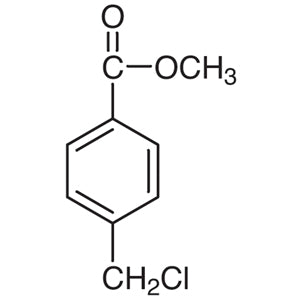
- TCI C1763 34040-64-7 Methyl 4-(Chloromethyl)benzoate
- TCI B6408 5335-05-7 Chloromethyl Benzoate
- TCI P1012 18997-19-8 Chloromethyl Pivalate [Amino-Protecting Agent]
- TCI C3982 23731-06-8 5-(Chloromethyl)-2-hydroxybenzaldehyde
- Benzylation of amines: the reactive benzylic chloride couples cleanly with primary and secondary amines at mild temperature, while the intact ester remains available for later conversion into an amide.
- Ether and thioether formation: phenols and thiols displace the benzylic chloride readily, allowing meta-substituted benzoate fragments to be attached to oxygen- or sulfur-containing scaffolds in one step.
- Ester alkylation chemistry: carboxylate salts react with the chloromethyl handle to give benzylic esters, making this reagent a practical alkylating agent for acid-functionalised intermediates.
- Ligand and macrocycle construction: the angular meta geometry differs from the para isomer and gives designers control over the final shape of chelating arms and ring-closing frameworks.
- Multistep route building: because the two reactive centres can be addressed in sequence, the compound lets researchers extend a molecular skeleton stepwise without extra protection and deprotection stages.
| Brand | TCI |
|---|---|
| CAS number | 54589-54-7 |
| Molecular formula | — |
| Purity | — |
| Category | Chemistry > Building Blocks > Non-Heterocyclic Building Blocks |
| Pack sizes | available in standard TCI research and laboratory catalogue pack sizes; please confirm the size required when ordering |
| Physical form | liquid, transferable by micropipette or syringe |
| Storage | keep in a cool, tightly closed container away from moisture |
- Product code: E0661
Store the container in a cool, dry, well-ventilated area, tightly closed and away from moisture, since benzylic chlorides are sensitive to hydrolysis. Keep the material in its original glass container or in a compatible chemically resistant bottle with a secure closure, and avoid storing it alongside strong bases, amines, or other nucleophiles. Handle the liquid in a fume hood using gloves, safety goggles, and a laboratory coat, because benzylic halides are alkylating agents that can irritate skin, eyes, and the respiratory tract. Transfer by syringe or micropipette to limit vapour release, close the container promptly after use, label all working dilutions clearly, and collect halogenated waste separately according to your institution's disposal procedures.
—
Produk Terkait
-
Methyl2-(Chloromethyl)benzoate TCI M2203
Regular price From Rp 4.213.650,00Regular price -
Ethyl4-(Chloromethyl)benzoate TCI E0662
Regular price From Rp 1.618.050,00Regular price -
Methyl4-(Chloromethyl)benzoate TCI C1763
Regular price From Rp 980.700,00Regular price -
ChloromethylBenzoate TCI B6408
Regular price From Rp 1.670.550,00Regular price -
ChloromethylPivalate[Amino-ProtectingAgent] TCI P1012
Regular price From Rp 717.150,00Regular price -
5-(Chloromethyl)-2-hydroxybenzaldehyde TCI C3982
Regular price From Rp 1.565.550,00Regular price -
2-(Chloromethyl)benzoylChloride TCI C3152
Regular price Rp 2.094.750,00Regular price -
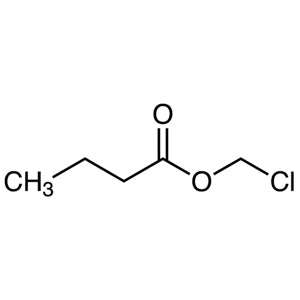
ChloromethylButyrate TCI C2841
Regular price Rp 2.439.150,00Regular price



![18997-19-8 Chloromethyl Pivalate [Amino-Protecting Agent] - AMI Scientific](http://amiscientific.com/cdn/shop/files/TCI2510P1012.jpg?v=1767134108&width=533)