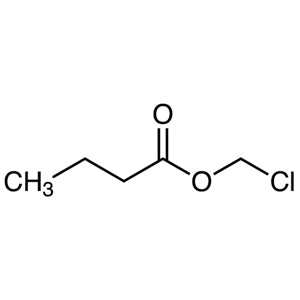
Chloromethyl Butyrate (TCI C2841) is a chemical compound widely used in organic synthesis as a fundamental building block. It serves as a key reagent in the construction of complex molecular structures, particularly in the development of both heterocyclic and non-heterocyclic compounds. Its role in the laboratory is critical for researchers aiming to create new chemical entities through substitution and alkylation reactions. This compound is essential for advancing synthetic chemistry, offering versatility and reliability in a variety of experimental setups.
The chemical properties of Chloromethyl Butyrate make it a preferred choice for laboratory use. It exhibits stability under controlled conditions, minimizing unwanted side reactions during synthesis. Its solubility in organic solvents such as ethyl acetate and ethanol facilitates efficient dissolution and reaction processes. These characteristics ensure that it remains a reliable and consistent material for chemical experimentation. Additionally, its non-reactive nature under normal conditions allows for precise control in laboratory settings, making it suitable for high-precision applications.
In Indonesian laboratories, Chloromethyl Butyrate is commonly used in organic chemistry research, particularly in academic institutions and research organizations. It is a fundamental component in the synthesis of various organic compounds, supporting both teaching and research activities. Its availability and reliability make it an essential tool for chemists working on a wide range of projects, from basic research to advanced synthetic methodologies.
- Organic synthesis applications benefit from Chloromethyl Butyrate due to its role in building complex molecular structures through substitution and alkylation reactions.
- It is ideal for creating heterocyclic compounds, as its structure can be modified to form ring systems essential in pharmaceutical and agrochemical research.
- In academic settings, it supports teaching and research in synthetic chemistry, providing students with hands-on experience in advanced reaction techniques.
- Its solubility in organic solvents makes it suitable for use in chromatographic and spectroscopic analyses, aiding in the characterization of synthesized compounds.
- It is frequently used in the development of new chemical entities, supporting innovation in drug discovery and material science research.
| Brand | TCI |
|---|---|
| CAS number | 33657-49-7 |
| Molecular formula | — |
| Purity | — |
| Category | Chemistry > Building Blocks > Non-Heterocyclic Building Blocks |
| Pack sizes | Available in standard laboratory quantities |
| Physical form | Liquid |
| Storage | Store in a cool, dry place away from light and incompatible substances |
Chloromethyl Butyrate should be stored in a cool, dry environment, away from direct sunlight and sources of heat. It is recommended to keep the container tightly sealed to prevent evaporation and contamination. Suitable storage containers include glass or high-density polyethylene bottles, which are resistant to chemical degradation. In laboratory settings, it is important to handle the compound with care, using appropriate personal protective equipment such as gloves and safety goggles. Due to its chemical stability, it does not require refrigeration but should be kept away from incompatible materials like strong oxidizers. Proper labeling and storage practices ensure safe handling and long-term usability in research environments.
—
Produk Terkait
-
BenzylIsovalerate TCI B6099
Regular price From Rp 505.050,00Regular price -
Butyl2-Methylbutyrate TCI B6101
Regular price From Rp 769.650,00Regular price -
CholesterolButyrate TCI C0668
Regular price Rp 2.995.650,00Regular price -
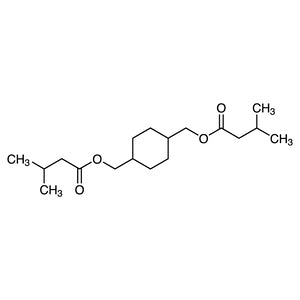
1,4-CyclohexanedimethanolDiisovalerate(cis-andtrans-mixture) TCI C1135
Regular price Rp 1.035.300,00Regular price -
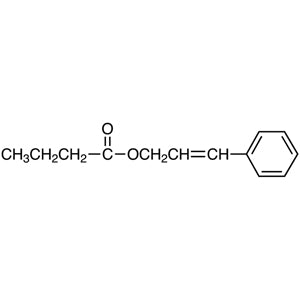
CinnamylButyrate TCI C2438
Regular price Rp 2.704.800,00Regular price -
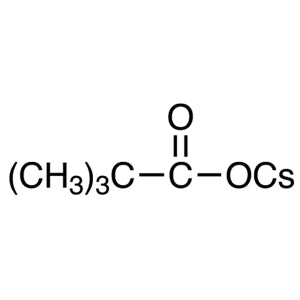
CesiumPivalate TCI C3230
Regular price From Rp 1.193.850,00Regular price -
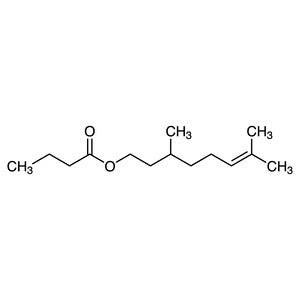
CitronellylButyrate TCI C3761
Regular price From Rp 2.889.600,00Regular price -
4,4'-Dipivaloyloxybenzophenone TCI D5620
Regular price From Rp 1.590.750,00Regular price