


TCI E0668 1-(4-Ethoxyphenyl)-5-mercapto-1H-tetrazole is a heterocyclic compound that combines a five-membered tetrazole ring with a thiol group at the 5-position and a 4-ethoxyphenyl group attached to the first nitrogen atom. In the laboratory, this compound plays a dual role: as a heterocyclic building block for organic synthesis, and as a functional reagent that exploits the strong affinity of the thiol group for metal surfaces. The combination of a weakly acidic tetrazole ring with a highly nucleophilic sulfhydryl group makes it a versatile material across a range of synthetic routes and surface studies.
The property that makes it a preferred choice is the ability of the tetrazole-5-thiol ring to behave both as a reliable sulfur nucleophile and as a good leaving group once activated. In its anionic form, this compound readily displaces halides and other leaving groups, forming stable thioether bonds. The tetrazole ring also acts as a carboxylic acid bioisostere — a group that mimics the acidity of a carboxylic acid but with a different solubility and metabolic profile — which makes it attractive for medicinal chemistry. The ethoxyphenyl substituent adds aromatic character that strengthens the overall structure.
In Indonesian laboratories, this material is typically used in university and institutional research settings where organic synthesis and heterocyclic chemistry are active areas of work. It is commonly handled in synthetic chemistry laboratories preparing sulfur-containing intermediates, and in surface and materials studies where thiol-metal interactions are investigated. Researchers generally order it as a specialty building block for defined synthetic projects rather than as a routine bulk consumable.
Related TCI products
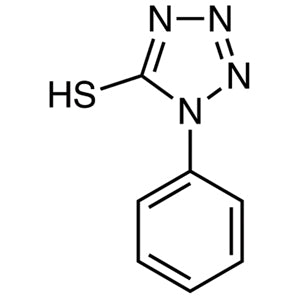
- TCI P0640 86-93-1 5-Mercapto-1-phenyl-1H-tetrazole
- TCI H0896 52431-78-4 1-(4-Hydroxyphenyl)-5-mercapto-1H-tetrazole
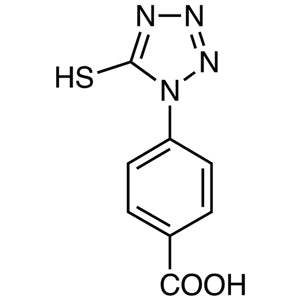
- TCI C2011 23249-95-8 1-(4-Carboxyphenyl)-5-mercapto-1H-tetrazole
- TCI E1134 139756-21-1 5-(2-Ethoxyphenyl)-1-methyl-3-propyl-1,6-dihydro-7H-pyrazolo[4,3-d]-7-pyrimidinone
- TCI A0425 2349-67-9 2-Amino-5-mercapto-1,3,4-thiadiazole
- TCI A0427 4418-61-5 5-Amino-1H-tetrazole
- Thioether bond formation: the tetrazole-5-thiolate anion readily displaces halides and other leaving groups, giving stable carbon-sulfur linkages under straightforward substitution conditions.
- Heterocyclic building block synthesis: the intact tetrazole ring can be carried through multi-step routes, letting chemists install a nitrogen-rich heterocycle without constructing it late in the sequence.
- Medicinal chemistry scaffold design: the tetrazole functions as a carboxylic acid bioisostere, offering comparable acidity with a different solubility and metabolic profile for analogue work.
- Metal surface modification studies: the strong affinity of the thiol group for metal surfaces makes this reagent suitable for investigating adsorbed organic layers and surface-bound chemistry.
- Activated leaving group chemistry: once activated, the tetrazolyl sulfur unit departs cleanly, allowing the compound to serve as a transferable handle in stepwise synthetic transformations.
| Brand | TCI (Tokyo Chemical Industry) |
|---|---|
| CAS number | 15182-68-0 |
| Molecular formula | — |
| Purity | — |
| Category | Chemistry > Building Blocks > Heterocyclic Building Blocks |
| Pack sizes | available in standard TCI research pack sizes; please confirm the current options when ordering |
| Physical form | — |
| Storage | store in a tightly closed container in a cool, dry, well-ventilated place away from light |
- Product code: E0668
Store the compound in its original tightly closed container, kept in a cool, dry and well-ventilated area away from direct light and from incompatible oxidising materials. Thiol-bearing compounds can develop an odour and are susceptible to oxidation, so containers should be closed promptly after use and, where practical, handled under an inert atmosphere. Weigh and transfer the solid inside a fume hood using clean, dry spatulas and glass or chemically compatible plastic containers. Laboratory staff should wear safety glasses, a lab coat and suitable chemical-resistant gloves, avoid inhaling dust, and wash hands thoroughly after handling. Consult the manufacturer's safety data sheet before first use and dispose of residues through the laboratory's chemical waste stream.
—
Produk Terkait
-
5-Mercapto-1-phenyl-1H-tetrazole TCI P0640
Regular price From Rp 875.700,00Regular price -
1-(4-Hydroxyphenyl)-5-mercapto-1H-tetrazole TCI H0896
Regular price From Rp 717.150,00Regular price -
1-(4-Carboxyphenyl)-5-mercapto-1H-tetrazole TCI C2011
Regular price Rp 1.565.550,00Regular price -
5-(2-Ethoxyphenyl)-1-methyl-3-propyl-1,6-dihydro-7H-pyrazolo[4,3-d]-7-pyrimidinone TCI E1134
Regular price From Rp 795.900,00Regular price -
2-Amino-5-mercapto-1,3,4-thiadiazole TCI A0425
Regular price From Rp 769.650,00Regular price -
5-Amino-1H-tetrazole TCI A0427
Regular price From Rp 1.776.600,00Regular price -
1H-Tetrazole-5-aceticAcid TCI T2737
Regular price From Rp 5.619.600,00Regular price -
5-(p-Tolyl)-1H-tetrazole TCI T2486
Regular price From Rp 1.538.250,00Regular price

![5-(2-Ethoxyphenyl)-1-methyl-3-propyl-1,6-dihydro-7H-pyrazolo[4,3-d]-7-pyrimidinone (CAS 139756-21-1) - TCI E1134 - AMI Scientific](http://amiscientific.com/cdn/shop/files/TCI2510E1134.jpg?v=1767112405&width=533)


