


N-Ethyl-p-toluenesulfonamide from TCI is a secondary sulfonamide formed from p-toluenesulfonic acid with an ethyl group attached to the nitrogen atom. The molecule combines a methylated aromatic ring, a strongly electron-withdrawing sulfonyl group, and one remaining N–H proton. That combination makes it a versatile material in the laboratory: it can serve as a synthetic building block, as a model compound for studying sulfonamide behaviour, and as a plasticizing agent in polymer studies, particularly for polyamides and cellulose derivatives that require improved flexibility.
The characteristic that makes it a preferred choice lies in the sulfonyl group. Its strong electron withdrawal renders the N–H proton sufficiently acidic that it is readily deprotonated by moderate bases and converted into a sulfonamide anion, which is a good nucleophile for both alkylation and arylation reactions. The tosyl group is also well known as a robust nitrogen protecting group that withstands many reaction conditions. In plasticizer applications, the polar nature of the sulfonamide group provides good compatibility with polyamide matrices and lowers the glass transition temperature, so the material becomes more flexible and easier to process.
In Indonesian laboratories, this compound is typically used in organic synthesis groups at universities and research institutes, where it supports work on nitrogen functionalisation and protecting-group strategies. It also appears in polymer and materials laboratories that evaluate flexibility and processing behaviour in polyamide and cellulose-derivative formulations. Because it functions both as a reagent and as a reference sulfonamide, it fits method-development work as well as routine teaching and research preparations.
Related TCI products
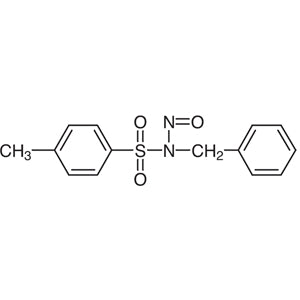
- TCI B3051 33528-13-1 N-Benzyl-N-nitroso-p-toluenesulfonamide
- TCI B1648 18303-04-3 N-(tert-Butoxycarbonyl)-p-toluenesulfonamide
- TCI M1717 640-61-9 N-Methyl-p-toluenesulfonamide
- TCI T1461 4104-47-6 N-Sulfinyl-p-toluenesulfonamide
- TCI B3082 1576-37-0 N-Benzyl-p-toluenesulfonamide
- TCI B2263 7146-67-0 N,N-Bis(2-hydroxyethyl)-p-toluenesulfonamide
- Synthetic building block: the reactive N–H site allows the molecule to be incorporated into larger structures, giving chemists a straightforward entry point for constructing nitrogen-containing targets.
- Nitrogen protecting-group chemistry: the tosyl unit shields the nitrogen centre through many reaction conditions, letting researchers carry out transformations elsewhere in a molecule without unwanted side reactions.
- N-Alkylation and N-arylation reactions: deprotonation with a moderate base generates a sulfonamide anion that acts as a good nucleophile, enabling controlled bond formation at nitrogen.
- Model compound for sulfonamide studies: its simple, well-defined structure makes it useful for investigating the acidity, reactivity, and general chemical behaviour of secondary sulfonamides.
- Polymer plasticizer research: the polar sulfonamide group is compatible with polyamide matrices and lowers the glass transition temperature, improving flexibility and processability in cellulose-derivative and polyamide formulations.
| Brand | TCI |
|---|---|
| CAS number | 80-39-7 |
| Molecular formula | — |
| Purity | — |
| Category | Chemistry > Building Blocks > Non-Heterocyclic Building Blocks |
| Pack sizes | available in standard TCI research pack sizes; please confirm the currently available options when ordering |
| Physical form | — |
| Storage | keep in a cool, dry place in a tightly closed original container |
- Product code: E0674
Store the container tightly closed in a cool, dry, and well-ventilated area, away from direct sunlight, heat sources, and incompatible materials such as strong oxidising agents and strong bases. The original manufacturer packaging is the most suitable container; if transfer is necessary, use clean, chemically compatible and clearly labelled glass or other resistant vessels. Handle the material in a fume hood, and wear a laboratory coat, safety goggles, and suitable chemical-resistant gloves. Avoid inhalation of dust and direct contact with skin and eyes, keep the working area clean, and consult the manufacturer's safety data sheet before use and disposal.
—
Produk Terkait
-
N-Benzyl-N-nitroso-p-toluenesulfonamide TCI B3051
Regular price From Rp 3.843.000,00Regular price -
N-(tert-Butoxycarbonyl)-p-toluenesulfonamide TCI B1648
Regular price From Rp 2.121.000,00Regular price -
N-Methyl-p-toluenesulfonamide TCI M1717
Regular price From Rp 1.246.350,00Regular price -
N-Sulfinyl-p-toluenesulfonamide TCI T1461
Regular price Rp 7.446.600,00Regular price -
N-Benzyl-p-toluenesulfonamide TCI B3082
Regular price From Rp 1.749.300,00Regular price -
N,N-Bis(2-hydroxyethyl)-p-toluenesulfonamide TCI B2263
Regular price Rp 2.730.000,00Regular price -
N-[Bis(methylthio)methylene]-p-toluenesulfonamide TCI B1389
Regular price Rp 2.068.500,00Regular price -
N-Butyl-p-toluenesulfonamide TCI B0745
Regular price From Rp 795.900,00Regular price


![2651-15-2 N-[Bis(methylthio)methylene]-p-toluenesulfonamide - AMI Scientific](http://amiscientific.com/cdn/shop/files/TCI2510B1389.jpg?v=1767087151&width=533)
