

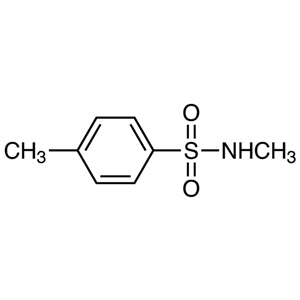
N-Methyl-p-toluenesulfonamide (N-Me-TsA) is a chemical compound widely used as a building block in various organic synthesis reactions. It plays a crucial role in the laboratory by serving as a versatile reagent that can participate in substitution reactions and other complex chemical processes. This compound is particularly valuable in the development of new organic molecules due to its ability to act as both an electrophilic donor and a reactive intermediate. Its structural stability and chemical versatility make it a go-to reagent for chemists working on diverse synthetic pathways.
The chemical properties of N-Me-TsA, including its stability under normal conditions and reactivity with bases, acids, and electrophilic compounds, make it a preferred choice in controlled chemical reactions. Its ability to undergo various transformation reactions under suitable conditions allows for the synthesis of a wide range of functional compounds. Additionally, its relatively high melting and boiling points facilitate processes such as purification and distillation, making it a practical option for laboratory use. These characteristics contribute to its widespread application in both academic and industrial research settings.
In Indonesian laboratories, N-Me-TsA is commonly used in the synthesis of heterocyclic compounds and other specialized organic molecules. It is a key component in the development of new pharmaceuticals, materials, and chemical intermediates. Its reliability and consistent performance make it a staple in chemical laboratories, supporting both routine and advanced research activities. Its availability and ease of handling further enhance its utility in laboratory environments.
Related TCI products
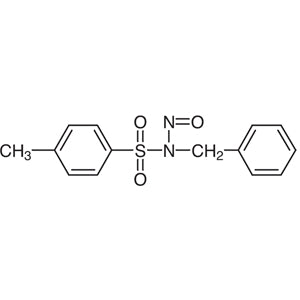
- TCI B3051 33528-13-1 N-Benzyl-N-nitroso-p-toluenesulfonamide
- TCI B1648 18303-04-3 N-(tert-Butoxycarbonyl)-p-toluenesulfonamide
- TCI E0674 80-39-7 N-Ethyl-p-toluenesulfonamide
- TCI T1461 4104-47-6 N-Sulfinyl-p-toluenesulfonamide
- TCI B3082 1576-37-0 N-Benzyl-p-toluenesulfonamide
- TCI B2263 7146-67-0 N,N-Bis(2-hydroxyethyl)-p-toluenesulfonamide
- Organic synthesis reactions benefit from N-Me-TsA due to its ability to act as a versatile electrophilic donor and reactive intermediate in substitution processes.
- It is widely used in the preparation of heterocyclic compounds, where its structural stability and reactivity support the formation of complex molecular frameworks.
- N-Me-TsA is ideal for controlled chemical transformations, allowing chemists to manipulate molecular structures with precision and efficiency.
- Its high melting and boiling points make it suitable for purification and distillation processes, enhancing the accuracy of laboratory procedures.
- It supports the development of pharmaceutical compounds by enabling the synthesis of functional groups essential for drug design and molecular modification.
| Brand | TCI |
|---|---|
| CAS number | 640-61-9 |
| Molecular formula | — |
| Purity | — |
| Category | Chemistry > Building Blocks > Non-Heterocyclic Building Blocks |
| Pack sizes | Available in various quantities as per standard laboratory supply |
| Physical form | Solid |
| Storage | Store in a cool, dry place away from moisture and direct sunlight |
N-Methyl-p-toluenesulfonamide should be stored in a cool, dry environment to maintain its chemical stability. It is recommended to use airtight containers to prevent exposure to moisture and air, which can affect its reactivity. Due to its potential reactivity with bases and acids, it should be handled with care, and appropriate personal protective equipment should be worn. It is best stored in a well-ventilated area to minimize any risk of inhalation. Proper labeling of containers is essential for safe handling and to ensure that the compound is easily identifiable in a laboratory setting.
—
Produk Terkait
-
N-Benzyl-N-nitroso-p-toluenesulfonamide TCI B3051
Regular price From Rp 3.843.000,00Regular price -
N-(tert-Butoxycarbonyl)-p-toluenesulfonamide TCI B1648
Regular price From Rp 2.121.000,00Regular price -
N-Ethyl-p-toluenesulfonamide TCI E0674
Regular price Rp 717.150,00Regular price -
N-Sulfinyl-p-toluenesulfonamide TCI T1461
Regular price Rp 7.446.600,00Regular price -
N-Benzyl-p-toluenesulfonamide TCI B3082
Regular price From Rp 1.749.300,00Regular price -
N,N-Bis(2-hydroxyethyl)-p-toluenesulfonamide TCI B2263
Regular price Rp 2.730.000,00Regular price -
N-[Bis(methylthio)methylene]-p-toluenesulfonamide TCI B1389
Regular price Rp 2.068.500,00Regular price -
N-Butyl-p-toluenesulfonamide TCI B0745
Regular price From Rp 795.900,00Regular price


![2651-15-2 N-[Bis(methylthio)methylene]-p-toluenesulfonamide - AMI Scientific](http://amiscientific.com/cdn/shop/files/TCI2510B1389.jpg?v=1767087151&width=533)
