

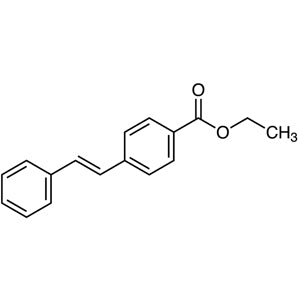
(E)-Ethyl Stilbene-4-carboxylate is a chemical compound widely used in organic reactions as a building block or structural foundation for the synthesis of complex compounds. This versatile reagent plays a crucial role in laboratory settings where the development of aromatic compounds and their derivatives is required. Its ability to participate in various chemical reactions makes it an essential component in the toolkit of chemists working on synthetic pathways. The compound is commonly utilized in both academic and industrial research environments to create new materials or improve existing synthetic processes.
The compound is known for its stable molecular structure and reactivity under specific conditions, which makes it a preferred choice for a range of chemical transformations. Its solubility in organic solvents allows for easy dissolution and integration into experimental protocols, enhancing its usability in diverse laboratory applications. The chemical’s predictable behavior and compatibility with a variety of reagents contribute to its reliability in both routine and advanced chemical synthesis. These properties ensure that it remains a valuable resource for researchers aiming to achieve precise and reproducible results.
In Indonesian laboratories, (E)-Ethyl Stilbene-4-carboxylate is extensively used in both pure and applied chemical research. Educational institutions and research organizations rely on this compound to develop new compounds or refine synthesis methods. Its availability in small quantities such as 1g and 5g supports practical experimentation in laboratory settings, making it accessible for both teaching and research purposes.
Related TCI products
- TCI F0412 40200-69-9 4-Formyl-trans-stilbene
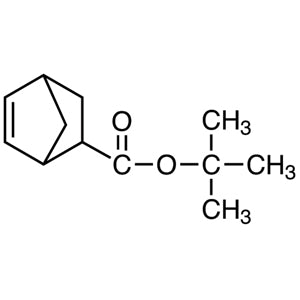
- TCI B4267 154970-45-3 tert-Butyl 5-Norbornene-2-carboxylate (endo- and exo- mixture)
- TCI M3689 22955-77-7 Methyl 1-Oxo-2,3-dihydro-1H-indene-2-carboxylate
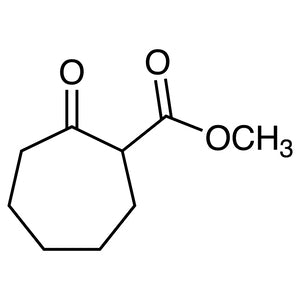
- TCI M3625 52784-32-4 Methyl 2-Oxocycloheptane-1-carboxylate
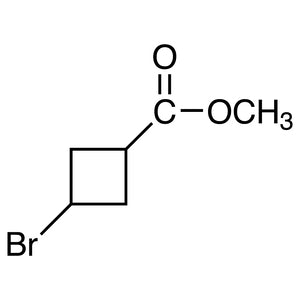
- TCI M3616 4935-00-6 Methyl 3-Bromocyclobutane-1-carboxylate (cis- and trans- mixture)
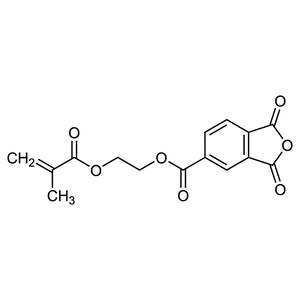
- TCI M3377 70293-55-9 2-(Methacryloyloxy)ethyl 1,3-Dioxo-1,3-dihydroisobenzofuran-5-carboxylate
- Organic synthesis for the development of aromatic compounds and their derivatives due to its structural versatility and reactivity.
- Research in catalytic reactions where the compound serves as a substrate for various chemical transformations.
- Educational experiments in chemistry courses to demonstrate synthetic pathways and molecular structures.
- Industrial applications in the production of specialty chemicals requiring precise molecular frameworks.
- Analytical chemistry for use in testing and characterizing new chemical compounds through various spectroscopic methods.
| Brand | TCI |
|---|---|
| CAS number | 109463-48-1 |
| Molecular formula | — |
| Purity | — |
| Category | Chemistry > Building Blocks > Non-Heterocyclic Building Blocks |
| Pack sizes | 1g, 5g |
| Physical form | Solid (powder or crystalline) |
| Storage | Store in a cool, dry place away from light and moisture |
This compound should be stored in a cool, dry environment, away from direct sunlight and sources of moisture. It is recommended to keep it in a sealed container to prevent exposure to air and humidity, which could affect its stability. When handling, it is advisable to use appropriate personal protective equipment such as gloves and safety goggles to minimize direct contact. Due to its chemical nature, it should be stored separately from incompatible substances to avoid any potential reactions. In laboratory settings, it is important to ensure proper ventilation and follow standard safety protocols to maintain a safe working environment.
—
Produk Terkait
-
4-Formyl-trans-stilbene TCI F0412
Regular price From Rp 2.969.400,00Regular price -
tert-Butyl5-Norbornene-2-carboxylate(endo-andexo-mixture) TCI B4267
Regular price From Rp 1.485.750,00Regular price -
Methyl1-Oxo-2,3-dihydro-1H-indene-2-carboxylate TCI M3689
Regular price Rp 3.843.000,00Regular price -
Methyl2-Oxocycloheptane-1-carboxylate TCI M3625
Regular price Rp 2.359.350,00Regular price -
Methyl3-Bromocyclobutane-1-carboxylate(cis-andtrans-mixture) TCI M3616
Regular price From Rp 2.650.200,00Regular price -
2-(Methacryloyloxy)ethyl1,3-Dioxo-1,3-dihydroisobenzofuran-5-carboxylate TCI M3377
Regular price From Rp 2.650.200,00Regular price -
Methyl1,4-Dioxaspiro[45]decane-8-carboxylate TCI M3273
Regular price From Rp 1.538.250,00Regular price -
Methyl1-Oxo-1,2,3,4-tetrahydronaphthalene-2-carboxylate TCI M3160
Regular price Rp 3.896.550,00Regular price


![26845-47-6 Methyl 1,4-Dioxaspiro[4.5]decane-8-carboxylate - AMI Scientific](http://amiscientific.com/cdn/shop/files/TCI2510M3273.jpg?v=1767128017&width=533)
