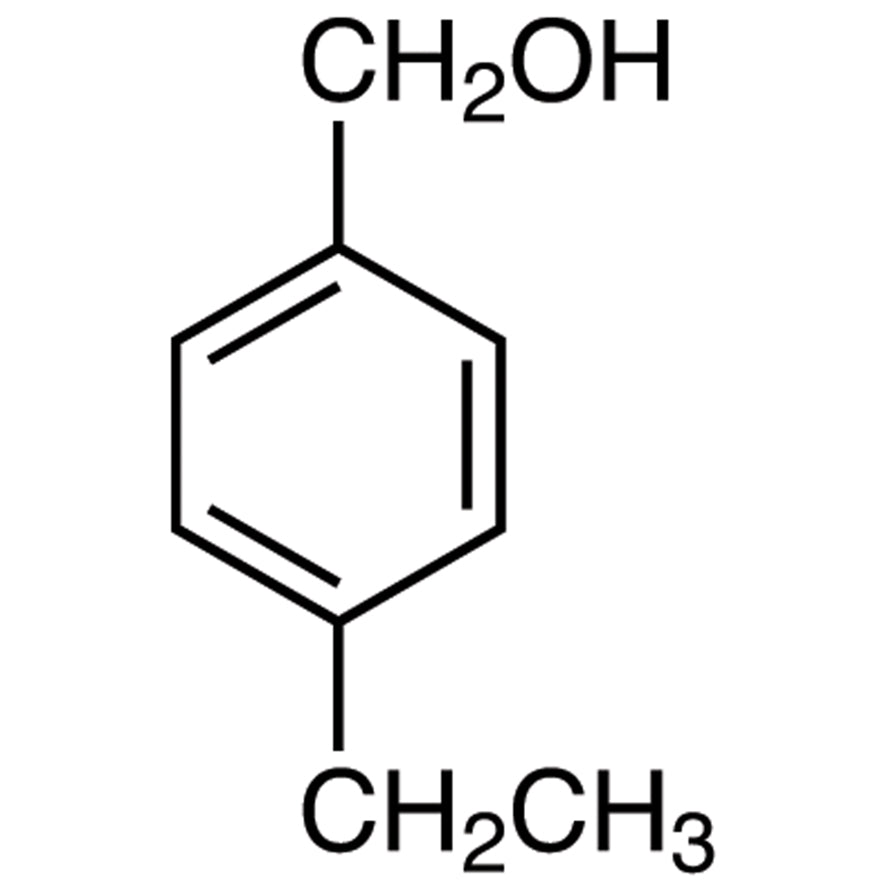
TCI E0704 4-Ethylbenzyl Alcohol is a benzylic alcohol carrying an ethyl group at the para position of the aromatic ring, supplied by TCI as a versatile non-heterocyclic building block. The compound occupies an important place in organic synthesis because the benzylic hydroxyl group is one of the most readily redirected functional groups available, whether toward a higher oxidation state or toward a leaving group ready for nucleophilic displacement. Its presence in the laboratory gives researchers an economical starting material for constructing the alkyl-substituted aromatic frameworks frequently encountered in active ingredients, fragrance molecules, and functional materials.
The property that makes this compound a preferred choice is the characteristic reactivity of the benzylic position, stabilised by the adjacent aromatic ring, so that oxidation to the corresponding aldehyde proceeds selectively and formation of a benzylic cation in substitution reactions occurs readily. Its primary hydroxyl group permits esterification, etherification, tosylation, or halogenation using standard procedures that are already very well established. The ethyl substituent contributes moderate lipophilicity and encourages directing effects in subsequent aromatic substitution reactions without imposing excessive steric hindrance, which keeps reaction planning straightforward for synthetic chemists.
In Indonesian laboratories, this building block is typically used in university and institutional research groups working on organic synthesis, medicinal chemistry, and materials development, as well as in industrial research units preparing intermediates on a laboratory scale. It is commonly drawn upon for multi-step route development, method optimisation, and the preparation of reference derivatives, where a well-characterised aromatic alcohol with predictable behaviour lets researchers focus their attention on the more demanding steps further along the synthetic sequence.
Related TCI products
- TCI T1905 4170-90-5 2,4,6-Trimethylbenzyl Alcohol
- TCI B5285 149104-89-2 4-Bromo-3-methylbenzyl Alcohol
- TCI B5231 17100-58-2 4-Bromo-2-methylbenzyl Alcohol
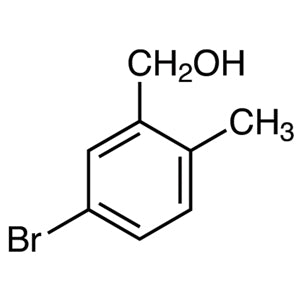
- TCI B5037 258886-04-3 5-Bromo-2-methylbenzyl Alcohol
- TCI B2772 2772-45-4 2,4-Bis(alpha,alpha-dimethylbenzyl)phenol
- TCI B1955 5391-88-8 4-Bromo-alpha-methylbenzyl Alcohol
- Selective oxidation to 4-ethylbenzaldehyde: the benzylic hydroxyl is activated by the aromatic ring, allowing controlled conversion to the aldehyde stage without disturbing the ethyl substituent.
- Synthesis of esters and ethers: the primary benzylic hydroxyl reacts cleanly under standard esterification and etherification conditions, giving straightforward access to derivatives for fragrance and materials research.
- Preparation of benzylic leaving groups: conversion to tosylates or benzylic halides is efficient here, providing reactive electrophiles for subsequent nucleophilic substitution in multi-step routes.
- Building block for alkyl-substituted aromatic scaffolds: the para-ethyl aromatic core matches the substitution pattern found in many active ingredients and functional molecules under investigation.
- Method development and reaction screening: predictable benzylic reactivity and well-documented transformations make this alcohol a dependable substrate when optimising new synthetic procedures or catalyst systems.
| Brand | TCI (Tokyo Chemical Industry) |
|---|---|
| CAS number | 768-59-2 |
| Molecular formula | — |
| Purity | — |
| Category | Chemistry > Building Blocks > Non-Heterocyclic Building Blocks |
| Pack sizes | available in standard TCI laboratory research pack sizes; please confirm the currently offered options when ordering |
| Physical form | — |
| Storage | keep in a tightly closed original container in a cool, dry, well-ventilated area away from ignition sources and incompatible chemicals |
- Product code: E0704
Store the material in its original tightly closed container in a cool, dry, and well-ventilated storage area, away from direct sunlight, heat, and sources of ignition. Chemically compatible containers such as amber glass bottles with well-sealing caps are appropriate, and the container should be reclosed immediately after each use to limit exposure to atmospheric moisture and vapour loss. Handle the compound inside a fume hood while wearing safety glasses, chemical-resistant gloves, and a laboratory coat. Avoid contact with skin and eyes and avoid inhaling vapours. Keep the substance separated from strong oxidising agents, label all secondary containers clearly, and consult the manufacturer's safety data sheet before first use and before disposal.
—
Produk Terkait
-
2,4,6-TrimethylbenzylAlcohol TCI T1905
Regular price Rp 2.041.200,00Regular price -
4-Bromo-3-methylbenzylAlcohol TCI B5285
Regular price From Rp 2.359.350,00Regular price -
4-Bromo-2-methylbenzylAlcohol TCI B5231
Regular price From Rp 1.298.850,00Regular price -
5-Bromo-2-methylbenzylAlcohol TCI B5037
Regular price From Rp 4.240.950,00Regular price -
2,4-Bis(alpha,alpha-dimethylbenzyl)phenol TCI B2772
Regular price From Rp 530.250,00Regular price -
4-Bromo-alpha-methylbenzylAlcohol TCI B1955
Regular price From Rp 875.700,00Regular price -
alpha,alpha'-Bis(4-methylbenzyloxy)-p-xylene TCI B1482
Regular price From Rp 2.254.350,00Regular price -
3-MethylbenzylAlcohol TCI M1124
Regular price Rp 2.094.750,00Regular price