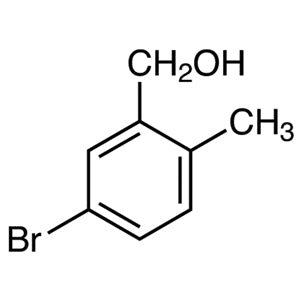
Alpha,alpha'-Bis(4-methylbenzyloxy)-p-xylene is a chemical compound widely used as a building block in the synthesis of complex molecules. This compound plays a crucial role in organic chemistry by serving as a versatile intermediate in various synthetic pathways. Its molecular structure allows it to participate in multiple reaction types, making it an essential component for researchers aiming to create new compounds with specific functional groups or molecular frameworks. In the laboratory, it is frequently employed to develop compounds that have applications in pharmaceuticals, materials science, and organic chemistry.
The compound is valued for its chemical stability and reactivity, which enable it to undergo a range of reactions such as substitution, redox, and coupling processes. Its ability to form diverse structural variations makes it a preferred choice for researchers seeking to explore new chemical space. The compound's predictable behavior under different reaction conditions ensures reliability in synthetic processes, contributing to its popularity among chemists. Its structural complexity also allows for the synthesis of compounds with unique properties, enhancing its utility in advanced research.
In Indonesian laboratories, this compound is commonly used in organic chemistry research, particularly in the development of new compounds with potential applications in pharmaceuticals and materials science. Due to its limited availability in the local market, it is often imported or sourced from reputable suppliers. Its role in creating complex molecular structures makes it an important tool for researchers working on innovative chemical projects.
Related TCI products
- TCI T1905 4170-90-5 2,4,6-Trimethylbenzyl Alcohol
- TCI B5285 149104-89-2 4-Bromo-3-methylbenzyl Alcohol
- TCI B5231 17100-58-2 4-Bromo-2-methylbenzyl Alcohol
- TCI B5037 258886-04-3 5-Bromo-2-methylbenzyl Alcohol
- TCI B2772 2772-45-4 2,4-Bis(alpha,alpha-dimethylbenzyl)phenol
- TCI B1955 5391-88-8 4-Bromo-alpha-methylbenzyl Alcohol
- Organic synthesis of complex molecules where structural diversity is required for drug development.
- Preparation of heterocyclic compounds by acting as a versatile intermediate in multi-step synthetic routes.
- Development of new materials with tailored properties through controlled chemical modifications.
- Research into polymer chemistry where functional group introduction is necessary for chain extension or cross-linking.
- Exploration of reaction mechanisms involving coupling reactions and substitution processes in synthetic chemistry.
| Brand | TCI |
|---|---|
| CAS number | 136861-46-6 |
| Molecular formula | — |
| Purity | — |
| Category | Chemistry > Building Blocks > Non-Heterocyclic Building Blocks |
| Pack sizes | Available in standard laboratory quantities |
| Physical form | Solid or liquid, depending on the specific formulation |
| Storage | Store in a cool, dry place away from direct sunlight and moisture |
This compound should be stored in a cool, dry environment to maintain its chemical stability. It is recommended to keep it in airtight containers to prevent exposure to moisture and air, which could affect its integrity. Due to its chemical nature, it should be handled in a well-ventilated area, and appropriate personal protective equipment such as gloves and safety goggles should be worn. Avoid contact with incompatible materials to ensure safe storage and usage. Regular monitoring of storage conditions is advised to maintain the compound's effectiveness in laboratory applications.
—
Produk Terkait
-
2,4,6-TrimethylbenzylAlcohol TCI T1905
Regular price Rp 2.041.200,00Regular priceRp 1.426.950,00Sale price Rp 2.041.200,00 -
4-Bromo-3-methylbenzylAlcohol TCI B5285
Regular price From Rp 2.359.350,00Regular priceRp 1.649.550,00Sale price From Rp 2.359.350,00 -
4-Bromo-2-methylbenzylAlcohol TCI B5231
Regular price From Rp 1.298.850,00Regular priceRp 908.250,00Sale price From Rp 1.298.850,00 -
5-Bromo-2-methylbenzylAlcohol TCI B5037
Regular price From Rp 4.240.950,00Regular priceRp 2.965.200,00Sale price From Rp 4.240.950,00 -
2,4-Bis(alpha,alpha-dimethylbenzyl)phenol TCI B2772
Regular price From Rp 582.750,00Regular priceRp 423.150,00Sale price From Rp 582.750,00 -
4-Bromo-alpha-methylbenzylAlcohol TCI B1955
Regular price From Rp 875.700,00Regular priceRp 612.150,00Sale price From Rp 875.700,00 -
3-MethylbenzylAlcohol TCI M1124
Regular price Rp 2.094.750,00Regular priceRp 1.464.750,00Sale price Rp 2.094.750,00 -
2-MethylbenzylAlcohol TCI M0887
Regular price Rp 1.378.650,00Regular priceRp 963.900,00Sale price Rp 1.378.650,00