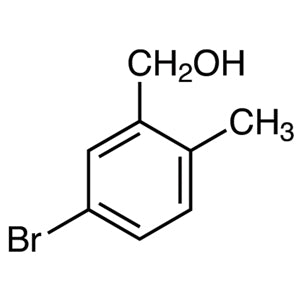
3-Methylbenzyl Alcohol (TCI M1124) is a chemical compound widely used in laboratory settings as a foundational building block in organic synthesis. It plays a crucial role in various chemical reactions, serving as a precursor for the synthesis of aromatic compounds and more complex molecular structures. This compound is essential for researchers in both academic and industrial environments, enabling the development of new chemical entities and the exploration of reaction mechanisms. Its versatility makes it a valuable resource for chemists working in diverse fields such as pharmaceuticals and materials science.
The compound is known for its stable molecular structure and moderate reactivity, which allows it to participate effectively in a wide range of chemical transformations. It is a clear liquid with a distinct odor, making it easily identifiable in laboratory conditions. Its non-toxic and biodegradable nature contributes to its safety profile, ensuring it can be used with proper handling precautions. These properties collectively make it a preferred choice for laboratory applications where reliability and safety are paramount.
In Indonesian laboratories, 3-Methylbenzyl Alcohol is commonly used in chemical research, particularly in pharmaceutical and industrial chemistry. It is frequently found in experiments aimed at synthesizing new compounds or modifying existing ones. Its availability and chemical properties make it an essential component in the toolkit of chemists conducting research in Indonesia.
- Organic synthesis is a key application where 3-Methylbenzyl Alcohol is used to create complex aromatic structures and functional groups.
- Pharmaceutical research benefits from its role in the development of new drug molecules and chemical intermediates.
- Analytical chemistry utilizes this compound for calibration and as a reference standard in various analytical techniques.
- Industrial chemistry applications include the production of specialty chemicals and materials requiring specific molecular structures.
- Teaching and research labs rely on this compound for demonstrating chemical reactions and exploring synthetic pathways.
| Brand | TCI |
|---|---|
| CAS number | 587-03-1 |
| Molecular formula | — |
| Purity | — |
| Category | Chemistry > Building Blocks > Non-Heterocyclic Building Blocks |
| Pack sizes | Available in various quantities as per supplier specifications |
| Physical form | Clear liquid |
| Storage | Store in a cool, dry place away from direct sunlight and incompatible materials |
3-Methylbenzyl Alcohol should be stored in a cool, dry environment to maintain its stability and prevent degradation. It is recommended to use airtight containers made of glass or high-density polyethylene to minimize exposure to air and moisture. Proper labeling of containers is essential for safe handling and to prevent accidental contact. Due to its moderate reactivity, it should be kept away from strong oxidizing agents and incompatible substances. Laboratory personnel should wear appropriate personal protective equipment, such as gloves and safety goggles, when handling this compound. Regular monitoring of storage conditions ensures the compound remains in optimal condition for use in research and development applications.
—
Produk Terkait
-
4-Bromo-3-methylbenzylAlcohol TCI B5285
Regular price From Rp 2.359.350,00Regular price -
4-Bromo-2-methylbenzylAlcohol TCI B5231
Regular price From Rp 1.298.850,00Regular price -
5-Bromo-2-methylbenzylAlcohol TCI B5037
Regular price From Rp 4.240.950,00Regular price -
4-Bromo-alpha-methylbenzylAlcohol TCI B1955
Regular price From Rp 875.700,00Regular price -
2-MethylbenzylAlcohol TCI M0887
Regular price Rp 1.378.650,00Regular price -
4-MethylbenzylAlcohol TCI M0162
Regular price From Rp 955.500,00Regular price -
4-Hydroxy-3-methoxy-alpha-methylbenzylAlcohol TCI H1386
Regular price From Rp 2.466.450,00Regular price -
2,4-Dichloro-alpha-methylbenzylAlcohol TCI D4508
Regular price From Rp 1.035.300,00Regular price