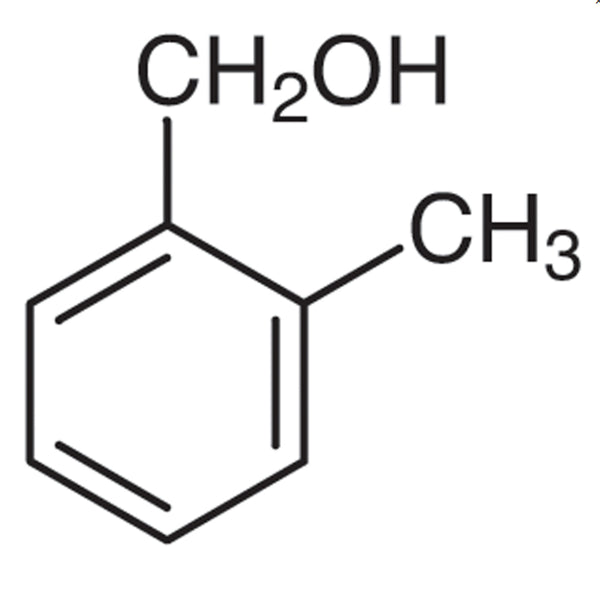
2-Methylbenzyl Alcohol is a chemical compound widely used in various chemical reactions for the synthesis of complex organic compounds. It serves as a fundamental building block in organic chemistry, playing a crucial role in the development of aromatic compounds and their derivatives. In laboratory settings, this compound is essential for creating more complex molecular structures, supporting both academic research and industrial product development. Its versatility makes it a valuable resource in chemical laboratories, where it is frequently utilized for its predictable chemical behavior and compatibility with a wide range of reaction conditions.
The compound's stable molecular structure and favorable chemical properties make it a preferred choice for chemists. It can participate in multiple types of chemical reactions, including substitution, reduction, and oxidation, which are essential in synthetic pathways. Its ability to function effectively in both reactive and neutral environments enhances its applicability across different experimental setups. These characteristics ensure that 2-Methylbenzyl Alcohol remains a reliable and consistent reagent in laboratory applications.
In Indonesian laboratories, 2-Methylbenzyl Alcohol is commonly used in organic chemistry research, particularly in the study of aromatic compound synthesis and its derivatives. It is also employed in pharmaceutical development, industrial chemical production, and material research. Its availability and consistent quality make it a highly sought-after material among researchers and professionals in the field.
Related TCI products
- Organic synthesis of aromatic compounds due to its role as a versatile building block in complex molecule creation.
- Pharmaceutical development for the production of active pharmaceutical ingredients and drug derivatives.
- Industrial chemical manufacturing as a precursor in the synthesis of various chemical intermediates.
- Material science research for the development of new polymers and functional materials.
- Analytical chemistry applications for use in standardization and calibration processes of chemical reagents.
| Brand | TCI |
|---|---|
| CAS number | 89-95-2 |
| Molecular formula | — |
| Purity | — |
| Category | Chemistry > Building Blocks > Non-Heterocyclic Building Blocks |
| Pack sizes | Available in various quantities as per standard laboratory supply requirements |
| Physical form | Liquid |
| Storage | Store in a cool, dry place away from direct sunlight and incompatible materials |
2-Methylbenzyl Alcohol should be stored in a cool, dry place, away from direct sunlight and sources of heat. It is recommended to keep it in tightly sealed containers made of materials compatible with organic solvents, such as glass or high-density polyethylene. Due to its flammable nature, it should be stored separately from oxidizers and strong acids. Proper ventilation is essential when handling the compound to minimize exposure. Laboratory personnel should use appropriate personal protective equipment, including gloves and safety goggles, to ensure safe handling and reduce the risk of skin or eye contact. Regular inspection of storage conditions and containers is advised to maintain the integrity and safety of the material.
—
Produk Terkait
-
4-Bromo-3-methylbenzylAlcohol TCI B5285
Regular price From Rp 2.359.350,00Regular price -
4-Bromo-2-methylbenzylAlcohol TCI B5231
Regular price From Rp 1.298.850,00Regular price -
5-Bromo-2-methylbenzylAlcohol TCI B5037
Regular price From Rp 4.240.950,00Regular price -
4-Bromo-alpha-methylbenzylAlcohol TCI B1955
Regular price From Rp 875.700,00Regular price -
3-MethylbenzylAlcohol TCI M1124
Regular price Rp 2.094.750,00Regular price -
4-MethylbenzylAlcohol TCI M0162
Regular price From Rp 955.500,00Regular price -
4-Hydroxy-3-methoxy-alpha-methylbenzylAlcohol TCI H1386
Regular price From Rp 2.466.450,00Regular price -
2,4-Dichloro-alpha-methylbenzylAlcohol TCI D4508
Regular price From Rp 1.035.300,00Regular price