TCI E1499 Ethyl (E)-3-(4-Chlorophenyl)acrylate is the ethyl ester of 4-chlorocinnamic acid, carrying a defined E configuration across its carbon–carbon double bond. The compound belongs to the cinnamate family, a group of building blocks used very frequently in organic synthesis laboratories because it combines an aromatic ring, an alkene, and an ester group into a single conjugated system. That combination makes the molecule simultaneously a Michael acceptor, a cycloaddition substrate, and a starting material for a wide range of onward transformations toward more elaborate target compounds in both medicinal chemistry and materials research.
The properties that make researchers select this compound begin with its uniform E stereochemistry, which gives predictable and reproducible geometry in reactions where the configuration of the double bond determines the outcome. The ester group is readily hydrolysed or reduced, providing a straightforward route to the corresponding acid or alcohol. The chlorine atom in the para position serves a dual function: it withdraws electron density and therefore increases the electrophilicity of the double bond, while at the same time providing a site for palladium- or nickel-catalysed cross-coupling reactions when a researcher wishes to extend the molecular framework. The conjugated system also absorbs ultraviolet light, making the compound attractive for study in photochemical reactions, isomerisation, and light-triggered cycloadditions.
In Indonesian laboratories, this building block is typically used in university and institutional research groups working on organic synthesis, medicinal chemistry, and functional materials. It is normally ordered in small research quantities for method development, student thesis work, and reaction screening, rather than for production-scale use. Analytical laboratories may also employ it as a reference substrate when developing chromatographic or spectroscopic methods for cinnamate derivatives.
Related TCI products
- Michael addition chemistry — the conjugated ester activated by the para-chloro substituent behaves as a reliable electrophilic acceptor for carbon and heteroatom nucleophiles in conjugate addition studies.
- Cycloaddition reactions — the defined E-configured double bond acts as a dienophile or dipolarophile, giving stereochemically predictable ring products in cycloaddition work aimed at building new carbocyclic and heterocyclic frameworks.
- Cross-coupling scaffold extension — the para-chlorine position provides a handle for palladium- or nickel-catalysed coupling, allowing researchers to install aryl, alkyl, or amino groups and expand the molecular skeleton.
- Photochemical and isomerisation studies — the conjugated aromatic-alkene-ester system absorbs ultraviolet light, making this compound a useful substrate for investigating light-driven isomerisation and photoinduced cycloaddition pathways in the laboratory.
- Medicinal chemistry intermediate synthesis — the ester group can be hydrolysed or reduced on demand, so the material serves as a convenient entry point toward acid, alcohol, and amide derivatives of pharmaceutical interest.
| Brand | TCI (Tokyo Chemical Industry) |
|---|---|
| CAS number | 24393-52-0 |
| Molecular formula | — |
| Purity | — |
| Category | Chemistry > Building Blocks > Non-Heterocyclic Building Blocks |
| Pack sizes | available in standard research-scale pack sizes; please confirm the currently listed options when ordering |
| Physical form | — |
| Storage | store in a cool, dry place, protected from light, in a tightly closed original container |
- Product Code: E1499
Store the container tightly closed in a cool, dry, and well-ventilated area, away from direct sunlight and heat sources, since the conjugated system is sensitive to ultraviolet light. Amber glass bottles or the original supplier packaging are suitable containers; keep the material separated from strong oxidising agents, strong bases, and strong nucleophiles. Handle inside a fume hood while wearing safety goggles, chemical-resistant gloves, and a laboratory coat, and avoid inhalation of vapour or contact with skin and eyes. Allow cold containers to reach room temperature before opening to prevent moisture condensation, and always consult the manufacturer's safety data sheet before use and before arranging waste disposal.
—
Produk Terkait
-
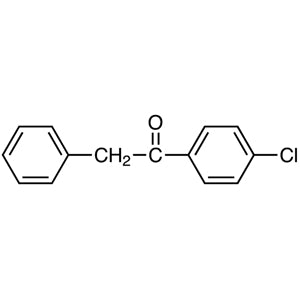
Benzyl4-ChlorophenylKetone TCI B4704
Regular price Rp 900.900,00Regular priceRp 645.750,00Sale price Rp 900.900,00 -
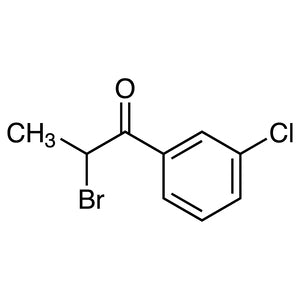
2-Bromo-1-(3-chlorophenyl)propan-1-one TCI B2932
Regular price Rp 1.934.100,00Regular priceRp 1.368.150,00Sale price Rp 1.934.100,00 -
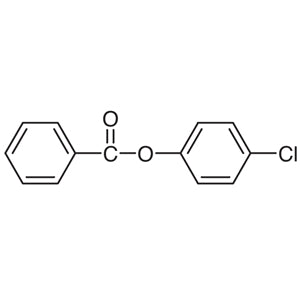
4-ChlorophenylBenzoate TCI B0063
Regular price Rp 2.227.050,00Regular priceRp 1.572.900,00Sale price Rp 2.227.050,00 -
4-ChlorophenylAcetate TCI A3593
Regular price Rp 3.949.050,00Regular priceRp 2.761.500,00Sale price Rp 3.949.050,00 -
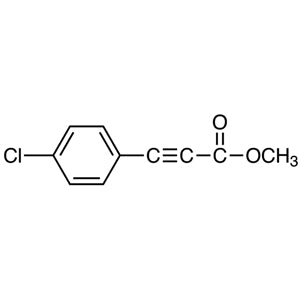
Methyl3-(4-Chlorophenyl)propiolate TCI M2894
Regular price Rp 4.531.800,00Regular priceRp 3.184.650,00Sale price Rp 4.531.800,00 -
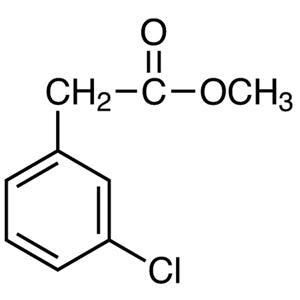
Methyl(3-Chlorophenyl)acetate TCI M2142
Regular price Rp 1.351.350,00Regular priceRp 960.750,00Sale price Rp 1.351.350,00 -
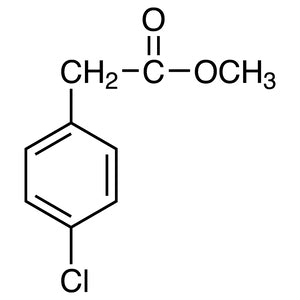
Methyl(4-Chlorophenyl)acetate TCI M2039
Regular price Rp 822.150,00Regular priceRp 590.100,00Sale price Rp 822.150,00 -
Ethyl3-Oxo-3-(4-chlorophenyl)propionate TCI E1059
Regular price From Rp 1.351.350,00Regular priceRp 960.750,00Sale price From Rp 1.351.350,00