Formanilide (103-70-8), also known as TCI F0047, is a chemical compound widely used as a building block in organic synthesis. It serves as a fundamental component in the creation of more complex organic molecules, particularly in reactions involving anilide groups. In laboratory settings, it plays a crucial role in the development of new chemical structures, enabling researchers to explore various synthetic pathways. Its versatility makes it an essential tool for chemists working on diverse projects, from pharmaceutical research to material science.
The chemical properties of Formanilide make it a preferred choice for laboratory applications. It exhibits stability under controlled conditions, allowing for consistent results in synthetic processes. However, it is sensitive to moisture and air exposure, which necessitates careful handling. Its reactivity with specific functional groups enables it to participate in substitution reactions, making it a valuable reagent in the synthesis of anilide derivatives. These characteristics make it a reliable and efficient compound for chemical synthesis.
In Indonesian laboratories, Formanilide is commonly used by researchers and scientists in the fields of chemistry and pharmaceutical development. It is an essential component in the synthesis of organic compounds and is frequently utilized in academic and research institutions. Its presence in laboratory workflows supports the advancement of scientific knowledge and the development of new chemical products.
- Anilide Synthesis: Formanilide is ideal for creating anilide derivatives due to its reactive anilide group, enabling the formation of complex organic structures.
- Pharmaceutical Research: It is widely used in drug development for synthesizing compounds with specific biological activities and therapeutic potential.
- Organic Chemistry Education: Formanilide is a key reagent in teaching organic synthesis techniques, helping students understand functional group transformations.
- Material Science Development: It contributes to the creation of new materials by serving as a building block in polymer and compound synthesis.
- Industrial Chemical Production: Its stability and reactivity make it suitable for large-scale chemical manufacturing processes in industrial laboratories.
| Brand | TCI |
|---|---|
| CAS number | 103-70-8 |
| Molecular formula | — |
| Purity | — |
| Category | Chemistry > Building Blocks > Non-Heterocyclic Building Blocks |
| Pack sizes | Available in various quantities as per supplier specifications |
| Physical form | Solid |
| Storage | Should be stored in a closed container away from heat and moisture |
Formanilide should be stored in a closed container to prevent exposure to moisture and air, which can degrade its chemical integrity. It is recommended to keep it in a cool, dry place away from direct heat sources to maintain its stability. Due to its sensitivity, it is important to use appropriate safety measures when handling, such as wearing protective gloves and goggles. Storage in a well-ventilated area is also advised to minimize any potential risk. Proper labeling of containers ensures safe handling and easy identification in laboratory environments.
—
Produk Terkait
-
4'-Methylformanilide TCI M1721
Regular price Rp 6.520.500,00Regular price -
4'-Methoxyformanilide TCI M1623
Regular price Rp 4.161.150,00Regular price -
2'-Methylformanilide TCI M1431
Regular price From Rp 1.035.300,00Regular price -
N-Methylformanilide TCI M0552
Regular price From Rp 477.750,00Regular price -
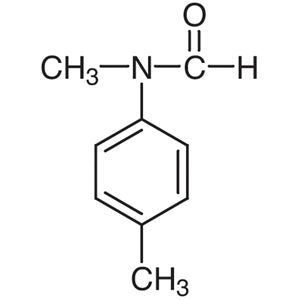
N,4'-Dimethylformanilide TCI D3369
Regular price From Rp 1.856.400,00Regular price -
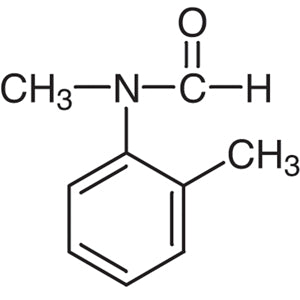
N,2'-Dimethylformanilide TCI D3368
Regular price From Rp 1.353.450,00Regular price -
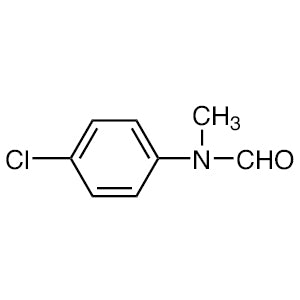
4'-Chloro-N-methylformanilide TCI C1619
Regular price Rp 6.070.050,00Regular price -
4'-Methoxy-N-methylformanilide TCI M1742
Regular price From Rp 1.538.250,00Regular price