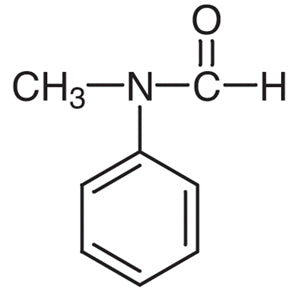
N-Methylformanilide (CAS 93-61-8) is a chemical compound widely used in organic laboratory reactions. It serves as a fundamental building block in the synthesis of more complex chemical structures. This compound is particularly valued for its role in the development of heterocyclic and aromatic compounds, making it a staple in synthetic chemistry. Its chemical stability and controlled reactivity allow researchers to manipulate it effectively in various experimental conditions. As a key component in the creation of pharmaceuticals and industrial chemicals, N-Methylformanilide is essential for advancing chemical research and innovation.
The compound’s molecular structure consists of an anilide group and a methyl group, contributing to its functional versatility. Its non-colored, solid form ensures ease of handling and measurement in laboratory settings. The stability of N-Methylformanilide reduces the risk of spontaneous reactions, enhancing safety during storage and use. Additionally, its ability to participate in substitution and coupling reactions makes it highly useful for the synthesis of new compounds. These properties make it a preferred choice for chemists seeking reliable and effective reagents.
In Indonesian laboratories, N-Methylformanilide is commonly used in organic chemistry research, especially in the development of pharmaceutical compounds and industrial materials. It is frequently found in university and research laboratory settings, where it supports the creation of new chemical entities. Its widespread application in both academic and industrial contexts highlights its importance in the chemical sciences. The compound’s reliability and versatility make it a valuable resource for chemists in Indonesia.
- Organic synthesis is a primary application where N-Methylformanilide is used to build complex molecules through substitution and coupling reactions.
- Pharmaceutical research benefits from this compound as it is a key reagent in the development of new drug compounds and medicinal agents.
- Industrial chemical production relies on N-Methylformanilide for the synthesis of aromatic and heterocyclic compounds used in various commercial applications.
- Academic research in chemistry utilizes this compound to explore new synthetic pathways and chemical transformations.
- Analytical chemistry laboratories use it as a standard reference material for testing and calibration purposes.
| Brand | TCI |
|---|---|
| CAS number | 93-61-8 |
| Molecular formula | — |
| Purity | — |
| Category | Chemistry > Building Blocks > Non-Heterocyclic Building Blocks |
| Pack sizes | Available in standard laboratory quantities |
| Physical form | Solid |
| Storage | Store in a cool, dry place away from direct sunlight |
N-Methylformanilide should be stored in a cool, dry environment to maintain its chemical stability. It is recommended to keep it in a sealed container to prevent moisture absorption and contamination. Due to its solid form, it can be stored in airtight glass or plastic containers that are resistant to chemical reactions. Laboratory personnel should handle the compound with care, using appropriate personal protective equipment such as gloves and safety goggles. It is important to ensure that the compound is kept away from incompatible substances to avoid any potential chemical interactions. Proper labeling of storage containers is essential for safe handling and easy identification.
—
Produk Terkait
-
4'-Methylformanilide TCI M1721
Regular price Rp 6.520.500,00Regular price -
2'-Methylformanilide TCI M1431
Regular price From Rp 1.035.300,00Regular price -
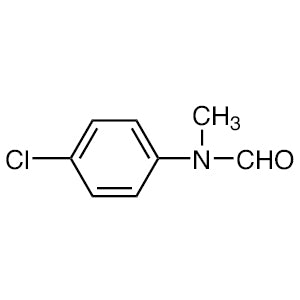
4'-Chloro-N-methylformanilide TCI C1619
Regular price Rp 6.070.050,00Regular price -
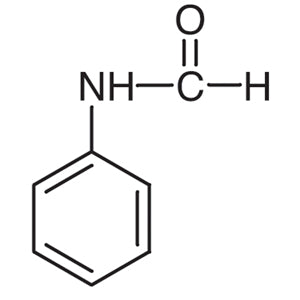
Formanilide TCI F0047
Regular price Rp 1.087.800,00Regular price -
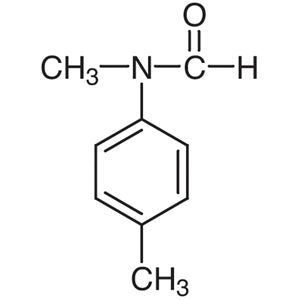
N,4'-Dimethylformanilide TCI D3369
Regular price From Rp 1.856.400,00Regular price -
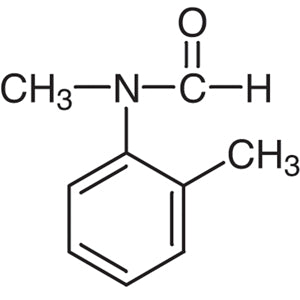
N,2'-Dimethylformanilide TCI D3368
Regular price From Rp 1.353.450,00Regular price -
2,4,6-TrichlorophenylFormate TCI T3121
Regular price From Rp 769.650,00Regular price -
AmmoniumFormate TCI A3378
Regular price From Rp 823.200,00Regular price