

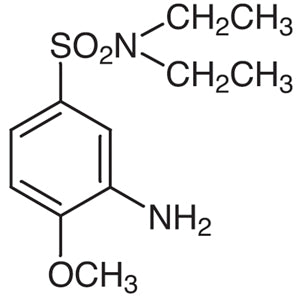
Fast Red ITR Base is a chemical dye widely used in laboratory settings for its ability to impart color in various chemical and analytical processes. It belongs to the azoic dye category, commonly utilized in scientific experiments for its stability and predictable chemical behavior. This compound plays a key role in staining and qualitative analysis, making it an essential tool for researchers and technicians. Its application spans across multiple disciplines, including chemistry, biology, and pharmacology, where accurate and consistent coloration is required. Due to its reliability and effectiveness, Fast Red ITR Base is a trusted choice for both routine and specialized laboratory procedures.
The properties of Fast Red ITR Base make it a preferred choice in laboratory environments. It exhibits a bright red color with good consistency, which enhances visibility during staining and analysis. The compound is chemically stable and resistant to variations in pH, allowing it to maintain its integrity across a range of experimental conditions. This stability ensures that it performs reliably in different chemical reactions without significant degradation. Additionally, its predictable behavior in reactions makes it suitable for use in complex laboratory protocols, where consistency and accuracy are paramount.
In Indonesian laboratories, Fast Red ITR Base is commonly used in various scientific fields. It is particularly favored for its ability to produce clear and consistent coloration, which is essential for accurate qualitative testing. Its versatility and reliability make it a popular choice among researchers working in chemistry, biology, and pharmaceutical laboratories. The compound’s ability to withstand different pH levels further enhances its applicability in diverse experimental setups, ensuring consistent results across different studies.
Related TCI products
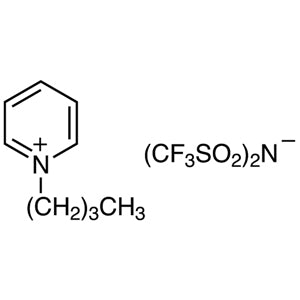
- TCI B5571 187863-42-9 1-Butylpyridinium Bis(trifluoromethanesulfonyl)imide
- TCI B5658 129378-52-5 2-(tert-Butyldimethylsilyl)-N,N-dimethyl-1H-imidazole-1-sulfonamide
- TCI B5734 89599-01-9 3-Bromobenzenesulfonamide
- TCI B5763 475681-62-0 1-Butyl-4-methylpyridinium Bis(trifluoromethanesulfonyl)imide
- TCI B5852 1041026-55-4 [3-(Bromomethyl)-1-tosylazetidin-3-yl]methanol
- TCI B5888 866323-14-0 Belinostat
- Staining and Qualitative Analysis: Fast Red ITR Base is ideal for staining biological samples and conducting qualitative chemical tests due to its bright red color and consistent performance.
- Cell Staining in Biological Research: It is used to stain cells for microscopic examination, providing clear and visible markers for cellular structures and components.
- Chemical Reaction Monitoring: Its stable chemical properties make it suitable for monitoring chemical reactions, allowing researchers to observe color changes and reaction progress.
- pH-Resistant Coloration in Analytical Chemistry: The dye’s resistance to pH variations enables its use in analytical procedures where pH fluctuations are common.
- Pharmaceutical Research and Development: It is employed in drug testing and formulation studies to assess color stability and reaction behavior under various conditions.
| Brand | TCI |
|---|---|
| CAS number | 97-35-8 |
| Molecular formula | — |
| Purity | — |
| Category | Chemistry > Stains and Dyes (for Research and Experimental Use) > Azoic Dyes (for Research and Experimental Use) |
| Pack sizes | — |
| Physical form | — |
| Storage | Store in a cool, dry place away from direct sunlight and moisture |
Fast Red ITR Base should be stored in a cool, dry place, away from direct sunlight and moisture to maintain its chemical stability and color integrity. It is recommended to use airtight containers to prevent exposure to air and potential contamination. Due to its chemical nature, it should be handled with appropriate personal protective equipment, such as gloves and safety goggles, to ensure laboratory safety. Avoid contact with skin and eyes, and ensure proper ventilation when handling the compound. It is important to keep the material in a secure location, away from incompatible substances to prevent any adverse reactions. Regular inspection of storage conditions is advised to ensure the compound remains in optimal condition for use in laboratory applications.
—
Produk Terkait
-
1-ButylpyridiniumBis(trifluoromethanesulfonyl)imide TCI B5571
Regular price From Rp 2.094.750,00Regular price -
2-(tert-Butyldimethylsilyl)-N,N-dimethyl-1H-imidazole-1-sulfonamide TCI B5658
Regular price From Rp 2.650.200,00Regular price -
3-Bromobenzenesulfonamide TCI B5734
Regular price From Rp 1.405.950,00Regular price -
1-Butyl-4-methylpyridiniumBis(trifluoromethanesulfonyl)imide TCI B5763
Regular price From Rp 903.000,00Regular price -
[3-(Bromomethyl)-1-tosylazetidin-3-yl]methanol TCI B5852
Regular price From Rp 1.378.650,00Regular price -
Belinostat TCI B5888
Regular price From Rp 2.306.850,00Regular price -
(-)-4-tert-Butyl-2,6-bis[(4S,5S)-4,5-tetramethylene-1-(2,4,6-trimethylbenzenesulfonyl)imidazolin-2-yl]phenol(contains5%Dichloromethaneatmaximum) TCI B6146
Regular price Rp 8.322.300,00Regular price


![[3-(Bromomethyl)-1-tosylazetidin-3-yl]methanol (CAS 1041026-55-4) - TCI B5852 - AMI Scientific](http://amiscientific.com/cdn/shop/files/TCI2510B5852_08c96097-28a8-4e07-aa20-fbef24394b16.jpg?v=1767863600&width=533)

![(-)-4-tert-Butyl-2,6-bis[(4S,5S)-4,5-tetramethylene-1-(2,4,6-trimethylbenzenesulfonyl)imidazolin-2-yl]phenol (contains 5% Dichloromethane at maximum) (CAS 2102316-91-4) - TCI B6146 - AMI Scientific](http://amiscientific.com/cdn/shop/files/TCI2510B6146.jpg?v=1767093225&width=533)