Furosemide is a pharmacological compound widely used in pharmaceutical research and life science applications. As a key reagent in experimental studies, it plays a critical role in investigating the physiological and pharmacological effects of drugs on the body’s excretory system. Its diuretic properties make it particularly valuable for understanding how medications interact with biological systems, especially in the context of renal function and fluid balance. This compound is essential for researchers aiming to explore the mechanisms of drug action and their impact on specific organs.
Furosemide is favored for its chemical stability and solubility in organic solvents such as ethyl acetate and ethanol. These properties ensure consistent performance in laboratory settings, making it a reliable choice for various experimental protocols. Its ability to induce measurable physiological responses further enhances its utility in scientific research. Additionally, Furosemide exhibits resistance to temperature fluctuations, which simplifies its handling and storage in different laboratory environments. These characteristics make it a preferred reagent for both basic and applied research.
In Indonesian laboratories, Furosemide is commonly used in pharmacological, toxicological, and related research fields. It is particularly relevant for studies involving drug effects on organs and the development of new formulations. Researchers across various institutions in Indonesia rely on Furosemide for experiments requiring a pharmacologically active reagent. Its versatility and reliability make it an essential component of many research projects in the life sciences.
- Pharmaceutical Research: Furosemide is used to study diuretic effects and renal function in drug development.
- Toxicological Studies: It helps assess the impact of drugs on the excretory system and organ toxicity.
- Pharmacokinetic Analysis: Furosemide is employed to evaluate drug metabolism and distribution in biological systems.
- Biochemical Experiments: Its chemical stability makes it suitable for experiments involving enzyme activity and metabolic pathways.
- Drug Formulation Development: Furosemide is used to test the efficacy and solubility of new pharmaceutical formulations.
| Brand | TCI |
|---|---|
| CAS number | 54-31-9 |
| Molecular formula | — |
| Purity | — |
| Category | Life Science > Biochemicals and Reagents > Pharmaceutical Research Reagents |
| Pack sizes | Available in various quantities as per standard laboratory requirements |
| Physical form | Solid |
| Storage | Store in a cool, dry place away from direct sunlight |
Furosemide should be stored in a cool, dry place, away from direct sunlight and moisture. It is recommended to use airtight containers to maintain its chemical stability and prevent contamination. Due to its solubility in organic solvents, it should be handled in a well-ventilated area to avoid inhalation of vapors. Proper personal protective equipment, such as gloves and safety goggles, should be worn when handling this compound. It is important to ensure that the storage area is secure and inaccessible to unauthorized personnel. Regular monitoring of storage conditions will help maintain the integrity and effectiveness of the reagent in laboratory settings.
—
Product Categories
Produk Terkait
-
IvabradineHydrochloride TCI I0847
Regular price From Rp 4.611.600,00Regular price -
VerapamilHydrochloride TCI V0118
Regular price From Rp 1.565.550,00Regular price -
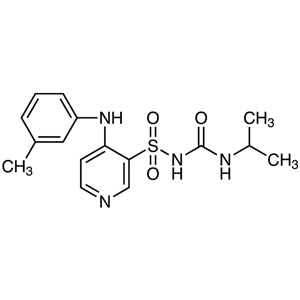
Torsemide TCI T2538
Regular price From Rp 1.644.300,00Regular price -
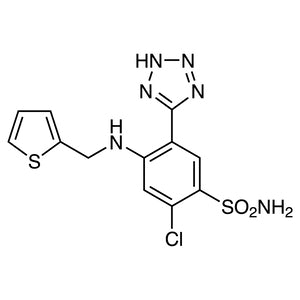
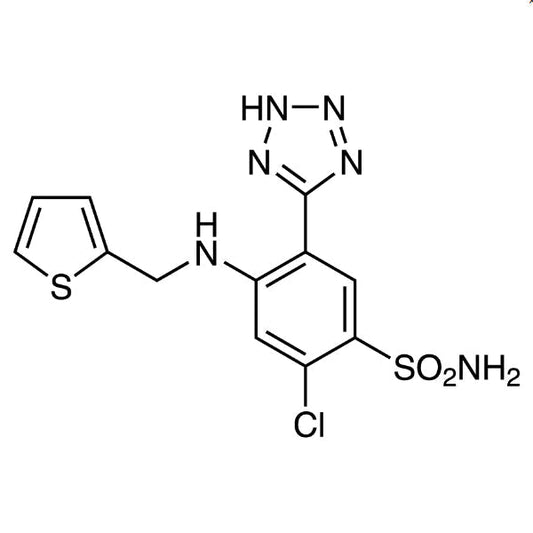
Azosemide TCI A3544
Regular price Rp 5.512.500,00Regular price -
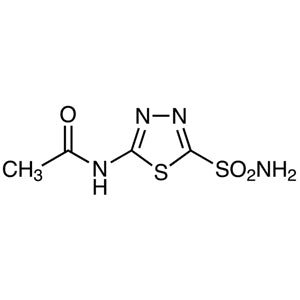
Acetazolamide TCI A2598
Regular price From Rp 2.677.500,00Regular price -
AmiodaroneHydrochloride TCI A2530
Regular price From Rp 1.485.750,00Regular price -
PropafenoneHydrochloride TCI P2301
Regular price Rp 1.829.100,00Regular price -
Pentoxifylline TCI P2050
Regular price From Rp 610.050,00Regular price