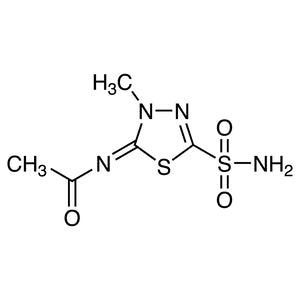
Acetazolamide (TCI A2598), with the CAS number 59-66-5, is a chemical compound widely used in scientific experiments, particularly in the fields of pharmacology and biochemistry. As a pharmaceutical research reagent, it plays a crucial role in studying the pharmacological effects and mechanisms of drug action. Its chemical structure allows it to interact with various biological targets, making it a valuable tool for researchers aiming to understand drug behavior and physiological responses. This compound is commonly used in experimental settings to investigate enzyme activity, neurological effects, and the body’s response to different stimuli.
Acetazolamide is known for its chemical stability and solubility in organic solvents, which simplifies its handling and application in a variety of experimental procedures. These properties make it a preferred choice for laboratory use, as they ensure consistency and reliability in research outcomes. Additionally, its non-toxic nature at certain dosages enhances its safety profile, allowing it to be used in a wide range of laboratory applications without significant risk. The compound’s versatility and reliability have made it a staple in many research environments.
In Indonesian laboratories, Acetazolamide is frequently utilized in scientific research related to pharmacology, biochemistry, and pharmaceutical development. It is a key component in studies aimed at understanding drug mechanisms, developing new therapeutic agents, and exploring the physiological effects of various compounds. Its availability and consistent performance make it a go-to reagent for researchers in both academic and industrial settings.
TCI brochures (PDF)
- Pharmaceutical Ingredients for Research and Experimental Use 2026-03-09 · p. 42
- Pharmacological research benefits from Acetazolamide’s ability to study drug mechanisms and physiological responses, supporting the development of new therapeutic agents.
- Biochemical experiments utilize its enzyme activity and interaction properties to analyze metabolic pathways and cellular functions.
- Neuropharmacological studies rely on its effects on the nervous system to investigate neurological disorders and treatment options.
- Clinical research applications use it to explore the impact of drugs on human physiology and to support drug development processes.
- Pharmaceutical development projects incorporate it to test and refine new compounds for therapeutic use in various medical fields.
| Brand | TCI |
|---|---|
| CAS number | 59-66-5 |
| Molecular formula | — |
| Purity | — |
| Category | Life Science > Biochemicals and Reagents > Pharmaceutical Research Reagents |
| Pack sizes | As listed on product packaging |
| Physical form | Solid (as per standard product description) |
| Storage | Store in a cool, dry place away from direct sunlight |
Acetazolamide should be stored in a cool, dry place, away from direct sunlight and sources of heat. It is recommended to keep the compound in a sealed container to prevent moisture absorption and maintain its chemical stability. Proper labeling of containers is essential to ensure safe handling and prevent accidental exposure. In laboratory settings, it is important to follow standard safety protocols, such as using appropriate personal protective equipment when handling the compound. While it is generally considered non-toxic at specified dosages, researchers should still exercise caution and follow established safety guidelines to ensure a safe working environment.
—
Product Categories
Produk Terkait
-
Methazolamide TCI M3772
Regular price Rp 3.683.400,00Regular priceRp 2.591.400,00Sale price Rp 3.683.400,00 -
IvabradineHydrochloride TCI I0847
Regular price From Rp 4.664.100,00Regular priceRp 3.277.050,00Sale price From Rp 4.664.100,00 -
VerapamilHydrochloride TCI V0118
Regular price From Rp 1.618.050,00Regular priceRp 1.146.600,00Sale price From Rp 1.618.050,00 -
TimololMaleate TCI T2905
Regular price Rp 3.578.400,00Regular priceRp 2.517.900,00Sale price Rp 3.578.400,00 -
Torsemide TCI T2538
Regular price From Rp 1.696.800,00Regular priceRp 1.202.250,00Sale price From Rp 1.696.800,00 -
BetaxololHydrochloride TCI B4474
Regular price From Rp 3.365.250,00Regular priceRp 2.368.800,00Sale price From Rp 3.365.250,00 -
Brinzolamide TCI B4258
Regular price From Rp 2.730.000,00Regular priceRp 1.924.650,00Sale price From Rp 2.730.000,00 -
Brimonidine TCI B4132
Regular price From Rp 2.332.050,00Regular priceRp 1.646.400,00Sale price From Rp 2.332.050,00