

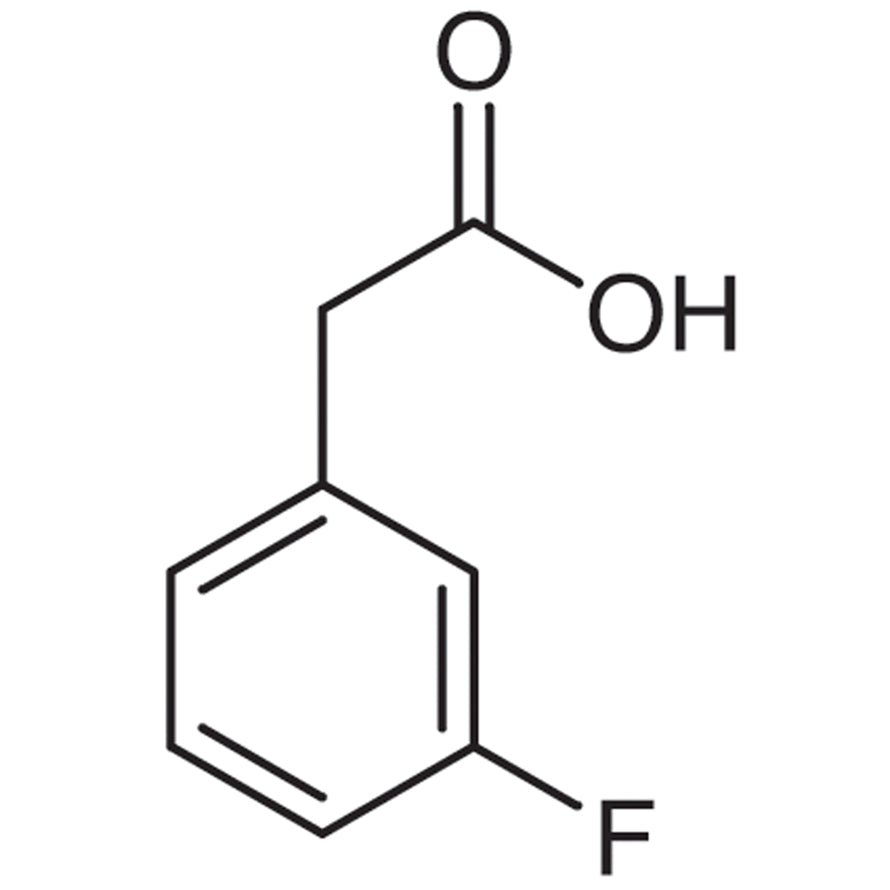
3-Fluorophenylacetic Acid is a chemical compound widely used in laboratory settings as a fundamental building block for the synthesis of complex organic compounds. This versatile reagent plays a crucial role in organic chemistry by enabling the introduction of fluorine atoms into carbon chains, which can significantly alter the properties of the final product. Its presence in various chemical reactions underscores its importance in the development of new materials, pharmaceuticals, and industrial chemicals. As a key component in synthetic pathways, it supports the creation of molecules with specific structural and functional characteristics.
The unique chemical properties of 3-Fluorophenylacetic Acid make it a preferred choice for chemists. The fluorine group contributes to the molecule's reactivity and polarity, enhancing its ability to participate in substitution and other chemical reactions. This reactivity, combined with its compatibility with a wide range of functional groups, allows for the synthesis of diverse compounds. The stability and specificity of its molecular structure further ensure reliable results in laboratory experiments, making it an essential tool for researchers.
In Indonesian laboratories, 3-Fluorophenylacetic Acid is extensively used in chemical research, particularly in pharmacology and organic synthesis. Its application is common in the development of new drugs and specialty chemicals. The compound’s ability to form stable intermediates and its role in creating complex molecular architectures make it a valuable resource for scientists working in both academic and industrial settings.
- Organic Synthesis: This compound is ideal for creating complex organic molecules due to its reactivity and ability to form stable intermediates.
- Pharmaceutical Research: It is frequently used in drug development to introduce fluorine atoms, which can enhance the efficacy and stability of pharmaceutical compounds.
- Fluorinated Compound Development: Its fluorine group makes it a key reagent in the synthesis of fluorinated compounds with specific functional properties.
- Functional Group Modification: It supports the modification of various functional groups in molecules, enabling the creation of diverse chemical structures.
- Industrial Chemical Production: It is used in the production of specialty chemicals where precise molecular control is required.
| Brand | TCI |
|---|---|
| CAS number | 331-25-9 |
| Molecular formula | — |
| Purity | — |
| Category | Chemistry > Building Blocks > Fluorinated Building Blocks |
| Pack sizes | Available in various quantities as per standard laboratory supply |
| Physical form | Solid or liquid, depending on the specific product variant |
| Storage | Store in a cool, dry place away from direct sunlight and moisture |
3-Fluorophenylacetic Acid should be stored in a cool, dry environment to maintain its chemical stability. It is recommended to keep it in a sealed container to prevent exposure to moisture and air. Due to its reactivity, it should be handled with care, using appropriate personal protective equipment such as gloves and goggles. Avoid direct contact with skin and eyes, and ensure proper ventilation in the laboratory. The compound should not be stored near incompatible substances to prevent any potential chemical reactions. Always follow standard laboratory safety protocols when working with this material.
—
Produk Terkait
-
3-Bromo-4-fluorophenylaceticAcid TCI B2976
Regular price Rp 1.167.600,00Regular price -
4-FluorophenylaceticAcid TCI F0206
Regular price From Rp 557.550,00Regular price -
2-FluorophenylaceticAcid TCI F0205
Regular price From Rp 530.250,00Regular price -
2-Chloro-6-fluorophenylaceticAcid TCI C1126
Regular price From Rp 795.900,00Regular price


