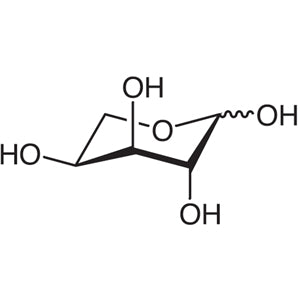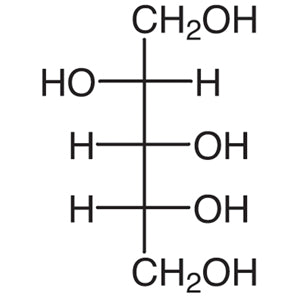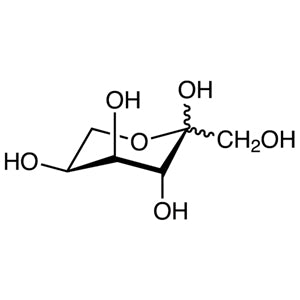
L-(+)-Fructose is a carbohydrate compound widely used in various chemical and biochemical experiments within laboratories. As one of the forms of glucose, it possesses a unique molecular structure that plays a crucial role in carbohydrate metabolism studies, especially in research related to glycosylation and sugar-related chemical reactions. This compound is commonly utilized as a substrate in enzymatic reactions to assess the activity of specific enzymes. Its chemical stability and solubility in water make it a versatile and reliable material for a wide range of experimental applications.
L-(+)-Fructose is preferred due to its high purity and consistent quality, which are essential for accurate and reproducible experimental results. Its ability to dissolve in water simplifies its use in preparing solutions for various biochemical assays. Additionally, its chemical stability ensures that it remains effective under a range of experimental conditions. These properties make it a trusted choice for researchers requiring a reliable and high-quality reagent.
In Indonesian laboratories, L-(+)-Fructose is extensively used in biochemical, pharmacological, and organic chemistry research. Local researchers frequently employ this compound to study chemical reaction mechanisms, enzyme testing, and pharmaceutical product development. Its availability and quality make it a key component in many laboratory workflows, supporting both academic and industrial research efforts.
- Biochemical research utilizes L-(+)-Fructose to study carbohydrate metabolism and glycosylation processes due to its structural similarity to glucose and its role in enzymatic reactions.
- Enzymatic assays benefit from L-(+)-Fructose as a substrate to evaluate the activity of enzymes involved in sugar metabolism and metabolic pathways.
- Pharmaceutical development incorporates this compound to test the efficacy of drugs that target metabolic processes or enzyme activity.
- Quantitative analysis relies on L-(+)-Fructose as a standard solution for calibrating instruments and ensuring accurate measurement results.
- Organic chemistry experiments use L-(+)-Fructose as a starting material for synthesizing complex compounds and studying reaction mechanisms.
| Brand | TCI |
|---|---|
| CAS number | 7776-48-9 |
| Molecular formula | — |
| Purity | — |
| Category | Chemistry > Chemical Biology > Glycoscience |
| Pack sizes | Available in various sizes as per supplier specifications |
| Physical form | White crystalline powder |
| Storage | Store in a cool, dry place away from moisture and direct sunlight |
L-(+)-Fructose should be stored in a cool, dry place, away from moisture and direct sunlight to maintain its chemical stability and prevent degradation. It is recommended to use airtight containers to minimize exposure to humidity and contaminants. When handling, it is important to ensure proper ventilation to avoid inhalation of fine particles. Due to its solubility in water, it should be stored in a manner that prevents accidental spills or contamination. Always follow standard laboratory safety protocols when working with this compound to ensure safe and effective use.
—
Product Categories
Produk Terkait
-
D-(-)-Fructose TCI F0060
Regular price From Rp 452.550,00Regular price -
D-(-)-Arabinose TCI A0513
Regular price From Rp 1.140.300,00Regular price -
L-(+)-Arabinose TCI A0515
Regular price From Rp 1.115.100,00Regular price -
D-(+)-Arabitol TCI A0516
Regular price Rp 717.150,00Regular price -
L-(-)-Arabitol TCI A0518
Regular price From Rp 557.550,00Regular price -
N-Acetyl-D-glucosamine TCI A0092
Regular price From Rp 928.200,00Regular price -
L-(-)-Xylose TCI X0021
Regular price From Rp 1.458.450,00Regular price -
D-(+)-Xylose TCI X0019
Regular price From Rp 452.550,00Regular price