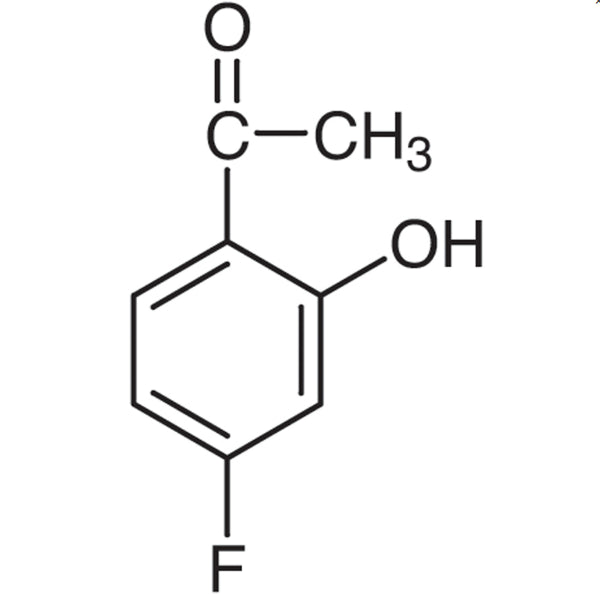
TCI F0723 is 4'-Fluoro-2'-hydroxyacetophenone, an acetophenone carrying a hydroxyl group at the position ortho to the carbonyl and a fluorine atom on the aromatic ring. This ortho-hydroxyacetophenone arrangement is highly valued in organic synthesis because it is a classical starting point toward the chromone, flavone, and coumarin frameworks. In the laboratory, compounds of this kind serve as a principal raw material when researchers set out to construct the oxygenated heterocyclic systems so frequently encountered in natural products and in synthetic drug candidates.
The most prominent characteristic is the intramolecular hydrogen bond between the phenolic hydroxyl group and the carbonyl oxygen, which stabilises the molecule while simultaneously activating the methyl ketone group for the Baker-Venkataraman rearrangement. The hydroxyl group can be selectively acylated or alkylated, whereas the methyl ketone group is ready to undergo aldol condensation and Claisen acylation. The fluorine atom on the ring exerts a measurable electronic influence on aromatic electron density, helps direct subsequent substitution, and persists throughout a reaction sequence so that the final product carries the fluorine substituent directly, without an additional fluorination step.
In Indonesian laboratories, a building block of this type is typically used in university and institutional research groups working on the synthesis of heterocyclic compounds, in medicinal chemistry programmes exploring fluorinated analogues, and in graduate-level work on natural product scaffolds. It is normally handled on a small to moderate scale in synthetic organic chemistry laboratories equipped with standard glassware, a fume hood, and the usual facilities for chromatographic purification and structural confirmation.
TCI brochures (PDF)
- Fluorination Reagents, Fluorinated Building Blocks 2026-03-18 · p. 26
Related TCI products
- TCI F0843 403-14-5 3'-Fluoro-4'-hydroxyacetophenone
- TCI F0418 98619-07-9 2'-Fluoro-4'-hydroxyacetophenone
- TCI F0318 394-32-1 5'-Fluoro-2'-hydroxyacetophenone
- TCI B5213 537050-14-9 2-Bromo-4'-fluoro-3'-(trifluoromethyl)acetophenone
- TCI B5074 749927-69-3 4-Bromo-2-fluoro-N-methylbenzamide
- TCI B4872 10472-88-5 2-Bromo-4-fluoro-6-nitroaniline
- Chromone and flavone synthesis: the ortho-hydroxyacetophenone arrangement is the classical entry point to these frameworks, allowing ring closure to proceed along well-established synthetic routes.
- Coumarin construction: the phenolic hydroxyl and the adjacent methyl ketone provide the two reactive handles required to assemble the benzopyranone core in a controlled fashion.
- Baker-Venkataraman rearrangement studies: the intramolecular hydrogen bond activates the methyl ketone, making this substrate a dependable choice for investigating and applying this rearrangement.
- Medicinal chemistry intermediates: the ring fluorine persists through subsequent transformations, so fluorinated analogues of drug candidates can be prepared without a separate fluorination step.
- Aldol condensation and Claisen acylation work: the methyl ketone group readily participates in both reactions, while the hydroxyl group can be selectively acylated or alkylated beforehand.
| Brand | TCI |
|---|---|
| CAS number | 1481-27-2 |
| Molecular formula | — |
| Purity | — |
| Category | Chemistry > Building Blocks > Fluorinated Building Blocks |
| Pack sizes | available in the standard catalogue pack sizes offered by the manufacturer |
| Physical form | — |
| Storage | keep in a tightly closed container, protected from light and moisture |
- Chemical name: 4'-Fluoro-2'-hydroxyacetophenone
Store the material in its original tightly closed container, protected from light and moisture, in a cool and well-ventilated area set aside for organic building blocks. Amber glass or the manufacturer's supplied packaging is suitable; keep the container closed when not in active use to limit exposure to atmospheric moisture. Handle the compound in a fume hood using gloves, safety glasses, and a laboratory coat, and avoid contact with skin and eyes as well as inhalation of any dust. Weigh and transfer the solid with clean, dry spatulas to prevent contamination, return the container promptly to storage after use, and consult the manufacturer's safety data sheet before handling and before disposing of any residues or contaminated materials.
—
Produk Terkait
-
3'-Fluoro-4'-hydroxyacetophenone TCI F0843
Regular price From Rp 1.485.750,00Regular price -
2'-Fluoro-4'-hydroxyacetophenone TCI F0418
Regular price From Rp 530.250,00Regular price -
5'-Fluoro-2'-hydroxyacetophenone TCI F0318
Regular price From Rp 769.650,00Regular price -
2-Bromo-4'-fluoro-3'-(trifluoromethyl)acetophenone TCI B5213
Regular price From Rp 505.050,00Regular price -
4-Bromo-2-fluoro-N-methylbenzamide TCI B5074
Regular price From Rp 1.035.300,00Regular price -
2-Bromo-4-fluoro-6-nitroaniline TCI B4872
Regular price Rp 1.140.300,00Regular price -
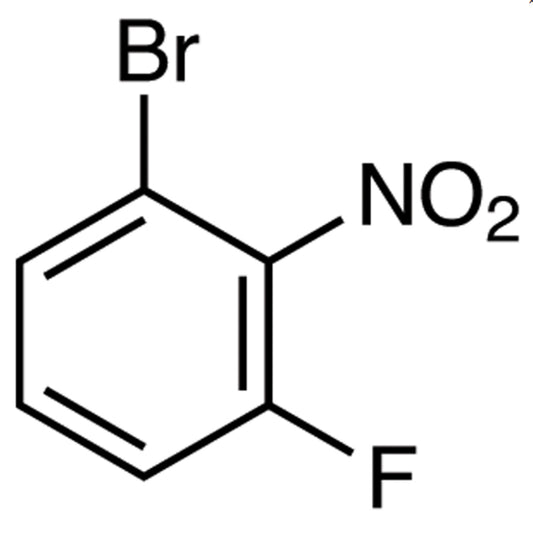
1-Bromo-3-fluoro-2-nitrobenzene TCI B4842
Regular price From Rp 1.273.650,00Regular price -
N2-(tert-Butoxycarbonyl)-4-fluoro-1,2-phenylenediamine TCI B4237
Regular price From Rp 980.700,00Regular price