

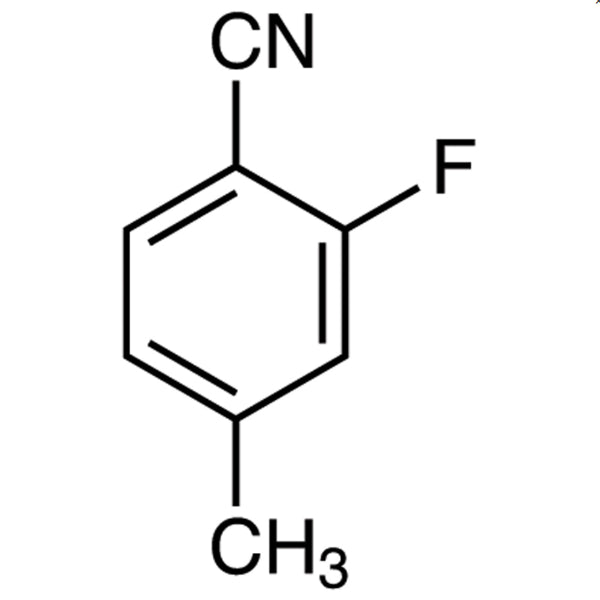
2-Fluoro-4-methylbenzonitrile is a chemical compound widely used in organic synthesis reactions within laboratory settings. It serves as a crucial building block for the development of complex molecules, particularly in pharmaceutical and organic chemistry research. This compound plays a significant role in the creation of bioactive substances, enabling scientists to design and synthesize compounds with specific biological activities. Its presence in laboratory workflows enhances the ability to explore new chemical pathways and functional group transformations.
The unique chemical properties of 2-Fluoro-4-methylbenzonitrile, including its fluorine and nitrile groups, contribute to its reactivity and versatility in synthetic applications. The fluorine atom introduces polarity and alters the electronic environment, making the molecule more suitable for targeted reactions. This characteristic allows for greater control over reaction specificity and selectivity, which is essential in advanced chemical synthesis. The nitrile group further enhances its reactivity, enabling it to participate in a variety of chemical transformations.
In Indonesian laboratories, 2-Fluoro-4-methylbenzonitrile is commonly used in academic and research institutions. It is a key reagent in studies related to organic chemistry and pharmacology, supporting both undergraduate and graduate-level research. Its application spans across various scientific disciplines, making it a valuable resource for researchers aiming to develop new compounds with therapeutic potential.
TCI brochures (PDF)
- Fluorination Reagents, Fluorinated Building Blocks 2026-03-18 · p. 23
Related TCI products
- TCI F1123 198633-76-0 2-Fluoro-6-methylbenzonitrile
- TCI F0962 147754-12-9 4-Fluoro-2-methylbenzonitrile
- TCI F0747 77532-79-7 5-Fluoro-2-methylbenzonitrile
- TCI F0573 64113-84-4 2-Fluoro-5-methylbenzonitrile
- TCI F1112 101048-76-4 2-Fluoro-4-formylbenzonitrile
- TCI C3104 21423-81-4 3-Chloro-4-methylbenzonitrile
- Organic synthesis is a primary application where this compound is used to construct complex molecular structures through various reaction mechanisms.
- Pharmaceutical research benefits from its ability to serve as a building block in the development of bioactive compounds with specific therapeutic properties.
- Medicinal chemistry studies often incorporate this reagent to explore new drug candidates and optimize molecular structures for desired biological effects.
- Academic research in chemistry laboratories utilizes this compound to teach and demonstrate advanced synthetic techniques and reaction mechanisms.
- Industrial chemical development leverages its reactivity to create novel materials and compounds with specialized functional properties.
| Brand | TCI |
|---|---|
| CAS number | 85070-67-3 |
| Molecular formula | — |
| Purity | — |
| Category | Chemistry > Building Blocks > Fluorinated Building Blocks |
| Pack sizes | — |
| Physical form | — |
| Storage | Store in a cool, dry place away from light and incompatible materials |
This compound should be stored in a cool, dry environment, away from direct sunlight and sources of heat. It is recommended to keep it in a sealed container to prevent moisture absorption and contamination. Due to its reactivity, it should be handled in a well-ventilated area, ideally within a fume hood, to minimize exposure. Avoid contact with incompatible substances such as strong acids or bases. Always use appropriate personal protective equipment, including gloves and safety goggles, when handling this material. Proper labeling and storage conditions are essential to ensure the stability and safety of the compound in the laboratory setting.
—
Produk Terkait
-
2-Fluoro-6-methylbenzonitrile TCI F1123
Regular price Rp 1.326.150,00Regular price -
4-Fluoro-2-methylbenzonitrile TCI F0962
Regular price Rp 743.400,00Regular price -
5-Fluoro-2-methylbenzonitrile TCI F0747
Regular price Rp 2.942.100,00Regular price -
2-Fluoro-5-methylbenzonitrile TCI F0573
Regular price Rp 1.988.700,00Regular price -
2-Fluoro-4-formylbenzonitrile TCI F1112
Regular price Rp 2.411.850,00Regular price -
3-Chloro-4-methylbenzonitrile TCI C3104
Regular price From Rp 1.087.800,00Regular price -
2-Fluoro-5-formylbenzonitrile TCI C2692
Regular price From Rp 1.167.600,00Regular price -
2-Bromo-4'-fluoro-3'-(trifluoromethyl)acetophenone TCI B5213
Regular price From Rp 505.050,00Regular price


