

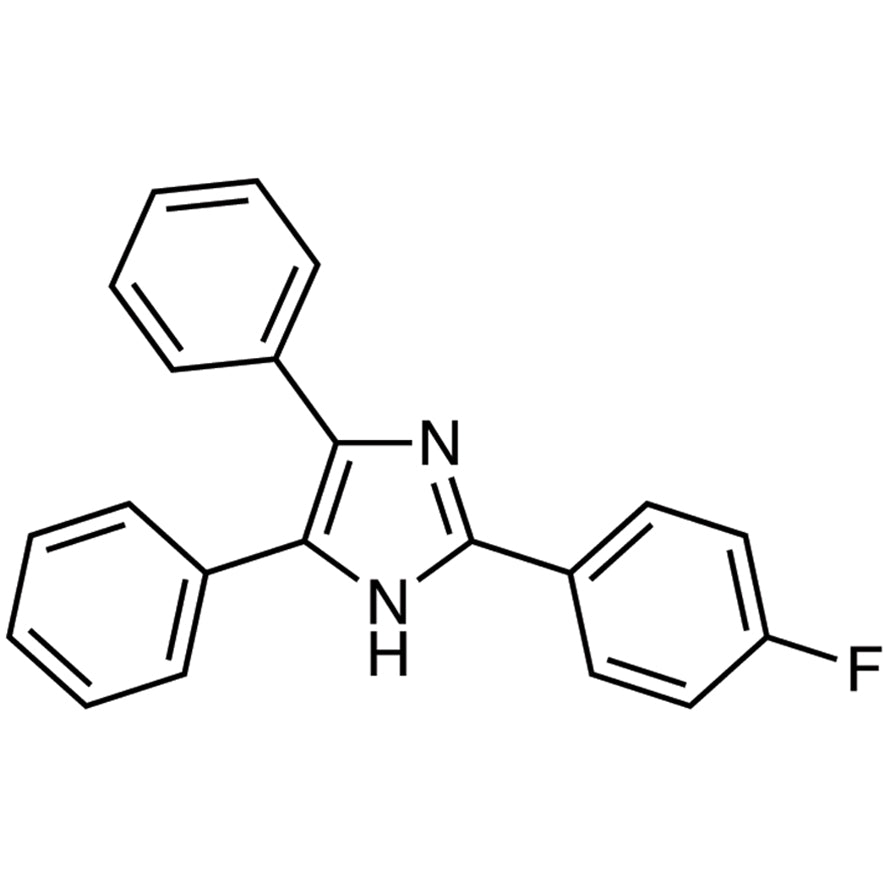
2-(4-Fluorophenyl)-4,5-diphenylimidazole is a chemical compound widely used in research applications within the life sciences. This compound plays a crucial role in molecular biology, particularly in the detection and hybridization of nucleic acids. Its complex structure, composed of an imidazole ring with two phenyl groups attached, makes it a valuable tool for studying molecular interactions. This compound is commonly found in laboratory settings where precision and specificity in chemical reactions are essential. Its ability to interact with biological molecules such as DNA and RNA enhances its utility in various scientific investigations.
The compound's high reactivity and structural complexity make it a preferred choice for researchers seeking compounds with strong binding affinity. Its chemical properties allow it to participate in a range of biochemical reactions, making it suitable for applications that require precise molecular interactions. The presence of fluorine in its molecular structure also contributes to its unique reactivity, which is advantageous in certain analytical techniques. These characteristics make it an essential component in many laboratory workflows, especially those involving nucleic acid analysis.
In Indonesian laboratories, this compound is frequently used in molecular biology research, particularly in the development of nucleic acid detection methods. Researchers in health and biotechnology sectors rely on this compound to accelerate molecular analysis and testing processes. Its application is especially relevant in diagnostic and research settings where accurate and reliable results are critical. The compound's versatility and effectiveness make it a key material in advancing scientific research in Indonesia.
TCI brochures (PDF)
- Fluorination Reagents, Fluorinated Building Blocks 2026-03-18 · p. 16
Related TCI products
- TCI C2990 5496-32-2 2-(4-Chlorophenyl)-4,5-diphenylimidazole
- TCI I0840 540-38-5 4-Iodophenol [for Biochemical Research]
- TCI B3910 106-41-2 4-Bromophenol [for Biochemical Research]
- TCI B1203 2315-97-1 10,10'-Dimethyl-9,9'-biacridinium Dinitrate [for Chemiluminescence Research]
- TCI A5311 886840-56-8 Red-CLA [Chemiluminescence Reagent]
- TCI A5309 128322-44-1 MCLA [Chemiluminescence Reagent]
- Nucleic Acid Hybridization: This compound is ideal for hybridization studies due to its ability to bind with DNA and RNA, enabling precise detection of target sequences.
- Molecular Interaction Studies: Its complex structure allows for detailed analysis of molecular interactions, making it suitable for research into biomolecular behavior.
- Diagnostic Reagent Development: The compound's reactivity and specificity are beneficial in creating reagents for diagnostic assays and nucleic acid detection kits.
- Biochemical Assay Optimization: Its high affinity for biological molecules helps in refining and optimizing biochemical assays for improved accuracy.
- Research in Genetic Analysis: It supports genetic research by facilitating the study of nucleic acid interactions in various biological systems.
| Brand | TCI |
|---|---|
| CAS number | 2284-96-0 |
| Molecular formula | — |
| Purity | — |
| Category | Life Science > Molecular Biology > Nucleic Acid Detection and Hybridization |
| Pack sizes | Available in various quantities as per supplier specifications |
| Physical form | Solid, crystalline powder |
| Storage | Store in a cool, dry place away from light and moisture |
This compound should be stored in a cool, dry environment, away from direct light and moisture to maintain its chemical integrity. It is recommended to use airtight containers to prevent exposure to air and humidity, which could affect its stability. Proper labeling of storage containers is essential for safe handling and easy identification. In laboratory settings, it should be handled with appropriate personal protective equipment, including gloves and safety goggles, to ensure safety. Regular inspection of storage conditions is advised to ensure optimal preservation of the compound's properties. Always follow standard laboratory safety protocols when working with this material to minimize risks.
—
Produk Terkait
-
2-(4-Chlorophenyl)-4,5-diphenylimidazole TCI C2990
Regular price Rp 1.485.750,00Regular price -
4-Iodophenol[forBiochemicalResearch] TCI I0840
Regular price From Rp 848.400,00Regular price -
4-Bromophenol[forBiochemicalResearch] TCI B3910
Regular price From Rp 717.150,00Regular price -
10,10'-Dimethyl-9,9'-biacridiniumDinitrate[forChemiluminescenceResearch] TCI B1203
Regular price Rp 2.466.450,00Regular price -
Red-CLA[ChemiluminescenceReagent] TCI A5311
Regular price Rp 3.683.400,00Regular price -
MCLA[ChemiluminescenceReagent] TCI A5309
Regular price Rp 5.485.200,00Regular price -
CLA[ChemiluminescenceReagent] TCI A5307
Regular price Rp 3.683.400,00Regular price -
N-(4-Aminobutyl)-N-ethylisoluminol[ChemiluminescenceReagent] TCI A5304
Regular price From Rp 4.028.850,00Regular price

![540-38-5 4-Iodophenol [for Biochemical Research] - AMI Scientific](http://amiscientific.com/cdn/shop/files/TCI2510I0840.jpg?v=1769180954&width=533)
![106-41-2 4-Bromophenol [for Biochemical Research] - AMI Scientific](http://amiscientific.com/cdn/shop/files/TCI2510B3910_a28465ae-6b1a-4bff-913f-1a43d04c54cf.jpg?v=1767434602&width=533)
![2315-97-1 10,10'-Dimethyl-9,9'-biacridinium Dinitrate [for Chemiluminescence Research] - AMI Scientific](http://amiscientific.com/cdn/shop/files/TCI2510B1203.jpg?v=1769144957&width=533)
![886840-56-8 Red-CLA [Chemiluminescence Reagent] - AMI Scientific](http://amiscientific.com/cdn/shop/files/TCI2510A5311.jpg?v=1768358973&width=533)
![886840-56-8 Red-CLA [Chemiluminescence Reagent] - AMI Scientific](http://amiscientific.com/cdn/shop/files/TCI2510A5311_c8332e7a-423e-4c93-beaf-bd2dcde371a9.jpg?v=1772176783&width=533)
![128322-44-1 MCLA [Chemiluminescence Reagent] - AMI Scientific](http://amiscientific.com/cdn/shop/files/TCI2510A5309.jpg?v=1769141513&width=533)
![19953-58-3 CLA [Chemiluminescence Reagent] - AMI Scientific](http://amiscientific.com/cdn/shop/files/TCI2510A5307.jpg?v=1769141512&width=533)
![66612-29-1 N-(4-Aminobutyl)-N-ethylisoluminol [Chemiluminescence Reagent] - AMI Scientific](http://amiscientific.com/cdn/shop/files/TCI2510A5304.jpg?v=1769055184&width=533)