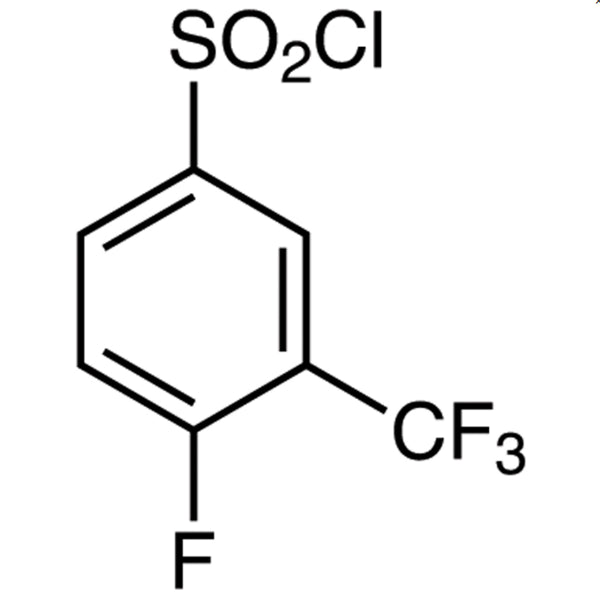
4-Fluoro-3-(trifluoromethyl)benzenesulfonyl chloride is a fluorinated building block widely used in organic chemistry for the synthesis of complex molecules. This compound serves as a versatile intermediate in various chemical reactions, particularly in substitution and functional group transformations. Its unique molecular structure, rich in fluorine atoms, enables it to participate in a wide range of synthetic pathways. In the laboratory, it is a key reagent for constructing molecules with specific physical and chemical properties, such as polarity and reactivity.
The compound’s high fluorine content contributes to its chemical stability, while still allowing for reactivity under controlled conditions. The presence of both a trifluoromethyl group and a fluorine atom at specific positions enhances its reactivity and compatibility with diverse functional groups. These properties make it a preferred choice for chemists working on advanced synthetic routes. Its ability to form stable intermediates and participate in multiple reaction mechanisms further solidifies its role in modern organic synthesis.
In Indonesian laboratories, this compound is commonly used in research projects focused on pharmaceutical development, chemical materials, and synthetic compounds. Its availability supports scientific innovation by providing a reliable fluorinated building block for researchers. It is particularly valuable in the development of new drugs and functional materials, where precise molecular design is essential. Its use is widespread in both academic and industrial research settings across the country.
Related TCI products
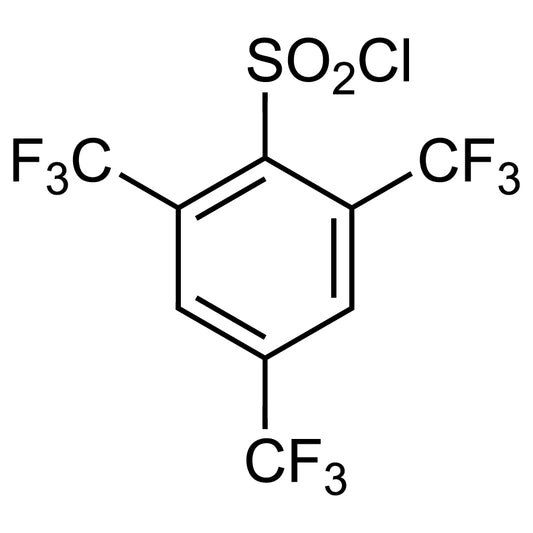
- TCI T4302 944453-80-9 2,4,6-Tris(trifluoromethyl)benzenesulfonyl Chloride
- TCI T3508 220227-84-9 3-(Trifluoromethoxy)benzenesulfonyl Chloride
- TCI T2146 94108-56-2 4-(Trifluoromethoxy)benzenesulfonyl Chloride
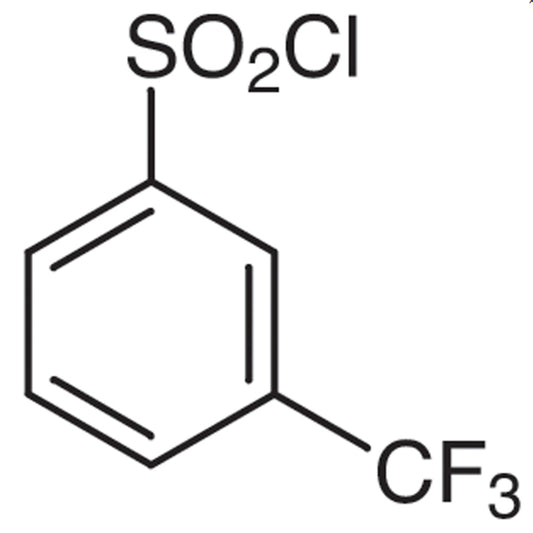
- TCI T1910 777-44-6 3-(Trifluoromethyl)benzenesulfonyl Chloride
- TCI T1892 776-04-5 2-(Trifluoromethyl)benzenesulfonyl Chloride
- TCI T1795 2991-42-6 4-(Trifluoromethyl)benzenesulfonyl Chloride
- Pharmaceutical synthesis for the development of new drug compounds due to its reactivity and structural versatility.
- Organic chemistry research involving substitution reactions and functional group modifications because of its fluorinated structure.
- Material science applications for creating fluorinated polymers and specialty chemicals due to its stability and reactivity.
- Synthetic chemistry projects requiring fluorinated intermediates for the construction of complex molecules.
- Analytical chemistry experiments for testing reactivity and compatibility with various functional groups in chemical reactions.
| Brand | TCI |
|---|---|
| CAS number | 1682-10-6 |
| Molecular formula | — |
| Purity | — |
| Category | Chemistry > Building Blocks > Fluorinated Building Blocks |
| Pack sizes | Available in various quantities as per supplier specifications |
| Physical form | Solid (as per standard chemical properties) |
| Storage | Store in a cool, dry place away from moisture and direct sunlight |
This compound should be stored in a cool, dry environment, away from moisture and direct sunlight to maintain its chemical integrity. It is recommended to use airtight containers made of materials compatible with its chemical nature, such as glass or high-density polyethylene. Due to its reactivity, it should be handled with appropriate personal protective equipment, including gloves and safety goggles. Avoid exposure to incompatible substances, such as strong bases or reducing agents. Ensure proper ventilation in the laboratory when working with this material to minimize inhalation risks. Always follow standard laboratory safety protocols when handling fluorinated compounds to ensure a safe working environment.
—
Produk Terkait
-
2,4,6-Tris(trifluoromethyl)benzenesulfonylChloride TCI T4302
Regular price From Rp 3.949.050,00Regular price -
3-(Trifluoromethoxy)benzenesulfonylChloride TCI T3508
Regular price From Rp 530.250,00Regular price -
4-(Trifluoromethoxy)benzenesulfonylChloride TCI T2146
Regular price From Rp 1.087.800,00Regular price -
3-(Trifluoromethyl)benzenesulfonylChloride TCI T1910
Regular price From Rp 1.856.400,00Regular price -
2-(Trifluoromethyl)benzenesulfonylChloride TCI T1892
Regular price From Rp 875.700,00Regular price -
4-(Trifluoromethyl)benzenesulfonylChloride TCI T1795
Regular price From Rp 610.050,00Regular price -
3,5-Bis(trifluoromethyl)benzenesulfonylChloride TCI B2186
Regular price From Rp 1.115.100,00Regular price -
4-Fluoro-2-(trifluoromethyl)benzenesulfonylChloride TCI F1124
Regular price From Rp 1.273.650,00Regular price