

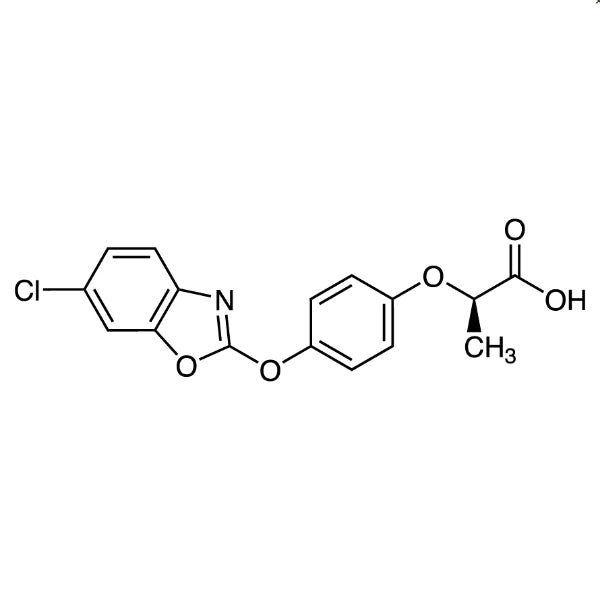
Fenoxaprop-P (TCI F1196) is a chemical compound widely used in laboratory research, particularly in the fields of nutrition and cell biology. It serves as a key reagent for studying the biochemical interactions between plant systems and synthetic compounds. This material is specifically categorized as a herbicide, functioning as an acyltransferase inhibitor, which disrupts the growth of weeds by interfering with essential metabolic processes. Its role in the laboratory is critical for understanding the mechanisms of herbicidal activity and its impact on plant physiology.
Fenoxaprop-P is valued for its chemical stability and solubility in organic solvents, making it easy to prepare and handle in laboratory settings. These properties ensure consistent performance in experiments, reducing variability and enhancing reproducibility. Additionally, its low toxicity to humans and animals makes it a safe choice for research environments where safety is a priority. The solid form of the compound also facilitates secure and efficient storage, supporting long-term use in laboratory operations.
In Indonesian laboratories, Fenoxaprop-P is commonly used in agricultural and biotechnology research. It plays a significant role in studies focused on the efficiency of active ingredients in weed control. These investigations are essential for addressing national agricultural needs and improving crop productivity through scientific innovation.
- Weed control research benefits from Fenoxaprop-P’s ability to inhibit acyltransferase, offering insights into herbicidal mechanisms.
- Nutritional studies utilize this compound to examine how synthetic chemicals interact with plant metabolism and nutrient uptake.
- Cell biology experiments leverage its role as an enzyme inhibitor to study the effects of chemical interference on cellular processes.
- Agricultural biotechnology applications focus on optimizing herbicide use for sustainable crop management.
- Environmental impact assessments use Fenoxaprop-P to evaluate the long-term effects of herbicides on soil and plant ecosystems.
| Brand | TCI |
|---|---|
| CAS number | 113158-40-0 |
| Molecular formula | — |
| Purity | — |
| Category | Life Science > Cell Biology > Nutrition Research |
| Pack sizes | — |
| Physical form | Solid |
| Storage | Store in a cool, dry place away from direct sunlight |
Fenoxaprop-P should be stored in a cool, dry environment to maintain its chemical stability and prevent degradation. It is recommended to use sealed containers made of glass or high-density polyethylene to avoid contamination and ensure safety. Due to its low toxicity, it is generally safe to handle, but standard laboratory precautions should still be observed, such as wearing gloves and safety goggles. The solid form allows for easy storage and minimizes the risk of spillage. It is important to keep the substance away from incompatible materials and ensure proper ventilation in the workspace to maintain a safe and controlled environment.
—
Produk Terkait
-
5-Bromobenzoxazole TCI B5515
Regular price From Rp 1.696.800,00Regular price -
BMS-599626 TCI B5520
Regular price From Rp 3.525.900,00Regular price -
6-Bromobenzo[b]thiophene TCI B5523
Regular price Rp 3.392.550,00Regular price -
3-tert-Butyl4-Methyl(4R,5S)-2,2,5-Trimethyloxazolidine-3,4-dicarboxylate TCI B5538
Regular price Rp 2.969.400,00Regular price -
Biotin-PEG4-Azide TCI B5546
Regular price Rp 7.897.050,00Regular price -
Benzo[b]benzo[4,5]thieno[2,3-d]thiophene TCI B5551
Regular price From Rp 903.000,00Regular price -
2-Bromo-5-(4-hexylphenyl)thiophene TCI B5553
Regular price Rp 3.207.750,00Regular price -
Biotin-PEG4-Amine TCI B5560
Regular price From Rp 1.510.950,00Regular price


![6-Bromobenzo[b]thiophene (CAS 17347-32-9) - TCI B5523 - AMI Scientific](http://amiscientific.com/cdn/shop/files/TCI2510B5523.jpg?v=1767092466&width=533)


![Benzo[b]benzo[4,5]thieno[2,3-d]thiophene (CAS 248-70-4) - TCI B5551 - AMI Scientific](http://amiscientific.com/cdn/shop/files/TCI2510B5551.jpg?v=1768815817&width=533)

