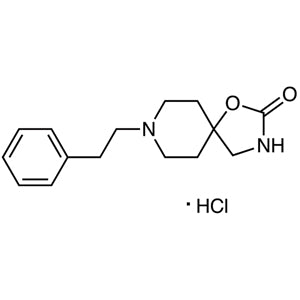
Fenspiride Hydrochloride is a chemical compound widely used in pharmacological and biochemical research. As a pharmaceutical research reagent, it plays a crucial role in experimental studies focused on the effects of drugs on the nervous and respiratory systems. This compound is essential for understanding drug mechanisms, developing therapeutic strategies, and investigating drug interactions. Its versatility makes it a valuable tool for researchers in both academic and industrial settings.
Fenspiride Hydrochloride is chemically stable and readily soluble in organic solvents, which enhances its utility in various chemical reactions and synthesis processes. These properties ensure consistent performance in laboratory experiments, making it a reliable choice for researchers. Additionally, its ability to interact with specific receptors and enzymes adds to its significance in pharmacological studies. The compound's stability and solubility contribute to its effectiveness in a wide range of experimental applications.
In Indonesian laboratories, Fenspiride Hydrochloride is commonly used in drug development, clinical trials, and toxicity studies. It is also employed in educational settings to teach fundamental principles of pharmacology and biochemistry. Its availability and high quality make it a preferred reagent for researchers aiming to conduct accurate and reproducible experiments. The compound supports both basic and applied research, contributing to advancements in pharmaceutical science.
TCI brochures (PDF)
- Pharmaceutical Ingredients for Research and Experimental Use 2026-03-09 · p. 33
- Drug Development: Fenspiride Hydrochloride is used to study the pharmacological effects of compounds on the respiratory and nervous systems, aiding in the design of new therapeutic agents.
- Clinical Trials: It supports research into drug interactions and efficacy, helping to evaluate the safety and effectiveness of new treatments in controlled environments.
- Toxicity Studies: This reagent is essential for assessing the potential harmful effects of drugs on biological systems, ensuring the safety of pharmaceutical products.
- Pharmacological Research: Its role in investigating receptor and enzyme interactions makes it a key component in understanding drug mechanisms and therapeutic outcomes.
- Educational Purposes: It is used in academic settings to demonstrate the principles of pharmacology and biochemical interactions in a practical laboratory environment.
| Brand | TCI |
|---|---|
| CAS number | 5053-08-7 |
| Molecular formula | — |
| Purity | — |
| Category | Life Science > Biochemicals and Reagents > Pharmaceutical Research Reagents |
| Pack sizes | Available in various quantities to suit different experimental needs |
| Physical form | Powder |
| Storage | Store in a cool, dry place away from moisture and direct sunlight |
Fenspiride Hydrochloride should be stored in a cool, dry place, away from moisture and direct sunlight to maintain its chemical stability. It is recommended to use airtight containers to prevent exposure to air and humidity, which could affect its quality. In a laboratory setting, it should be handled with care to avoid contamination and ensure safe usage. Proper labeling of containers is essential for identification and safe handling. Due to its chemical properties, it is advisable to keep it in a secure location that is inaccessible to unauthorized personnel. Regular monitoring of storage conditions ensures the compound remains suitable for experimental use.
—
Product Categories
- Biochemicals and ReagentsPharmaceutical Research Reagents (for Experimental Use)Anti-inflammatory Ingredients (for Research and Experimental Use)
- Biochemicals and ReagentsPharmaceutical Research Reagents (for Experimental Use)Pharmaceutical Research Reagents (Others)
- Pharmaceutical Development and Drug Discovery ResearchPharmaceutical Research Reagents (for Experimental Use)Anti-inflammatory Ingredients (for Research and Experimental Use)
- Pharmaceutical Development and Drug Discovery ResearchPharmaceutical Research Reagents (for Experimental Use)Pharmaceutical Research Reagents (Others)
Produk Terkait
-
Diflunisal TCI D5875
Regular price From Rp 1.458.450,00Regular price -
5-AminosalicylicAcid TCI A0317
Regular price From Rp 955.500,00Regular price -
Ibudilast TCI I0740
Regular price From Rp 1.908.900,00Regular price -
IvabradineHydrochloride TCI I0847
Regular price From Rp 4.611.600,00Regular price -
Carbazochrome TCI A0176
Regular price From Rp 2.227.050,00Regular price -
L-Adrenaline TCI A0173
Regular price Rp 1.298.850,00Regular price -
Zonisamide TCI Z0026
Regular price From Rp 2.147.250,00Regular price -
Zaltoprofen TCI Z0021
Regular price From Rp 1.326.150,00Regular price