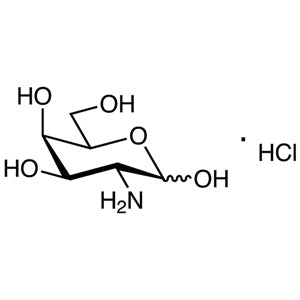
D-(+)-Galactosamine Hydrochloride is a chemical compound widely used in laboratory research, particularly in the fields of chemical biology and glycoscience. This compound plays a crucial role in studying carbohydrate metabolism and molecular interactions within biological systems. Its unique molecular structure makes it an essential tool for researchers investigating the biochemical pathways and functional roles of glycoproteins and glycolipids. In laboratory settings, it is frequently employed as a substrate or modulator in various chemical reactions, contributing to the understanding of complex biological processes.
The chemical properties of D-(+)-Galactosamine Hydrochloride make it a preferred choice for many research applications. It is highly soluble in water and exhibits strong reactivity, which allows it to participate effectively in a wide range of chemical reactions and molecular synthesis processes. Its stability under specific conditions ensures ease of storage and use, making it a reliable material for long-term research projects. These characteristics enable scientists to conduct experiments with consistent results, supporting the development of new therapeutic strategies and biochemical insights.
In Indonesian laboratories, D-(+)-Galactosamine Hydrochloride is extensively used in biochemistry, pharmacology, and glycoscience research. Its application spans from basic research to applied studies, including investigations into metabolic disorders and liver diseases. Researchers rely on this compound to explore its effects on cellular and tissue responses, contributing to advancements in medical and scientific knowledge.
TCI brochures (PDF)
- Reagents for Preparing Animal Disease Models 2024-09-13 · p. 2
- Reagents for Glyco Chemistry & Biology 5th Edition · p. 26
Related TCI products
- Biochemical Research: This compound is used to study metabolic pathways and enzyme activity, providing insights into carbohydrate metabolism and cellular function.
- Pharmacological Studies: It is employed in drug development to evaluate the effects of compounds on liver function and metabolic processes.
- Glycoscience Investigations: D-(+)-Galactosamine Hydrochloride is essential for studying glycoprotein and glycolipid interactions, aiding in the understanding of cellular communication.
- Hepatic Disease Research: It is widely used in experiments related to hepatitis and liver disorders to analyze the impact of chemical agents on liver cells.
- Molecular Synthesis: Its high reactivity makes it a valuable reagent in the synthesis of complex molecules and bioactive compounds.
| Brand | TCI |
|---|---|
| CAS number | 1772-03-8 |
| Molecular formula | — |
| Purity | — |
| Category | Chemistry > Chemical Biology > Glycoscience |
| Pack sizes | Available in various quantities as per supplier specifications |
| Physical form | White crystalline powder |
| Storage | Store in a cool, dry place away from moisture and light |
D-(+)-Galactosamine Hydrochloride should be stored in a cool, dry environment to maintain its chemical stability. It is recommended to keep the compound in a tightly sealed container to prevent moisture absorption, which can affect its integrity. Due to its high reactivity, it should be handled with care, using appropriate personal protective equipment such as gloves and safety goggles. Avoid exposure to direct sunlight or high humidity conditions to ensure optimal preservation. In laboratory settings, it is important to store the compound in a designated chemical storage area, away from incompatible substances. Proper labeling and adherence to safety protocols are essential to ensure safe handling and usage.
—
Product Categories
Produk Terkait
-
2-Acetamido-1,3,4,6-tetra-O-acetyl-2-deoxy-beta-D-galactopyranose TCI T4028
Regular price Rp 2.411.850,00Regular price -
4-Methylumbelliferyl2-Acetamido-2-deoxy-beta-D-galactopyranoside TCI M3029
Regular price From Rp 3.180.450,00Regular price -
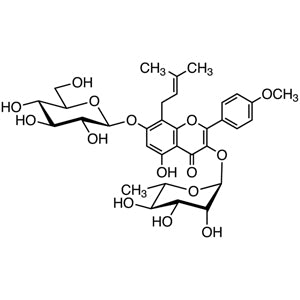
Icariin TCI I0862
Regular price From Rp 1.829.100,00Regular price -
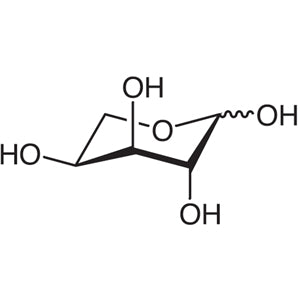
D-(-)-Arabinose TCI A0513
Regular price From Rp 1.140.300,00Regular price -
DL-Arabinose TCI A0514
Regular price From Rp 1.220.100,00Regular price -
L-(+)-Arabinose TCI A0515
Regular price From Rp 1.115.100,00Regular price -
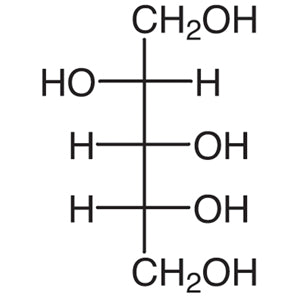
D-(+)-Arabitol TCI A0516
Regular price Rp 717.150,00Regular price -
L-(-)-Arabitol TCI A0518
Regular price From Rp 557.550,00Regular price