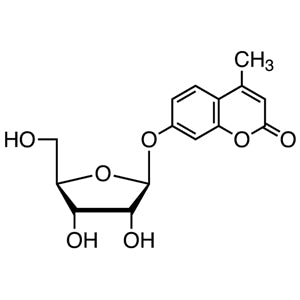
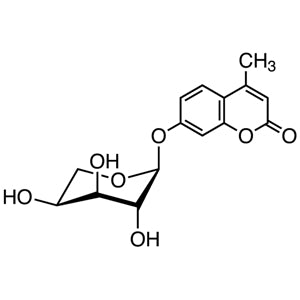
4-Methylumbelliferyl 2-Acetamido-2-deoxy-beta-D-galactopyranoside is a chemical compound widely used in biochemical and molecular biology research. It serves as a substrate for beta-galactosidase enzymes, enabling the measurement of enzymatic activity through color change or fluorescence. This compound plays a crucial role in enzyme kinetics studies and is essential for understanding the mechanisms of glycoside hydrolysis. Its application extends to various analytical techniques, making it a valuable tool for researchers working in glycoscience.
The compound is known for its chemical stability under controlled conditions, although it is sensitive to temperature and light exposure. Its molecular structure allows for specific interactions with target enzymes, enhancing the accuracy of experimental results. The ease of solubilization and availability in solid form make it convenient for use in a wide range of laboratory procedures. These properties contribute to its popularity among scientists seeking reliable and reproducible data.
In Indonesian laboratories, this compound is commonly used in biochemical research and enzyme studies. It is frequently employed in academic and research institutions to assess enzyme activity and monitor metabolic processes. Its role in fluorescence-based assays makes it particularly useful for high-precision experiments. The compound’s versatility and reliability have made it a standard reagent in many laboratory workflows across Indonesia.
TCI brochures (PDF)
- Reagents for Glyco Chemistry & Biology 5th Edition · p. 27
- Reagents for Biological Research 2025-03-11 · p. 22
Related TCI products
- TCI M3030 37067-30-4 4-Methylumbelliferyl 2-Acetamido-2-deoxy-beta-D-glucopyranoside
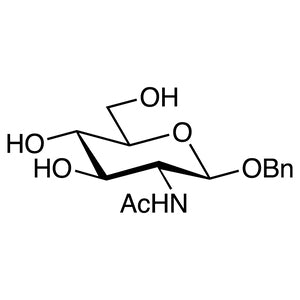
- TCI B6760 13343-67-4 Benzyl 2-Acetamido-2-deoxy-beta-D-glucopyranoside
- TCI B3470 97753-82-7 5-Bromo-3-indolyl beta-D-Galactopyranoside [for Biochemical Research]
- TCI B3201 7240-90-6 5-Bromo-4-chloro-3-indolyl beta-D-Galactopyranoside [for Biochemical Research]
- TCI C2371 138182-21-5 6-Chloro-3-indolyl beta-D-Galactopyranoside [for Biochemical Research]
- TCI M3027 195385-93-4 4-Methylumbelliferyl beta-D-Ribofuranoside
- Enzyme Activity Assays: This compound is ideal for measuring beta-galactosidase activity due to its fluorescent properties, making it a reliable indicator in kinetic studies.
- Glycoscience Research: It is used to investigate carbohydrate metabolism and enzyme-substrate interactions in complex biological systems.
- Fluorescence-Based Assays: The compound’s ability to emit fluorescence upon hydrolysis allows for sensitive detection in biochemical experiments.
- Biochemical Analysis: It supports the analysis of enzymatic reactions and provides data for understanding metabolic pathways.
- Molecular Biology Studies: Its use in enzyme activity testing contributes to research on gene expression and protein function.
| Brand | TCI |
|---|---|
| CAS number | 36476-29-6 |
| Molecular formula | — |
| Purity | — |
| Category | Chemistry > Chemical Biology > Glycoscience |
| Pack sizes | Available in various quantities as per standard laboratory supply |
| Physical form | Solid |
| Storage | Store in a cool, dark place away from light and moisture |
This compound should be stored in a cool, dark place to prevent degradation due to light exposure. It is recommended to use airtight containers to maintain its stability and prevent moisture absorption. As it is sensitive to temperature, it should be kept at controlled room temperature to ensure optimal performance. Laboratory personnel should handle the compound with care, using appropriate personal protective equipment. Proper labeling and storage conditions are essential to maintain its integrity and ensure safe usage in experimental settings.
—
Product Categories
Produk Terkait
-
4-Methylumbelliferyl2-Acetamido-2-deoxy-beta-D-glucopyranoside TCI M3030
Regular price From Rp 2.439.150,00Regular price -
Benzyl2-Acetamido-2-deoxy-beta-D-glucopyranoside TCI B6760
Regular price Rp 6.042.750,00Regular price -
5-Bromo-3-indolylbeta-D-Galactopyranoside[forBiochemicalResearch] TCI B3470
Regular price From Rp 743.400,00Regular price -
5-Bromo-4-chloro-3-indolylbeta-D-Galactopyranoside[forBiochemicalResearch] TCI B3201
Regular price From Rp 1.326.150,00Regular price -
6-Chloro-3-indolylbeta-D-Galactopyranoside[forBiochemicalResearch] TCI C2371
Regular price From Rp 1.193.850,00Regular price -
4-Methylumbelliferylbeta-D-Ribofuranoside TCI M3027
Regular price From Rp 4.108.650,00Regular price -
4-Methylumbelliferylbeta-D-GlucuronideHydrate TCI M3026
Regular price From Rp 1.565.550,00Regular price -
4-Methylumbelliferylalpha-L-Arabinopyranoside TCI M3025
Regular price From Rp 1.353.450,00Regular price

![97753-82-7 5-Bromo-3-indolyl beta-D-Galactopyranoside [for Biochemical Research] - AMI Scientific](http://amiscientific.com/cdn/shop/files/TCI2510B3470.jpg?v=1768193597&width=533)
![7240-90-6 5-Bromo-4-chloro-3-indolyl beta-D-Galactopyranoside [for Biochemical Research] - AMI Scientific](http://amiscientific.com/cdn/shop/files/TCI2510B3201.jpg?v=1768193511&width=533)
![6-Chloro-3-indolyl beta-D-Galactopyranoside [for Biochemical Research] (CAS 138182-21-5) - TCI C2371 - AMI Scientific](http://amiscientific.com/cdn/shop/files/TCI2510C2371.jpg?v=1767098219&width=533)