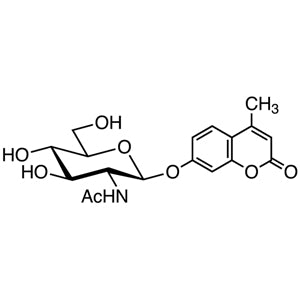
TCI M3030 with CAS number 37067-30-4 is 4-Methylumbelliferyl 2-Acetamido-2-deoxy-beta-D-glucopyranoside, a fluorogenic substrate in which an N-acetylglucosamine unit is linked in the beta configuration to 4-methylumbelliferone. The compound serves as a reference substrate for the enzyme beta-N-acetylglucosaminidase, and it is also used frequently in chitinase activity assays, because N-acetylglucosamine is the building block of chitin. Enzymatic hydrolysis releases the fluorescent coumarin, allowing enzyme activity to be followed fluorometrically in a straightforward and quantitative manner.
This substrate ranks among the most frequently encountered glycoscience reagents in enzymology protocols across many fields of research. The characteristics that make it such a common choice are the breadth of its applicability combined with high detection sensitivity. Beta-N-acetylglucosaminidase is present in mammals, plants, fungi, insects, and bacteria, so a single substrate can serve a diverse range of research programmes within one laboratory. The fluorogenic format delivers a far lower detection limit than chromogenic substrates, which means reaction volumes can be reduced and precious samples conserved. The beta configuration ensures specificity toward the target enzyme.
In Indonesian laboratories, this substrate typically appears in university and institutional research settings where glycosidase and chitinase work is carried out, as well as in enzymology teaching and method development. Its ability to cover mammalian, plant, fungal, insect, and bacterial enzyme sources within a single reagent makes it practical for laboratories that run several project lines side by side and need to keep their reagent inventory compact without limiting the scope of the assays they can support.
TCI brochures (PDF)
- Reagents for Biological Research 2025-03-11 · p. 22
Related TCI products
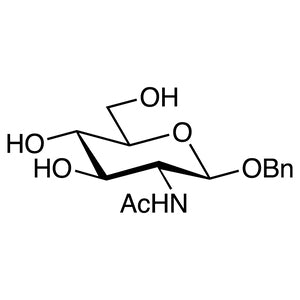
- TCI B6760 13343-67-4 Benzyl 2-Acetamido-2-deoxy-beta-D-glucopyranoside
- TCI M3029 36476-29-6 4-Methylumbelliferyl 2-Acetamido-2-deoxy-beta-D-galactopyranoside
- TCI M3022 18997-57-4 4-Methylumbelliferyl beta-D-Glucopyranoside
- TCI B5393 15548-60-4 5-Bromo-4-chloro-3-indolyl beta-D-Glucopyranoside
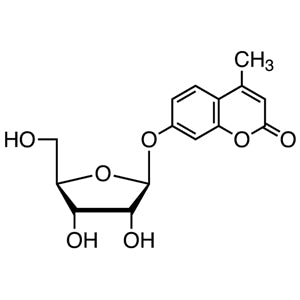
- TCI M3027 195385-93-4 4-Methylumbelliferyl beta-D-Ribofuranoside
- TCI M3026 881005-91-0 4-Methylumbelliferyl beta-D-Glucuronide Hydrate
- Beta-N-acetylglucosaminidase activity assays: this compound is the reference substrate for the enzyme, releasing fluorescent 4-methylumbelliferone upon hydrolysis for direct, quantitative fluorometric readout of activity.
- Chitinase activity testing: because N-acetylglucosamine is the structural building block of chitin, the substrate is widely applied to follow chitinase activity in agricultural, entomological, and microbiological research.
- Comparative enzymology across organisms: the target enzyme occurs in mammals, plants, fungi, insects, and bacteria, so one substrate supports several parallel research programmes within a single laboratory.
- Low-volume and sample-limited assays: the fluorogenic format offers a much lower detection limit than chromogenic substrates, allowing reaction volumes to be reduced and scarce or precious samples to be conserved.
- Specificity-dependent glycosidase studies: the beta anomeric configuration of the glycosidic linkage ensures the substrate is cleaved selectively by the intended target enzyme rather than by unrelated glycosidases.
| Brand | TCI |
|---|---|
| CAS number | 37067-30-4 |
| Molecular formula | — |
| Purity | — |
| Category | Chemistry > Chemical Biology > Glycoscience |
| Pack sizes | available in the standard catalogue pack sizes offered by TCI for this item; please confirm the size required when ordering. |
| Physical form | — |
| Storage | store according to the conditions stated on the manufacturer's label and in the accompanying safety data sheet. |
- Chemical name: 4-Methylumbelliferyl 2-Acetamido-2-deoxy-beta-D-glucopyranoside
Keep the container tightly closed and store it under the conditions specified on the manufacturer's label and safety data sheet for this item. Fluorogenic substrates of this type are generally protected from light and moisture, so amber or opaque containers and a dry storage location are appropriate. Use clean, dry spatulas and glassware when weighing out material to avoid contamination of the stock, and allow sealed containers to equilibrate to room temperature before opening to reduce condensation. Handle the material in a well-ventilated area, wear standard laboratory personal protective equipment including a lab coat, gloves, and eye protection, and consult the safety data sheet before first use and before disposal of waste.
—
Product Categories
Produk Terkait
-
Benzyl2-Acetamido-2-deoxy-beta-D-glucopyranoside TCI B6760
Regular price Rp 6.042.750,00Regular price -
4-Methylumbelliferyl2-Acetamido-2-deoxy-beta-D-galactopyranoside TCI M3029
Regular price From Rp 3.180.450,00Regular price -
4-Methylumbelliferylbeta-D-Glucopyranoside TCI M3022
Regular price From Rp 1.008.000,00Regular price -
5-Bromo-4-chloro-3-indolylbeta-D-Glucopyranoside TCI B5393
Regular price From Rp 1.220.100,00Regular price -
4-Methylumbelliferylbeta-D-Ribofuranoside TCI M3027
Regular price From Rp 4.108.650,00Regular price -
4-Methylumbelliferylbeta-D-GlucuronideHydrate TCI M3026
Regular price From Rp 1.565.550,00Regular price -
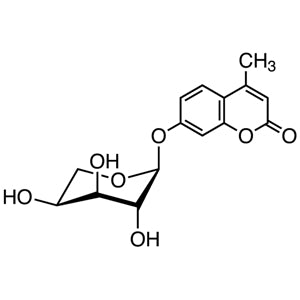
4-Methylumbelliferylalpha-L-Arabinopyranoside TCI M3025
Regular price From Rp 1.353.450,00Regular price -
4-Methylumbelliferylalpha-D-Mannopyranoside TCI M3023
Regular price From Rp 1.829.100,00Regular price