Guanidine Nitrate is the nitrate salt of guanidine, a high-nitrogen compound known in the laboratory both as a source of the guanidine group and as a material carrying the nitrate anion as an oxidising component. Its ionic structure combines the nitrogen-rich guanidinium cation with the nitrate anion, which is why this compound is widely studied in energetic materials research, gas generant chemistry, and heterocyclic synthesis. The material also serves as a starting substance in the preparation of guanidine derivatives and other nitrogen compounds at laboratory scale.
The characteristic that makes this compound attractive is its very high nitrogen content together with a distinctive oxygen balance, so that its decomposition produces a large volume of gas with minimal solid residue. This property is the basis for its study as a gas generant material in materials research. From a synthetic point of view, the nitrate salt of guanidine is a solid form that is stable at room temperature, easy to weigh out, and soluble in water as well as in certain polar solvents, making it practical for supplying the guanidine group used to build pyrimidine rings, triazines, and aminopyrimidine derivatives.
In Indonesia, this material is used by laboratories working on synthetic reagent chemistry and nitrogen-compound research, where a stable, easily weighed solid source of the guanidine group is preferred over handling less convenient forms. It suits academic research groups, materials laboratories, and organic synthesis units that prepare heterocyclic scaffolds and guanidine derivatives on a routine bench scale, and that require a consistent reagent grade from an established supplier.
TCI brochures (PDF)
- C-N Bond Formation Reactions 2025-08-07 · p. 5
Related TCI products
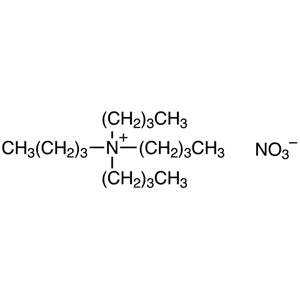
- TCI T3651 1941-27-1 Tetrabutylammonium Nitrate
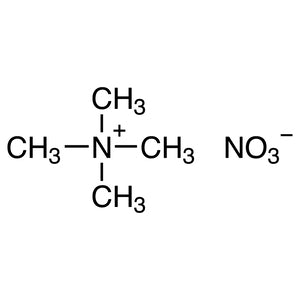
- TCI T4131 1941-24-8 Tetramethylammonium Nitrate
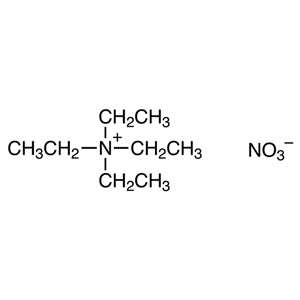
- TCI T3082 1941-26-0 Tetraethylammonium Nitrate
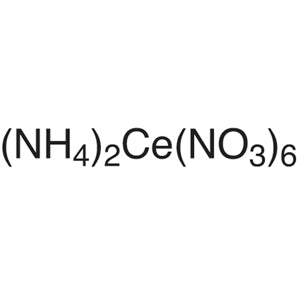
- TCI C1806 16774-21-3 Ammonium Cerium(IV) Nitrate
- TCI M2613 152460-08-7 1-(2-Methyl-5-nitrophenyl)guanidine Nitrate
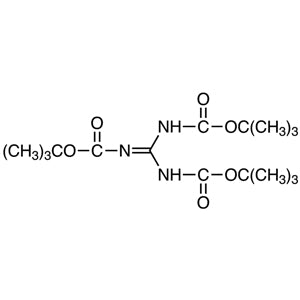
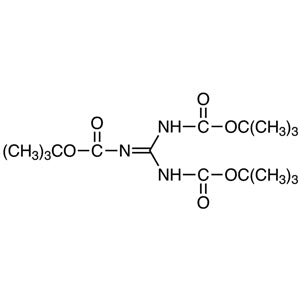
- TCI T2964 216584-22-4 1,2,3-Tris(tert-butoxycarbonyl)guanidine
- Heterocyclic synthesis: supplies the guanidine group for constructing pyrimidine rings, triazines, and aminopyrimidine derivatives, with the solid salt form making stoichiometric weighing straightforward at the bench.
- Energetic materials research: studied for its very high nitrogen content and distinctive oxygen balance, properties that are central to characterising decomposition behaviour in this field of investigation.
- Gas generant chemistry: investigated because decomposition yields a large volume of gas with minimal solid residue, which is exactly the behaviour gas generant formulation studies are designed to evaluate.
- Preparation of guanidine derivatives: serves as a laboratory-scale starting material where a stable, room-temperature solid provides the guanidinium cation for onward functionalisation and derivative work.
- Nitrogen compound synthesis: acts as a starting substance for other nitrogen-containing compounds, with good solubility in water and certain polar solvents simplifying solution preparation and reaction setup.
| Brand | TCI |
|---|---|
| CAS number | 506-93-4 |
| Molecular formula | — |
| Purity | — |
| Category | Chemistry > Synthetic Reagents > Oxidation [Synthetic Reagents] |
| Pack sizes | available in standard TCI laboratory pack sizes; please confirm the size required when ordering |
| Physical form | solid at room temperature; soluble in water and certain polar solvents |
| Storage | — |
- Product Code: G0164
Store the container tightly closed in a cool, dry, well-ventilated area, away from heat sources, direct sunlight, and any incompatible materials, particularly reducing agents and combustible substances, given that the nitrate anion acts as an oxidising component. Keep the material in its original tightly sealed container or an equivalent chemically resistant vessel, clearly labelled and kept off the floor. Handle in a fume hood using standard laboratory personal protective equipment, including safety goggles, gloves, and a laboratory coat. Avoid generating dust during weighing and transfer, keep the container closed when not in use, and consult the manufacturer's safety data sheet before first use and before disposal.
—
Produk Terkait
-
TetrabutylammoniumNitrate TCI T3651
Regular price From Rp 1.008.000,00Regular price -
TetramethylammoniumNitrate TCI T4131
Regular price From Rp 1.087.800,00Regular price -
TetraethylammoniumNitrate TCI T3082
Regular price From Rp 1.405.950,00Regular price -
AmmoniumCerium(IV)Nitrate TCI C1806
Regular price From Rp 903.000,00Regular price -
1-(2-Methyl-5-nitrophenyl)guanidineNitrate TCI M2613
Regular price From Rp 743.400,00Regular price -
1,2,3-Tris(tert-butoxycarbonyl)guanidine TCI T2964
Regular price From Rp 1.538.250,00Regular price -
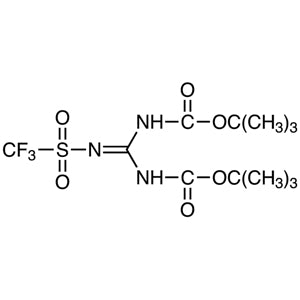
1,3-Bis(tert-butoxycarbonyl)-2-(trifluoromethanesulfonyl)guanidine TCI B3625
Regular price From Rp 4.293.450,00Regular price -
1-(tert-Butoxycarbonyl)guanidine TCI B5001
Regular price From Rp 1.298.850,00Regular price