TCI B3625, with the CAS number 207857-15-6, is a specialized chemical compound known as 1,3-Bis(tert-butoxycarbonyl)-2-(trifluoromethanesulfonyl)guanidine. This reagent plays a crucial role in organic synthesis, particularly in reactions involving the formation of C-X bonds. It is widely used in laboratory settings for its ability to participate in substitution and activation reactions. Its unique molecular structure enables it to act as a versatile intermediate in the synthesis of complex organic compounds.
The compound's chemical properties make it a preferred choice for researchers seeking high reactivity and specificity in synthetic processes. The presence of tert-butoxycarbonyl groups and a trifluoromethanesulfonyl group contributes to its reactivity and stability under controlled laboratory conditions. These functional groups allow it to be selectively activated in various synthetic pathways, making it a valuable tool in organic chemistry. Its ability to undergo controlled reactions under specific conditions enhances its utility in advanced chemical research.
In Indonesian laboratories, this compound is commonly used in organic chemistry research, especially in the synthesis of complex molecules. It is particularly favored in academic and industrial settings where precision and reactivity are essential. Researchers in Indonesia rely on this reagent for its reliability and effectiveness in producing high-quality chemical products. Its application is widespread in both teaching and research laboratories across the country.
TCI brochures (PDF)
- Guanidinylation Reagents 2025-11-07 · p. 2
- C-N Bond Formation Reactions 2025-08-07 · p. 6
Related TCI products
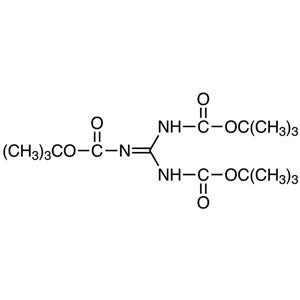
- TCI T2964 216584-22-4 1,2,3-Tris(tert-butoxycarbonyl)guanidine
- TCI B5001 219511-71-4 1-(tert-Butoxycarbonyl)guanidine
- TCI B4028 152120-61-1 N-(tert-Butoxycarbonyl)-1H-pyrazole-1-carboxamidine
- TCI B3619 152120-54-2 N,N'-Bis(tert-butoxycarbonyl)-1H-pyrazole-1-carboxamidine
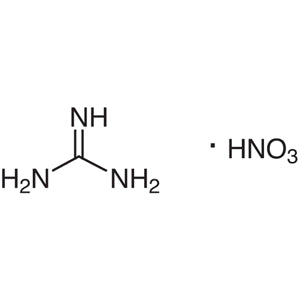
- TCI G0164 506-93-4 Guanidine Nitrate
- TCI M2613 152460-08-7 1-(2-Methyl-5-nitrophenyl)guanidine Nitrate
- Organic synthesis of complex molecules requiring C-X bond formation due to its reactivity and functional group versatility.
- Activation of substrates in substitution reactions where controlled reactivity is essential for selective chemical transformations.
- Development of new chemical compounds in research laboratories focusing on synthetic chemistry and pharmaceutical applications.
- Support for academic research in universities and research institutions working on advanced organic synthesis techniques.
- Use in industrial chemical processes that require high precision and specific reactivity in the production of specialty chemicals.
From the TCI brochure
- Guanidinylation of amines with Et3N in CH2Cl2 at rt, giving Boc-protected guanidines
| Brand | TCI |
|---|---|
| CAS number | 207857-15-6 |
| Molecular formula | — |
| Purity | — |
| Category | Chemistry > Synthetic Reagents > C-X(Non-Halogen) Bond Formation [Synthetic Reagents] |
| Pack sizes | — |
| Physical form | — |
| Storage | Store in a cool, dry place away from moisture and direct sunlight |
This compound should be stored in a cool, dry environment to maintain its chemical stability. It is recommended to keep it in a tightly sealed container to prevent exposure to moisture and air. Due to its reactivity, it should be handled with care in a well-ventilated laboratory setting. Avoid contact with incompatible substances such as strong bases or reactive metals. Always use appropriate personal protective equipment, including gloves and safety goggles, when handling this material. Proper storage and handling ensure the compound remains effective for its intended applications in laboratory research.
References cited in the TCI brochure
- Konrad Feichtinger. Diprotected Triflylguanidines: A New Class of Guanidinylation Reagents The Journal of Organic Chemistry, 1998. doi:10.1021/jo980425s
Produk Terkait
-
1,2,3-Tris(tert-butoxycarbonyl)guanidine TCI T2964
Regular price From Rp 1.590.750,00Regular priceRp 1.127.700,00Sale price From Rp 1.590.750,00 -
1-(tert-Butoxycarbonyl)guanidine TCI B5001
Regular price From Rp 1.351.350,00Regular priceRp 960.750,00Sale price From Rp 1.351.350,00 -
N-(tert-Butoxycarbonyl)-1H-pyrazole-1-carboxamidine TCI B4028
Regular price Rp 2.384.550,00Regular priceRp 1.683.150,00Sale price Rp 2.384.550,00 -
N,N'-Bis(tert-butoxycarbonyl)-1H-pyrazole-1-carboxamidine TCI B3619
Regular price From Rp 1.458.450,00Regular priceRp 1.035.300,00Sale price From Rp 1.458.450,00 -
GuanidineNitrate TCI G0164
Regular price Rp 928.200,00Regular priceRp 664.650,00Sale price Rp 928.200,00 -
1-(2-Methyl-5-nitrophenyl)guanidineNitrate TCI M2613
Regular price From Rp 795.900,00Regular priceRp 572.250,00Sale price From Rp 795.900,00 -
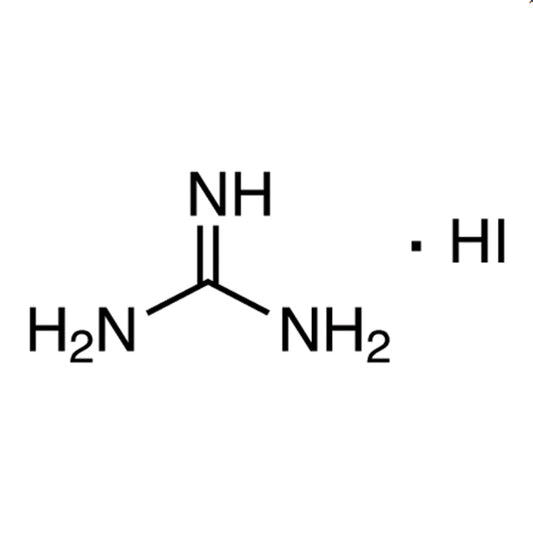
GuanidineHydroiodide TCI G0450
Regular price Rp 689.850,00Regular priceRp 497.700,00Sale price Rp 689.850,00 -
GuanidineHydrobromide TCI G0449
Regular price From Rp 1.696.800,00Regular priceRp 1.202.250,00Sale price From Rp 1.696.800,00