N-(tert-Butoxycarbonyl)-1H-pyrazole-1-carboxamidine is a synthetic reagent widely used in organic chemistry for its ability to participate in carbon-carbon bond formation reactions. This compound plays a crucial role in the synthesis of complex organic molecules, particularly in the development of compounds with specific biological activities. Its structural complexity allows for precise chemical reactions, making it a valuable tool in both academic and industrial research settings. In Indonesian laboratories, it is frequently employed in the synthesis of pharmaceuticals and specialty chemicals, contributing to the advancement of scientific knowledge and practical applications.
The compound is known for its chemical stability under controlled conditions, which simplifies its storage and handling. Its molecular structure provides high reactivity and selectivity, essential for achieving desired reaction outcomes. The non-halogen nature of the C-X bond formation category makes it a preferred choice for reactions requiring minimal side reactions and high specificity. This stability and reactivity make it a reliable reagent in various synthetic processes, ensuring consistent results in laboratory experiments.
In Indonesian laboratories, this reagent is commonly used in research focused on organic chemistry, particularly in academic institutions and research centers. Its application spans from basic research to the development of new drugs and industrial chemicals. The solid form of the compound facilitates easy handling and processing, making it suitable for a wide range of experimental setups. Its role in chemical synthesis is vital for advancing both theoretical and applied scientific work in the region.
TCI brochures (PDF)
- Guanidinylation Reagents 2025-11-07 · p. 1
- C-N Bond Formation Reactions 2025-08-07 · p. 6
Related TCI products
- TCI B3619 152120-54-2 N,N'-Bis(tert-butoxycarbonyl)-1H-pyrazole-1-carboxamidine
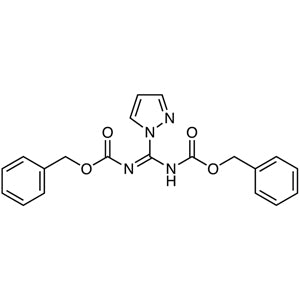
- TCI B3605 152120-55-3 N,N'-Bis(carbobenzoxy)-1H-pyrazole-1-carboxamidine
- TCI C2709 152120-62-2 N-(Carbobenzoxy)-1H-pyrazole-1-carboxamidine
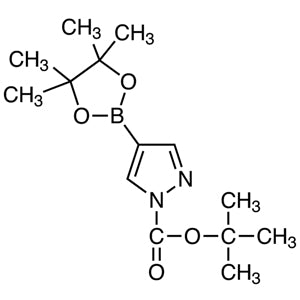
- TCI B5203 552846-17-0 1-(tert-Butoxycarbonyl)-4-(4,4,5,5-tetramethyl-1,3,2-dioxaborolan-2-yl)pyrazole
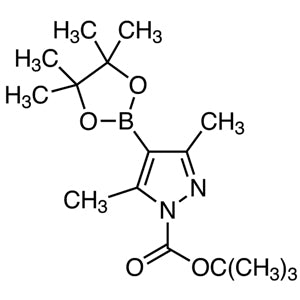
- TCI B6026 1073354-70-7 1-(tert-Butoxycarbonyl)-3,5-dimethyl-4-(4,4,5,5-tetramethyl-1,3,2-dioxaborolan-2-yl)pyrazole
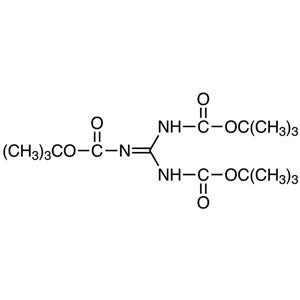
- TCI T2964 216584-22-4 1,2,3-Tris(tert-butoxycarbonyl)guanidine
- Organic synthesis of bioactive compounds due to its ability to participate in carbon-carbon bond formation reactions.
- Development of pharmaceuticals as a key reagent in the synthesis of complex drug molecules.
- Research in medicinal chemistry for the creation of compounds with targeted biological activities.
- Industrial chemical production where precise and controlled chemical reactions are required.
- Academic teaching and research in chemistry laboratories for demonstrating synthetic methodologies.
| Brand | TCI |
|---|---|
| CAS number | 152120-61-1 |
| Molecular formula | — |
| Purity | — |
| Category | Chemistry > Synthetic Reagents > C-X(Non-Halogen) Bond Formation [Synthetic Reagents] |
| Pack sizes | Available in various quantities as per supplier specifications |
| Physical form | Solid |
| Storage | Store in a cool, dry place away from light and moisture |
This compound should be stored in a cool, dry environment, away from direct light and moisture to maintain its chemical stability. It is recommended to use airtight containers made of glass or high-density polyethylene to prevent contamination and degradation. Due to its reactivity, it should be handled with care, using appropriate personal protective equipment such as gloves and safety goggles. In laboratory settings, it is important to ensure good ventilation and to avoid exposure to incompatible substances. Proper storage and handling practices help preserve the compound's integrity and ensure safe usage in chemical synthesis processes.
—
Produk Terkait
-
N,N'-Bis(tert-butoxycarbonyl)-1H-pyrazole-1-carboxamidine TCI B3619
Regular price From Rp 1.458.450,00Regular priceRp 1.035.300,00Sale price From Rp 1.458.450,00 -
N,N'-Bis(carbobenzoxy)-1H-pyrazole-1-carboxamidine TCI B3605
Regular price From Rp 1.246.350,00Regular priceRp 887.250,00Sale price From Rp 1.246.350,00 -
N-(Carbobenzoxy)-1H-pyrazole-1-carboxamidine TCI C2709
Regular price From Rp 875.700,00Regular priceRp 627.900,00Sale price From Rp 875.700,00 -
1-(tert-Butoxycarbonyl)-4-(4,4,5,5-tetramethyl-1,3,2-dioxaborolan-2-yl)pyrazole TCI B5203
Regular price From Rp 1.326.150,00Regular priceRp 942.900,00Sale price From Rp 1.326.150,00 -
1-(tert-Butoxycarbonyl)-3,5-dimethyl-4-(4,4,5,5-tetramethyl-1,3,2-dioxaborolan-2-yl)pyrazole TCI B6026
Regular price From Rp 1.272.600,00Regular priceRp 905.100,00Sale price From Rp 1.272.600,00 -
1,2,3-Tris(tert-butoxycarbonyl)guanidine TCI T2964
Regular price From Rp 1.590.750,00Regular priceRp 1.127.700,00Sale price From Rp 1.590.750,00 -
1,3-Bis(tert-butoxycarbonyl)-2-(trifluoromethanesulfonyl)guanidine TCI B3625
Regular price From Rp 4.345.950,00Regular priceRp 3.054.450,00Sale price From Rp 4.345.950,00 -
N,N'-Dicyclohexyl-4-morpholinecarboxamidine TCI D3792
Regular price From Rp 875.700,00Regular priceRp 627.900,00Sale price From Rp 875.700,00