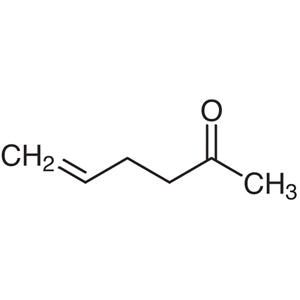
TCI H0125 5-Hexen-2-one is a bifunctional organic compound featuring a ketone group at the second position and a terminal double bond at the end of a six-carbon chain. The presence of two distinct functional groups within a single, relatively small molecule makes it a highly useful building block in organic synthesis, particularly for constructing ring systems. In the laboratory, this compound is frequently employed as a precursor for cyclization reactions, as a substrate in radical reaction studies, and as a starting material for the preparation of more complex carbocyclic and heterocyclic compounds.
The principal advantage of 5-Hexen-2-one lies in the spacing between its two functional groups. A ketone and an alkene separated by three carbon atoms represent an ideal arrangement for forming five- and six-membered rings through radical cyclization, metal-catalyzed cyclization, and carbonyl ene reactions. The ketone group simultaneously provides an enolizable alpha site, while the terminal alkene is ready to undergo hydroboration, epoxidation, metathesis, or other addition reactions selectively. This orthogonal character allows researchers to modify one group without disturbing the other when reaction conditions are chosen carefully.
Research laboratories in Indonesia typically use this type of building block in organic synthesis and methodology development work at universities and research institutes. It supports the preparation of ring-containing target molecules, study of reaction mechanisms, and training in multi-step synthetic techniques. Supplied by TCI, the material fits routine bench-scale synthetic work where a reliable, well-characterized bifunctional intermediate is required for the construction of carbocyclic and heterocyclic frameworks.
Related TCI products
- TCI B1039 25152-85-6 cis-3-Hexen-1-yl Benzoate
- TCI T0934 67883-79-8 cis-3-Hexen-1-yl Tiglate
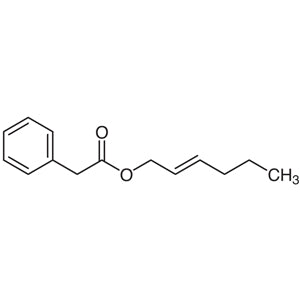
- TCI P1045 68133-78-8 trans-2-Hexen-1-yl Phenylacetate
- TCI M2366 5166-53-0 5-Methyl-3-hexen-2-one (contains 5-Methyl-4-hexen-2-one)
- TCI M0734 53398-85-9 cis-3-Hexen-1-yl 2-Methylbutyrate
- TCI H1735 50396-87-7 (E)-4-Hexen-3-one
- Radical cyclization studies: the three-carbon spacing between the ketone and terminal alkene makes this an ideal substrate for forming five- and six-membered rings under radical conditions.
- Metal-catalyzed cyclization: the alkene and carbonyl pair allows transition-metal catalysts to mediate ring closure, supporting methodology development on carbocyclic ring-forming reactions.
- Carbonyl ene reactions: the intramolecular arrangement of the enophile and the carbonyl group makes this compound a standard test substrate for ene-type cyclization studies.
- Synthesis of heterocyclic compounds: the ketone provides an electrophilic site for condensation with nitrogen or oxygen nucleophiles, enabling construction of more elaborate heterocyclic frameworks.
- Selective alkene functionalization: the terminal double bond undergoes hydroboration, epoxidation, or metathesis selectively, letting researchers elaborate one end while preserving the ketone functionality.
| Brand | TCI |
|---|---|
| CAS number | 109-49-9 |
| Molecular formula | — |
| Purity | — |
| Category | Chemistry > Building Blocks > Non-Heterocyclic Building Blocks |
| Pack sizes | available in standard laboratory pack sizes; please confirm current packaging options when ordering. |
| Physical form | — |
| Storage | store in a cool, dry, well-ventilated area away from heat and ignition sources. |
- Chemical name: 5-Hexen-2-one
Store 5-Hexen-2-one in a cool, dry, and well-ventilated area, away from heat sources, open flames, and direct sunlight. Keep the container tightly closed in its original packaging to limit exposure to air and moisture, and store it separately from strong oxidizing agents. Handle the material inside a fume hood, and wear appropriate personal protective equipment including safety goggles, chemical-resistant gloves, and a laboratory coat. Use only clean, dry glassware or compatible chemical-resistant containers when transferring the material. Avoid inhalation of vapors and prolonged skin contact. Always consult the manufacturer's safety data sheet before use, and dispose of residues and contaminated materials in accordance with applicable laboratory waste procedures.
—
Produk Terkait
-
cis-3-Hexen-1-ylBenzoate TCI B1039
Regular price Rp 2.174.550,00Regular price -
cis-3-Hexen-1-ylTiglate TCI T0934
Regular price Rp 1.988.700,00Regular price -
trans-2-Hexen-1-ylPhenylacetate TCI P1045
Regular price Rp 1.298.850,00Regular price -
5-Methyl-3-hexen-2-one(contains5-Methyl-4-hexen-2-one) TCI M2366
Regular price From Rp 1.670.550,00Regular price -
cis-3-Hexen-1-yl2-Methylbutyrate TCI M0734
Regular price Rp 1.618.050,00Regular price -
(E)-4-Hexen-3-one TCI H1735
Regular price From Rp 875.700,00Regular price -
2-Hexen-1-ylsuccinicAnhydride(cis-andtrans-mixture) TCI H0616
Regular price Rp 4.213.650,00Regular price -
cis-3-Hexen-1-ylHexanoate TCI C0917
Regular price Rp 1.298.850,00Regular price