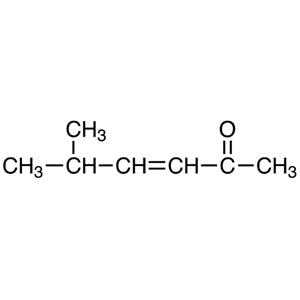
5-Methyl-3-hexen-2-one is an organic compound widely used as a building block in the synthesis of complex chemical structures. This versatile reagent plays a crucial role in laboratory settings, where it is employed in reactions involving the formation of double bonds and substitution processes. Its ability to participate in a variety of chemical transformations makes it an essential tool for chemists working on both synthetic and analytical projects. As a key component in the development of new compounds, it supports the advancement of research in multiple scientific disciplines.
The compound is known for its stable molecular structure and high reactivity, which enable it to engage in a wide range of chemical reactions. These properties make it a preferred choice for researchers looking to create derivatives with specific functional groups or to modify existing molecules. Its chemical versatility allows it to be used in the synthesis of both aromatic and aliphatic compounds, making it a valuable asset in organic chemistry laboratories. The liquid form of the compound also facilitates ease of handling and storage, contributing to its practicality in daily lab operations.
In Indonesian laboratories, 5-Methyl-3-hexen-2-one is extensively used in organic chemistry research, particularly in pharmaceutical, material science, and analytical chemistry fields. Its application spans from the development of new drug compounds to the creation of advanced materials. Due to its broad utility and reliability, it remains a fundamental reagent in academic and research institutions across Indonesia, supporting a wide array of scientific investigations.
Related TCI products
- TCI B1039 25152-85-6 cis-3-Hexen-1-yl Benzoate
- TCI T0934 67883-79-8 cis-3-Hexen-1-yl Tiglate
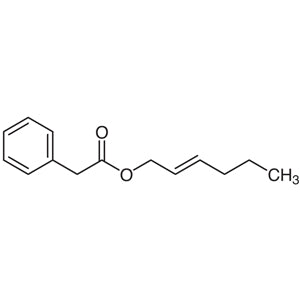
- TCI P1045 68133-78-8 trans-2-Hexen-1-yl Phenylacetate
- TCI M0734 53398-85-9 cis-3-Hexen-1-yl 2-Methylbutyrate
- TCI H1735 50396-87-7 (E)-4-Hexen-3-one
- TCI H0616 10500-34-2 2-Hexen-1-ylsuccinic Anhydride (cis- and trans- mixture)
- Synthesis of aromatic and aliphatic compounds due to its reactivity and ability to form various chemical bonds.
- Development of pharmaceutical products as a key intermediate in the creation of complex drug molecules.
- Research in material science for the production of polymers and other functional materials.
- Analytical chemistry applications where it serves as a standard for chromatographic and spectroscopic analysis.
- Organic synthesis projects requiring flexible building blocks for structural modification and functional group introduction.
| Brand | TCI |
|---|---|
| CAS number | 5166-53-0 |
| Molecular formula | — |
| Purity | — |
| Category | Chemistry > Building Blocks > Non-Heterocyclic Building Blocks |
| Pack sizes | Available in various quantities as per standard laboratory supply options |
| Physical form | Liquid |
| Storage | Store in a cool, dark place away from heat and direct sunlight |
This compound should be stored in a cool, dark environment to maintain its stability and prevent degradation. It is recommended to use airtight containers made of glass or high-density polyethylene to minimize exposure to air and moisture. Due to its reactivity, it should be handled in a well-ventilated area, preferably under a fume hood, to ensure safety. Avoid contact with incompatible substances such as strong oxidizing agents. Proper labeling and storage conditions are essential to maintain the integrity of the compound and ensure safe laboratory practices. Always follow standard chemical safety protocols when working with this material.
—
Produk Terkait
-
cis-3-Hexen-1-ylBenzoate TCI B1039
Regular price Rp 2.174.550,00Regular price -
cis-3-Hexen-1-ylTiglate TCI T0934
Regular price Rp 1.988.700,00Regular price -
trans-2-Hexen-1-ylPhenylacetate TCI P1045
Regular price Rp 1.298.850,00Regular price -
cis-3-Hexen-1-yl2-Methylbutyrate TCI M0734
Regular price Rp 1.618.050,00Regular price -
(E)-4-Hexen-3-one TCI H1735
Regular price From Rp 875.700,00Regular price -
2-Hexen-1-ylsuccinicAnhydride(cis-andtrans-mixture) TCI H0616
Regular price Rp 4.213.650,00Regular price -
5-Hexen-2-one TCI H0125
Regular price From Rp 875.700,00Regular price -
cis-3-Hexen-1-ylHexanoate TCI C0917
Regular price Rp 1.298.850,00Regular price