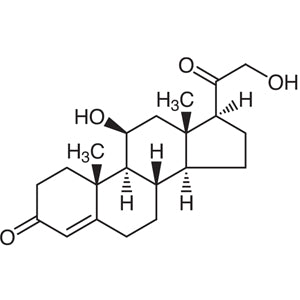
TCI H0184 Hydrocortisone Acetate is the acetate ester of hydrocortisone, a glucocorticoid belonging to the steroid class and widely used as a research material in life science laboratories. The compound serves as an important reference in studies of corticosteroid hormone mechanisms of action, the regulation of inflammation, and cellular responses to glucocorticoid signalling. Because its behaviour in biological systems has been examined extensively, it provides researchers with a well-characterised starting point for experimental work involving steroid hormone pathways, receptor-mediated processes, and the downstream effects that follow glucocorticoid exposure in cultured systems and analytical studies alike.
Several properties make this material a preferred choice. In pharmaceutical laboratories, hydrocortisone acetate is used as a comparison substance in the development and validation of analytical methods for topical preparations and other dosage forms containing corticosteroids. Its role is not limited to analysis, since the compound is also frequently used as a supplement in the formulation of certain cell culture media that require steroid hormone support. The ester form is generally more stable and less water-soluble than free hydrocortisone, which makes it easier to handle and weigh as a white crystalline solid, giving analysts practical consistency during sample preparation.
In Indonesian laboratories, the solubility profile described above shapes everyday handling. The material is normally dissolved first in an organic solvent such as ethanol or dimethyl sulfoxide before being diluted into aqueous media, a procedure already familiar to anyone working in cell culture. This approach is routine in university research laboratories, pharmaceutical quality control units, and biomedical research facilities where corticosteroid-containing preparations are analysed or where cell culture work requires steroid hormone supplementation.
- Corticosteroid mechanism studies: the compound acts as a reference glucocorticoid for investigating hormone action, allowing researchers to examine receptor-mediated signalling under well-defined and reproducible experimental conditions.
- Inflammation regulation research: as a recognised glucocorticoid, it supports laboratory work on the regulation of inflammatory processes and on how cells respond to steroid hormone signals over time.
- Analytical method development: pharmaceutical laboratories use it as a comparison substance when developing analytical procedures for topical preparations and other dosage forms containing corticosteroids in routine work.
- Method validation for corticosteroid preparations: the material supports validation exercises where a consistent, well-characterised steroid is required to demonstrate that an analytical method performs reliably.
- Cell culture medium supplementation: it is added to certain culture media formulations that require steroid hormone support, with dissolution in ethanol or dimethyl sulfoxide before dilution into aqueous medium.
| Brand | TCI |
|---|---|
| CAS number | 50-03-3 |
| Molecular formula | — |
| Purity | — |
| Category | Life Science > Biochemicals and Reagents > Steroids |
| Pack sizes | available in the standard laboratory pack sizes offered by TCI for this catalogue item |
| Physical form | white crystalline solid |
| Storage | store according to the conditions stated on the manufacturer's label and product documentation |
Store the material in its original tightly closed container, kept in a cool, dry place away from direct sunlight, moisture, and incompatible substances, and follow the storage conditions stated on the manufacturer's label. Keep the solid dry, as its crystalline form is what makes accurate weighing straightforward. Prepare stock solutions in ethanol or dimethyl sulfoxide in clean, chemically resistant glass or suitable plastic containers, label them clearly, and close them securely after use. Handle the powder in a fume hood or an area with adequate ventilation to avoid raising dust, and wear a laboratory coat, gloves, and safety glasses. As with any steroid compound, avoid direct contact with skin and eyes and avoid inhalation, wash hands thoroughly after handling, and dispose of residues and contaminated materials in accordance with applicable laboratory waste procedures.
—
Produk Terkait
-
Corticosterone TCI C0388
Regular price From Rp 769.650,00Regular price -
CholesterylChloride TCI C0610
Regular price Rp 2.625.000,00Regular price -
CholesterylBromide TCI C0695
Regular price Rp 4.559.100,00Regular price -
CyproteroneAcetate TCI C2942
Regular price From Rp 2.518.950,00Regular price -
ClostebolAcetate TCI C3497
Regular price From Rp 2.016.000,00Regular price -
ClobetasoneButyrate TCI C3510
Regular price From Rp 1.618.050,00Regular price -
Ciclesonide TCI C3701
Regular price From Rp 1.326.150,00Regular price -
DehydrocholicAcid TCI D0042
Regular price From Rp 1.590.750,00Regular price