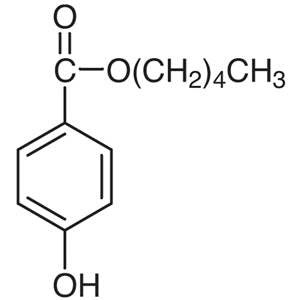
Amyl 4-Hydroxybenzoate (CAS No. 6521-29-5) is a chemical compound widely used as a building block in laboratory reactions. It serves as an essential component for the synthesis of more complex organic compounds. This compound is commonly employed in organic chemistry laboratories for its versatility and stability. Its role as an ester of 4-hydroxybenzoic acid makes it a valuable reagent in various chemical processes. Due to its chemical properties, it is frequently used in both academic and industrial research settings.
One of the key attributes that make Amyl 4-Hydroxybenzoate a preferred choice is its solubility in organic solvents such as ethyl acetate and ethanol. This solubility facilitates easy mixing and reaction processes in the laboratory. Additionally, its antimicrobial properties contribute to its utility in preserving chemical solutions. The compound’s stability and resistance to degradation further enhance its reliability in long-term storage and repeated use. These characteristics make it an ideal candidate for a wide range of chemical applications.
In Indonesian laboratories, Amyl 4-Hydroxybenzoate is commonly used in organic synthesis and pharmaceutical research. Its availability and consistent quality make it a popular choice among researchers and educators. The compound is particularly useful in the development of new chemical compounds and the testing of various reaction mechanisms. Its role in supporting both basic and applied research is significant in advancing scientific knowledge in the region.
Related TCI products
- TCI A3639 63435-16-5 Methyl 4-Amino-3-hydroxybenzoate
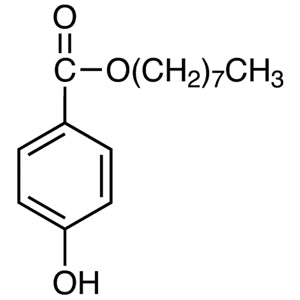
- TCI O0443 1219-38-1 n-Octyl 4-Hydroxybenzoate
- TCI M3513 3964-57-6 Methyl 3-Chloro-4-hydroxybenzoate
- TCI M3498 536-25-4 Methyl 3-Amino-4-hydroxybenzoate
- TCI M2796 1882-72-0 Methyl 2-Amino-5-hydroxybenzoate
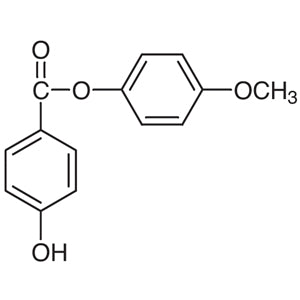
- TCI H0825 50687-62-2 4-Methoxyphenyl 4-Hydroxybenzoate
- Organic synthesis is a key application where Amyl 4-Hydroxybenzoate is used to create complex organic molecules through esterification and other reaction pathways.
- Pharmaceutical research benefits from this compound as it is used in the development of antimicrobial agents and preservatives for drug formulations.
- Chemical preservation applications rely on its antimicrobial properties to extend the shelf life of sensitive chemical compounds.
- Educational institutions use it in teaching laboratories to demonstrate ester reactions and basic organic chemistry principles.
- Industrial research utilizes it for the synthesis of specialty chemicals and intermediates in manufacturing processes.
| Brand | TCI |
|---|---|
| CAS number | 6521-29-5 |
| Molecular formula | — |
| Purity | — |
| Category | Chemistry > Building Blocks > Non-Heterocyclic Building Blocks |
| Pack sizes | Available in various quantities as per supplier specifications |
| Physical form | Solid, white to off-white powder |
| Storage | Store in a cool, dry place away from direct sunlight and moisture |
Amyl 4-Hydroxybenzoate should be stored in a cool, dry environment to maintain its chemical integrity. It is recommended to keep the compound in a sealed container to prevent exposure to moisture and air. Suitable storage containers include glass or plastic vessels with tight-fitting lids. Since it is a solid, it does not require refrigeration but should be protected from extreme temperatures. In laboratory settings, it is important to handle the compound with care, using appropriate personal protective equipment when necessary. Regular inspection of storage conditions ensures the compound remains stable and usable for extended periods.
—
Produk Terkait
-
Methyl4-Amino-3-hydroxybenzoate TCI A3639
Regular price From Rp 2.041.200,00Regular price -
n-Octyl4-Hydroxybenzoate TCI O0443
Regular price Rp 1.724.100,00Regular price -
Methyl3-Chloro-4-hydroxybenzoate TCI M3513
Regular price From Rp 1.458.450,00Regular price -
Methyl3-Amino-4-hydroxybenzoate TCI M3498
Regular price From Rp 1.378.650,00Regular price -
Methyl2-Amino-5-hydroxybenzoate TCI M2796
Regular price From Rp 717.150,00Regular price -
4-Methoxyphenyl4-Hydroxybenzoate TCI H0825
Regular price From Rp 4.531.800,00Regular price -
2-Hydroxyethyl4-Hydroxybenzoate TCI H0698
Regular price Rp 1.829.100,00Regular price -
2-Ethylhexyl4-Hydroxybenzoate TCI H0506
Regular price From Rp 823.200,00Regular price