

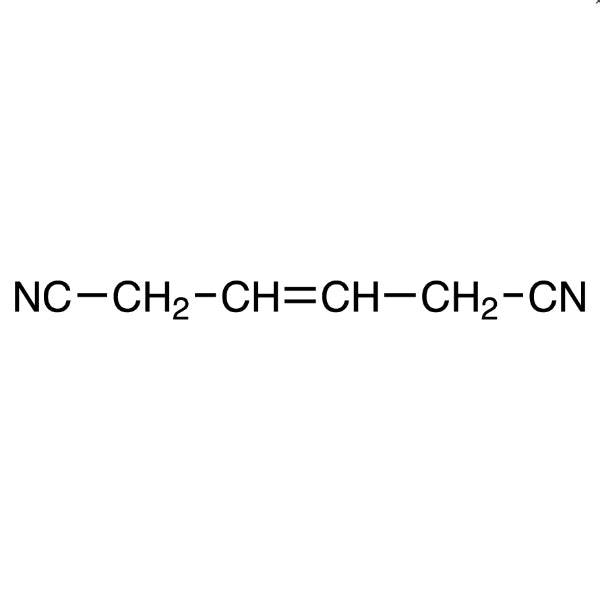
3-Hexenedinitrile is a chemical compound widely used in laboratory settings for the synthesis of complex organic molecules. As a building block in chemical reactions, it serves as a foundational material for creating various functional groups and molecular structures. This compound is particularly valuable in organic chemistry due to its versatility and reactivity, making it a key player in both academic and industrial research. Its ability to participate in substitution and addition reactions allows chemists to design and develop new compounds with specific properties.
The compound's molecular structure is stable, yet it exhibits sufficient reactivity to engage in multiple chemical transformations. This combination of stability and reactivity makes it a preferred choice for chemists working on advanced synthetic routes. Its chemical properties enable it to be used in a range of applications, including pharmaceutical research and material science. The compound’s reactivity also means it requires careful handling to prevent unintended side reactions or safety hazards.
In Indonesian laboratories, 3-Hexenedinitrile is commonly used in organic chemistry research, especially in pharmaceutical and materials science fields. It is frequently found in research labs focused on the synthesis of new compounds, contributing to the development of innovative chemical solutions. Its role in the creation of nitrogen-containing complex structures makes it an essential tool for researchers aiming to expand the boundaries of chemical knowledge in Indonesia.
- Complex nitrogen compound synthesis: 3-Hexenedinitrile is ideal for creating nitrogen-containing molecules due to its reactivity and ability to form stable intermediates.
- Organic synthesis in pharmaceutical research: This compound is used in the development of new drug molecules, providing a versatile platform for functional group modification.
- Material science applications: Its chemical properties make it suitable for the synthesis of advanced materials with specific structural and functional characteristics.
- Research in chemical intermediates: It serves as a key building block for the production of various chemical intermediates used in industrial and academic settings.
- Custom compound development: Its adaptability in different reaction conditions allows researchers to tailor its use for the synthesis of unique chemical compounds.
| Brand | TCI |
|---|---|
| CAS number | 1119-85-3 |
| Molecular formula | — |
| Purity | — |
| Category | Chemistry > Building Blocks > Non-Heterocyclic Building Blocks |
| Pack sizes | Available in various quantities as per standard laboratory supply |
| Physical form | Liquid |
| Storage | Store in a cool, dry place away from direct sunlight and incompatible materials |
3-Hexenedinitrile should be stored in a cool, dry environment, away from direct sunlight and sources of heat. It is recommended to use sealed containers made of materials compatible with its chemical properties, such as glass or high-density polyethylene. Due to its reactivity, it should be handled with care, using appropriate personal protective equipment such as gloves and goggles. It is important to ensure proper ventilation in the laboratory to minimize exposure. Avoid contact with incompatible substances like strong bases or reducing agents. Always follow standard laboratory safety protocols when working with this compound to prevent any potential hazards.
—
Produk Terkait
-
2,3-Bis(4-bromophenyl)-2-butenedinitrile TCI B3437
Regular price From Rp 2.041.200,00Regular price -
Undecanedinitrile TCI U0059
Regular price From Rp 1.908.900,00Regular price

