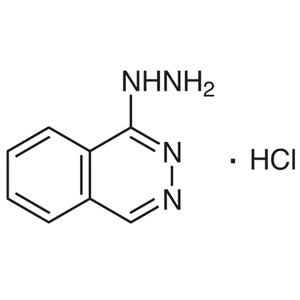
1-Hydrazinophthalazine Hydrochloride is a chemical compound widely used in scientific experiments, particularly in the fields of pharmacology and biochemistry. This reagent plays a crucial role in laboratory settings by serving as a key component in the synthesis of complex molecules. Its versatility makes it an essential tool for researchers aiming to develop new pharmaceutical compounds. In experimental processes, it is often employed to facilitate chemical reactions and improve the efficiency of analytical procedures. Due to its stability under controlled conditions, it is a reliable choice for various biochemical applications.
The compound is valued for its reactivity and specificity, which make it ideal for high-precision experiments. Its ability to interact with a wide range of organic compounds enhances its utility in both qualitative and quantitative analyses. The complex molecular structure allows for diverse chemical interactions, making it suitable for a variety of research purposes. Additionally, its availability in multiple packaging formats ensures convenience for laboratory use, supporting both small-scale and large-volume experiments.
In Indonesian laboratories, 1-Hydrazinophthalazine Hydrochloride is commonly used in pharmacological and biochemical research. It supports the development of new drugs and the study of biological processes. Researchers in Indonesia rely on this compound for its reliability and effectiveness in experimental settings. Its presence in local research institutions underscores its importance in advancing scientific knowledge and innovation in the region.
TCI brochures (PDF)
- Epigenetics Research Reagents 2024-11-22 · p. 1
- Pharmaceutical Ingredients for Research and Experimental Use 2026-03-09 · p. 21
- Reagents for Biological Research 2025-03-11 · p. 62
- Pharmaceutical Research Reagents: This compound is ideal for drug development due to its reactivity and ability to participate in complex chemical reactions.
- Biochemical Analysis: It is used in qualitative and quantitative analysis to detect and measure specific compounds in biological samples.
- Organic Synthesis: Its ability to interact with various organic molecules makes it a valuable reagent in the synthesis of complex pharmaceutical compounds.
- Pharmacological Studies: It supports research into drug mechanisms and biological activity, aiding in the discovery of new therapeutic agents.
- Laboratory Protocols: Its stability and availability make it a preferred choice for standard laboratory procedures requiring consistent results.
| Brand | TCI |
|---|---|
| CAS number | 304-20-1 |
| Molecular formula | — |
| Purity | — |
| Category | Life Science > Biochemicals and Reagents > Pharmaceutical Research Reagents |
| Pack sizes | Available in multiple packaging formats for different experimental needs |
| Physical form | Solid (as per standard chemical reagent form) |
| Storage | Store in a cool, dry place away from light and moisture |
This compound should be stored in a cool, dry environment, away from direct light and moisture to maintain its stability and effectiveness. It is recommended to use airtight containers to prevent exposure to air and humidity, which could affect its chemical integrity. In laboratory settings, it should be handled with appropriate personal protective equipment, such as gloves and safety goggles, to ensure safety during use. Proper labeling of storage containers is essential to avoid confusion and ensure safe handling. Due to its reactivity, it should be stored separately from incompatible substances to prevent unwanted chemical interactions. Regular inspection of storage conditions is advised to maintain the quality and usability of the compound in research applications.
—
Product Categories
- Biochemicals and ReagentsPharmaceutical Research Reagents (for Experimental Use)Antihypertensive Ingredients (for Research and Experimental Use)
- Biochemicals and Reagents
- Molecular BiologyEpigeneticsBioactive Small Molecules for Epigenetic Research
- Pharmaceutical Development and Drug Discovery ResearchPharmaceutical Research Reagents (for Experimental Use)Antihypertensive Ingredients (for Research and Experimental Use)
Produk Terkait
-
Irbesartan TCI I0859
Regular price From Rp 955.500,00Regular price -
VerapamilHydrochloride TCI V0118
Regular price From Rp 1.565.550,00Regular price -
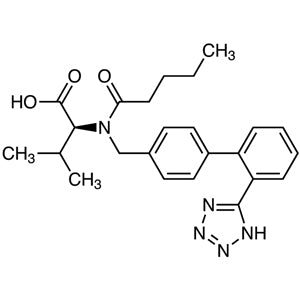
Valsartan TCI V0112
Regular price From Rp 1.035.300,00Regular price -
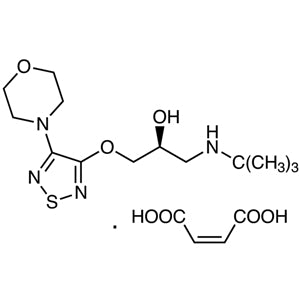
TimololMaleate TCI T2905
Regular price Rp 3.525.900,00Regular price -
Telmisartan TCI T2861
Regular price From Rp 1.961.400,00Regular price -
BetaxololHydrochloride TCI B4474
Regular price From Rp 3.312.750,00Regular price -
BenazeprilHydrochloride TCI B3611
Regular price Rp 2.439.150,00Regular price -
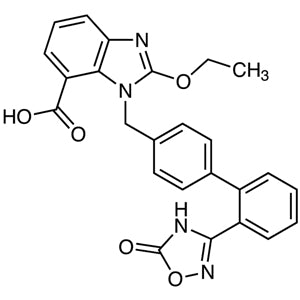
Azilsartan TCI A2601
Regular price From Rp 2.332.050,00Regular price