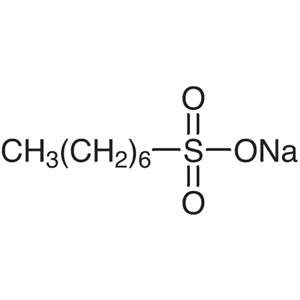
Sodium 1-Heptanesulfonate is a chemical compound widely used in laboratory settings as a building block for various chemical reactions and organic synthesis processes. It is a key reagent in the development of complex organic molecules due to its functional sulfonate group, which can participate in multiple reaction types. This compound is particularly valuable in synthetic chemistry for its ability to undergo substitution reactions, esterification, and other transformations, making it a versatile tool for chemists. Its chemical structure, consisting of a sulfonate group attached to a heptane chain, provides the necessary reactivity and stability required for a wide range of applications.
The compound's chemical properties make it a preferred choice for laboratory use. It exhibits good solubility in organic solvents such as ethyl acetate and ethanol, which facilitates its use in solution-based reactions. Its stability under various reaction conditions ensures consistent results, while its reactivity allows it to interact with a variety of functional groups, including alcohols, acids, and bases. These characteristics make Sodium 1-Heptanesulfonate a reliable and effective reagent for both academic and industrial research.
In Indonesian laboratories, Sodium 1-Heptanesulfonate is commonly used in organic chemistry and pharmaceutical research. It plays a crucial role in the synthesis of new compounds and the development of drug molecules. Its availability and performance make it an essential component in many research projects, especially those focused on creating complex chemical structures with high reactivity.
Related TCI products
- TCI O0548 22767-50-6 Sodium 1-Heptanesulfonate [for Biochemical Research]
- TCI I0345 22767-50-6 Sodium 1-Heptanesulfonate [Reagent for Ion-Pair Chromatography]
- TCI B0866 2386-60-9 1-Butanesulfonyl Chloride
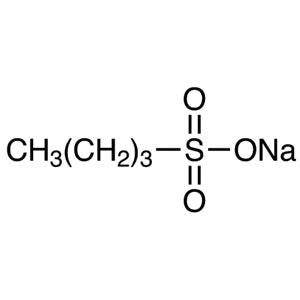
- TCI B0379 2386-54-1 Sodium 1-Butanesulfonate
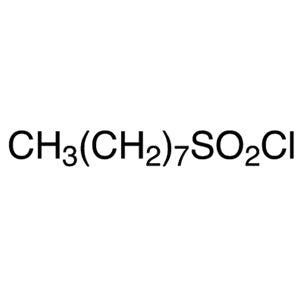
- TCI O0150 7795-95-1 1-Octanesulfonyl Chloride
- TCI O0123 5324-84-5 Sodium 1-Octanesulfonate
- Organic synthesis where sulfonate groups are needed for functionalization and modification of organic molecules.
- Esterification reactions due to its ability to act as an acylating agent in the formation of ester compounds.
- Substitution reactions in which the sulfonate group can replace other functional groups in target molecules.
- Pharmaceutical research for the development of new drug compounds requiring sulfonate functionalities.
- Intermediate applications in the synthesis of complex organic compounds used in industrial and academic settings.
| Brand | TCI |
|---|---|
| CAS number | 22767-50-6 |
| Molecular formula | — |
| Purity | — |
| Category | Chemistry > Building Blocks > Non-Heterocyclic Building Blocks |
| Pack sizes | 50g, 250g, 1kg |
| Physical form | White crystalline solid |
| Storage | Store in a cool, dry place away from moisture and direct sunlight |
Sodium 1-Heptanesulfonate should be stored in a cool, dry place, away from moisture and direct sunlight to maintain its chemical integrity. It is recommended to use airtight containers made of glass or high-density polyethylene to prevent contamination and degradation. Due to its reactivity, it should be handled with care, using appropriate personal protective equipment such as gloves and safety goggles. Avoid exposure to strong acids or bases to prevent unwanted chemical reactions. In laboratory settings, it is important to ensure proper ventilation when working with this compound to minimize inhalation risks. Always follow standard safety protocols to ensure safe handling and storage practices.
—
Produk Terkait
-
Sodium1-Heptanesulfonate[forBiochemicalResearch] TCI O0548
Regular price From Rp 664.650,00Regular price -
Sodium1-Heptanesulfonate[ReagentforIon-PairChromatography] TCI I0345
Regular price From Rp 743.400,00Regular price -
1-ButanesulfonylChloride TCI B0866
Regular price From Rp 2.016.000,00Regular price -
Sodium1-Butanesulfonate TCI B0379
Regular price From Rp 1.749.300,00Regular price -
1-OctanesulfonylChloride TCI O0150
Regular price From Rp 1.829.100,00Regular price -
Sodium1-Octanesulfonate TCI O0123
Regular price From Rp 1.776.600,00Regular price -
Sodium1-Pentanesulfonate TCI P0343
Regular price From Rp 1.724.100,00Regular price
![22767-50-6 Sodium 1-Heptanesulfonate [for Biochemical Research] - AMI Scientific](http://amiscientific.com/cdn/shop/files/TCI2510O0548.jpg?v=1768362288&width=533)
![22767-50-6 Sodium 1-Heptanesulfonate [Reagent for Ion-Pair Chromatography] - AMI Scientific](http://amiscientific.com/cdn/shop/files/TCI2510I0345.jpg?v=1768360932&width=533)