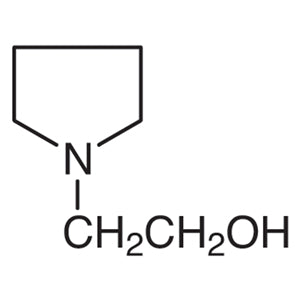
1-(2-Hydroxyethyl)pyrrolidine is a versatile chemical compound widely used in laboratory settings for the synthesis of heterocyclic compounds. As a key building block in organic chemistry, it plays a crucial role in the development of complex molecular structures. This compound is commonly employed in research to create derivatives that are essential in pharmaceutical, agrochemical, and industrial applications. Its unique molecular structure, featuring both a hydroxyl group and a pyrrolidine ring, makes it a valuable reagent for various synthetic pathways.
The compound's polar nature and solubility in organic solvents such as ethyl acetate and acetone make it highly compatible with a range of chemical reactions. These properties allow it to be easily integrated into reaction systems that require solvent compatibility. Additionally, its stable molecular structure ensures that it remains effective under a variety of reaction conditions, making it a reliable choice for synthetic chemists. Its chemical stability and reactivity also contribute to its widespread use in both academic and industrial research environments.
In Indonesian laboratories, 1-(2-Hydroxyethyl)pyrrolidine is frequently utilized in applied chemistry research, particularly in pharmaceutical and organic chemistry fields. Research institutions and universities across Indonesia rely on this compound for the development of new compounds with potential medical or industrial applications. Its availability and reliability make it an essential component in the chemical supply chain supporting scientific innovation in the region.
Related TCI products
- TCI H1850 18190-44-8 1-(2-Hydroxyethyl)pyrrolidine-2,5-dione
- TCI T4405 1239488-58-4 Tetrahydrofuran-2-yl Pyrrolidine-1-carbodithioate
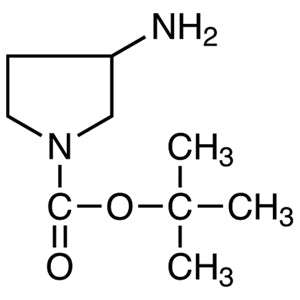
- TCI B3890 186550-13-0 3-Amino-1-(tert-butoxycarbonyl)pyrrolidine
- TCI B1560 115445-21-1 1-Benzyl-3-(ethylamino)pyrrolidine
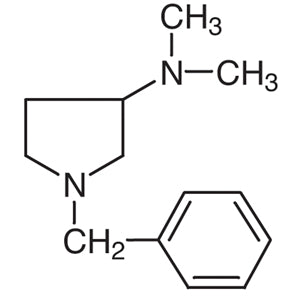
- TCI B1559 69478-77-9 1-Benzyl-3-(dimethylamino)pyrrolidine
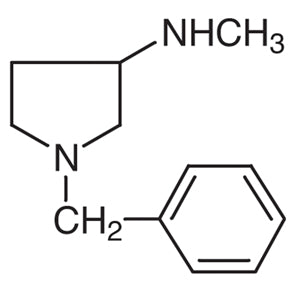
- TCI B1558 96568-35-3 1-Benzyl-3-(methylamino)pyrrolidine
- Pharmaceutical research utilizes this compound for the synthesis of drug molecules due to its ability to participate in nucleophilic and electrophilic reactions.
- Organic chemistry laboratories use it as a building block for creating complex heterocyclic structures essential in drug development and chemical synthesis.
- Agrochemical research benefits from its reactivity in the production of pesticides and herbicides, where heterocyclic compounds are commonly employed.
- Industrial chemical synthesis relies on its solubility in organic solvents, making it suitable for large-scale production processes.
- Academic research institutions use it to explore new chemical pathways and develop novel compounds with potential applications in medicine and materials science.
| Brand | TCI |
|---|---|
| CAS number | 2955-88-6 |
| Molecular formula | — |
| Purity | — |
| Category | Chemistry > Building Blocks > Heterocyclic Building Blocks |
| Pack sizes | Available in various quantities as per supplier specifications |
| Physical form | Liquid |
| Storage | Store in a cool, dry place away from direct sunlight |
This compound should be stored in a cool, dry environment, away from direct sunlight and sources of heat. It is recommended to keep it in a tightly sealed container to prevent evaporation and contamination. Due to its polar nature, it is advisable to use glass or plastic containers that are chemically inert to avoid any reaction with the container material. In laboratory settings, it should be handled with appropriate personal protective equipment, such as gloves and safety goggles, to ensure safety during use and storage. Proper ventilation should be maintained when working with this compound to minimize exposure to vapors. Regular monitoring of storage conditions is essential to maintain the compound's integrity and effectiveness.
—
Produk Terkait
-
1-(2-Hydroxyethyl)pyrrolidine-2,5-dione TCI H1850
Regular price From Rp 903.000,00Regular price -
Tetrahydrofuran-2-ylPyrrolidine-1-carbodithioate TCI T4405
Regular price From Rp 1.988.700,00Regular price -
3-Amino-1-(tert-butoxycarbonyl)pyrrolidine TCI B3890
Regular price From Rp 2.094.750,00Regular price -
1-Benzyl-3-(ethylamino)pyrrolidine TCI B1560
Regular price Rp 2.016.000,00Regular price -
1-Benzyl-3-(dimethylamino)pyrrolidine TCI B1559
Regular price Rp 1.776.600,00Regular price -
1-Benzyl-3-(methylamino)pyrrolidine TCI B1558
Regular price From Rp 1.590.750,00Regular price -
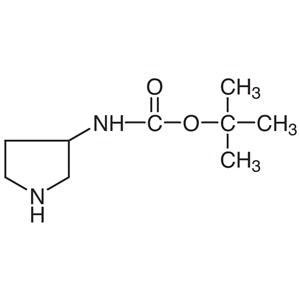
3-(tert-Butoxycarbonylamino)pyrrolidine TCI B1358
Regular price From Rp 1.696.800,00Regular price -
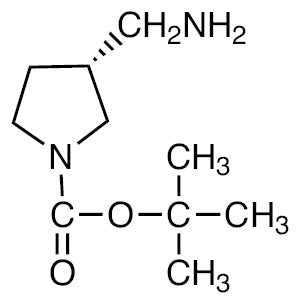
(R)-3-(Aminomethyl)-1-(tert-butoxycarbonyl)pyrrolidine TCI A3285
Regular price From Rp 2.227.050,00Regular price