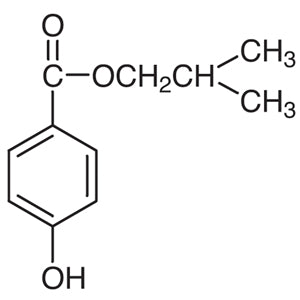
Isobutyl 4-Hydroxybenzoate is a chemical compound widely used in various laboratory applications, particularly in organic synthesis. As a derivative of 4-hydroxybenzoic acid, it functions as an antioxidant and oxidation inhibitor, making it essential for protecting compounds from oxidative degradation. Its role in the laboratory is crucial for maintaining the integrity of chemical reactions and ensuring the stability of synthesized materials. This compound is commonly used as a building block in the development of pharmaceuticals and other organic compounds that require protection against environmental factors.
The properties of Isobutyl 4-Hydroxybenzoate make it a preferred choice in laboratory settings. It exhibits a stable chemical structure and controlled reactivity, allowing it to be used in a wide range of chemical processes. Its non-volatile nature and resistance to degradation ensure that it remains effective over time, simplifying storage and handling. These characteristics contribute to its reliability in experimental procedures, making it a trusted material for researchers. Additionally, its consistent performance supports reproducibility in scientific experiments.
In Indonesian laboratories, Isobutyl 4-Hydroxybenzoate is commonly used in chemical, pharmaceutical, and food-related research. It is a staple in university laboratories, research institutions, and chemical manufacturing companies. Its availability in the local market ensures that it is accessible to scientists and researchers working on various projects. Its versatility and reliability make it a valuable resource for laboratory operations in Indonesia.
- Organic synthesis is a key application where Isobutyl 4-Hydroxybenzoate is used as a building block to protect compounds from oxidation during reaction processes.
- Pharmaceutical research benefits from this compound due to its antioxidant properties, which help in the development of stable drug formulations.
- Food industry applications include its use as a preservative in the formulation of food products to prevent spoilage and maintain quality.
- Analytical chemistry experiments often incorporate this compound to test the stability and reactivity of other substances under controlled conditions.
- Industrial chemical production relies on Isobutyl 4-Hydroxybenzoate for creating compounds with enhanced shelf life and resistance to environmental factors.
| Brand | TCI |
|---|---|
| CAS number | 4247-02-3 |
| Molecular formula | — |
| Purity | — |
| Category | Chemistry > Building Blocks > Non-Heterocyclic Building Blocks |
| Pack sizes | Available in various quantities as per standard laboratory requirements |
| Physical form | Solid, typically in crystalline or powder form |
| Storage | Store in a cool, dry place away from direct sunlight and moisture |
Isobutyl 4-Hydroxybenzoate should be stored in a cool, dry environment to maintain its chemical stability and prevent degradation. It is recommended to keep the compound in a sealed container to avoid exposure to moisture and air, which can affect its performance. Suitable containers include glass or high-density polyethylene (HDPE) bottles with tight-fitting lids. Laboratory personnel should handle the material with care, using appropriate personal protective equipment such as gloves and safety goggles. It is important to ensure that the compound is stored away from incompatible substances to prevent any potential chemical reactions. Proper storage conditions help preserve the compound’s effectiveness and ensure safe handling in laboratory settings.
—
Produk Terkait
-
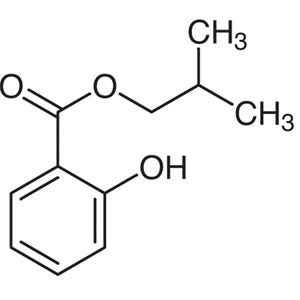
IsobutylSalicylate TCI S0013
Regular price From Rp 505.050,00Regular price -
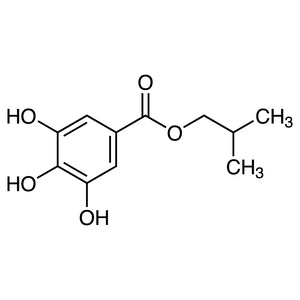
IsobutylGallate TCI G0205
Regular price Rp 1.538.250,00Regular price -
Methyl4-Amino-3-hydroxybenzoate TCI A3639
Regular price From Rp 2.041.200,00Regular price -
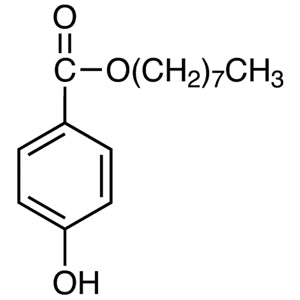
n-Octyl4-Hydroxybenzoate TCI O0443
Regular price Rp 1.724.100,00Regular price -
Methyl3-Chloro-4-hydroxybenzoate TCI M3513
Regular price From Rp 1.458.450,00Regular price -
Methyl3-Amino-4-hydroxybenzoate TCI M3498
Regular price From Rp 1.378.650,00Regular price -
Methyl2-Amino-5-hydroxybenzoate TCI M2796
Regular price From Rp 717.150,00Regular price -
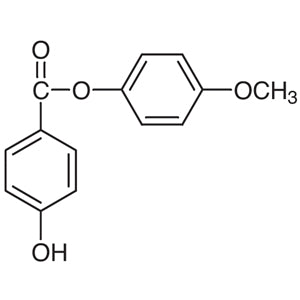
4-Methoxyphenyl4-Hydroxybenzoate TCI H0825
Regular price From Rp 4.531.800,00Regular price