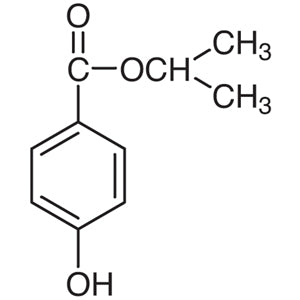
Isopropyl 4-Hydroxybenzoate is a chemical compound widely used as a building block in various laboratory reactions. It belongs to the category of non-heterocyclic building blocks and is commonly employed as a precursor in the synthesis of aromatic compounds. This compound plays a crucial role in the development of pharmaceuticals, cosmetics, and industrial chemicals due to its versatility and chemical stability. Its presence in laboratory settings enables researchers to conduct experiments with reliable and reproducible results.
The compound is valued for its chemical stability under normal conditions, which ensures minimal degradation during experimental processes. It exhibits good solubility in organic solvents, making it easy to mix and react in various chemical processes. These properties make it a preferred choice for chemists and researchers who require a reliable and safe material for their experiments. Additionally, its non-toxic nature and safe handling profile contribute to its widespread use in laboratory environments.
In Indonesian laboratories, Isopropyl 4-Hydroxybenzoate is extensively used in chemical research, particularly in the fields of pharmacy and cosmetics. Local researchers frequently utilize this compound for developing new formulations and conducting analytical studies. Its availability and reliability make it an essential component in both academic and industrial research settings in Indonesia.
Related TCI products
- TCI A3639 63435-16-5 Methyl 4-Amino-3-hydroxybenzoate
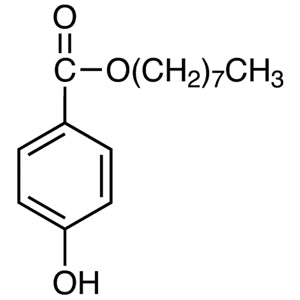
- TCI O0443 1219-38-1 n-Octyl 4-Hydroxybenzoate
- TCI M3513 3964-57-6 Methyl 3-Chloro-4-hydroxybenzoate
- TCI M3498 536-25-4 Methyl 3-Amino-4-hydroxybenzoate
- TCI M2796 1882-72-0 Methyl 2-Amino-5-hydroxybenzoate
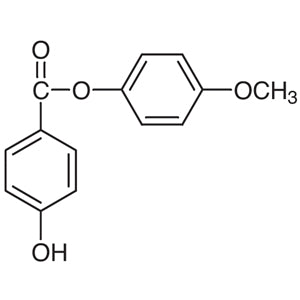
- TCI H0825 50687-62-2 4-Methoxyphenyl 4-Hydroxybenzoate
- Pharmaceutical synthesis where it serves as a key intermediate in the production of active pharmaceutical ingredients.
- Cosmetic formulation for the development of preservatives and fragrance compounds due to its stability and solubility.
- Organic chemistry experiments as a versatile building block for the synthesis of aromatic derivatives.
- Analytical chemistry applications for use in chromatographic and spectroscopic studies due to its predictable chemical behavior.
- Industrial chemical research for the creation of specialty chemicals and polymer additives in manufacturing processes.
| Brand | TCI |
|---|---|
| CAS number | 4191-73-5 |
| Molecular formula | — |
| Purity | — |
| Category | Chemistry > Building Blocks > Non-Heterocyclic Building Blocks |
| Pack sizes | Available in various quantities as per standard laboratory supply sizes |
| Physical form | Solid powder or crystalline form depending on packaging |
| Storage | Store in a cool, dry place away from direct sunlight and moisture |
Isopropyl 4-Hydroxybenzoate should be stored in a cool, dry environment to maintain its chemical stability. It is recommended to keep it in airtight containers to prevent exposure to moisture and air. Since it is non-toxic, general laboratory safety protocols should be followed during handling. Avoid direct contact with skin and inhalation of dust during preparation. It is suitable for storage in standard chemical cabinets, provided the area is well-ventilated. Proper labeling and safe handling practices ensure its effectiveness and safety in laboratory settings.
—
Produk Terkait
-
Methyl4-Amino-3-hydroxybenzoate TCI A3639
Regular price From Rp 2.041.200,00Regular price -
n-Octyl4-Hydroxybenzoate TCI O0443
Regular price Rp 1.724.100,00Regular price -
Methyl3-Chloro-4-hydroxybenzoate TCI M3513
Regular price From Rp 1.458.450,00Regular price -
Methyl3-Amino-4-hydroxybenzoate TCI M3498
Regular price From Rp 1.378.650,00Regular price -
Methyl2-Amino-5-hydroxybenzoate TCI M2796
Regular price From Rp 717.150,00Regular price -
4-Methoxyphenyl4-Hydroxybenzoate TCI H0825
Regular price From Rp 4.531.800,00Regular price -
2-Hydroxyethyl4-Hydroxybenzoate TCI H0698
Regular price Rp 1.829.100,00Regular price -
2-Ethylhexyl4-Hydroxybenzoate TCI H0506
Regular price From Rp 823.200,00Regular price