

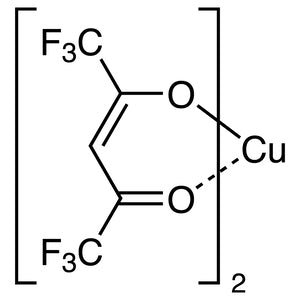
TCI H0554 Bis(hexafluoroacetylacetonato)copper(II) is a copper(II) complex in which the metal centre is surrounded by two bidentate hexafluoroacetylacetonate ligands coordinating through their donor oxygen atoms. The compound belongs to the family of fluorinated metal complexes that are well known in catalysis and materials chemistry, because fluorinated ligands modify the electronic character of the copper centre while at the same time increasing its volatility. In the laboratory it serves as a catalyst or precatalyst in carbene transfer reactions, cyclopropanation, C–H bond insertion and copper-mediated coupling reactions, and equally as a source of copper that dissolves readily in organic solvents.
The characteristics that make researchers select this complex begin with the high Lewis acidity of the copper centre, a direct consequence of the six fluorine atoms distributed across the two ligands, combined with thermal stability and the convenience of handling a solid material. Copper moves easily between the +1 and +2 oxidation states, which makes this complex an effective redox mediator across a wide range of organic transformations. The fluorinated ligands also render the complex comparatively volatile and soluble both in organic solvents and in supercritical carbon dioxide — two properties rarely found together in inorganic copper salts.
In Indonesian laboratories this material is typically found in university research groups, government research institutes and industrial R&D units working on synthetic methodology, catalysis development and materials chemistry. It is normally purchased in small research quantities rather than bulk, weighed out on an analytical balance for reaction-scale work, and kept alongside other air-sensitive or moisture-sensitive organometallic reagents in a dedicated reagent store. Its solubility in organic media makes it straightforward to incorporate into standard Schlenk-line and glovebox workflows already established in such laboratories.
TCI brochures (PDF)
- C-H Bond Activation Reaction 2025-06-20 · p. 7
- Transition Metal Catalysts 2026-04-10 · p. 15
Related TCI products
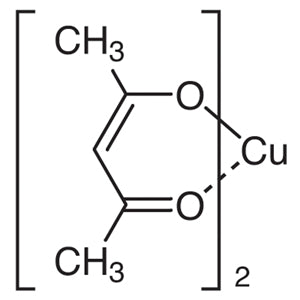
- TCI C0384 13395-16-9 Bis(2,4-pentanedionato)copper(II)
- TCI T3905 58452-28-1 Tetrakis(acetonitrile)copper(I) Trifluoromethanesulfonate
- TCI T1442 42152-46-5 Copper(I) Trifluoromethanesulfonate Benzene Complex
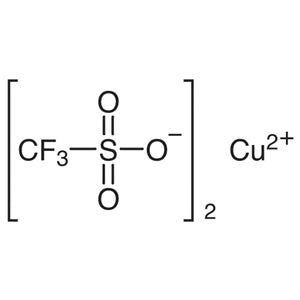
- TCI T1292 34946-82-2 Copper(II) Trifluoromethanesulfonate
- TCI B3351 920739-11-3 [1,3-Bis(2,6-diisopropylphenyl)imidazol-2-ylidene](1,3-diphenyl-1,3-propanedionato)copper(I)
- TCI A1540 598-54-9 Copper(I) Acetate
- Carbene transfer catalysis — the Lewis-acidic copper centre activates diazo compounds efficiently, and the electron-withdrawing fluorinated ligands help stabilise the reactive copper–carbene intermediates formed during the catalytic cycle.
- Cyclopropanation of alkenes — this complex functions as a catalyst or precatalyst for constructing three-membered carbocycles, with good solubility in organic solvents ensuring a homogeneous reaction medium throughout.
- C–H bond insertion chemistry — the compound is applied in C–H activation work, the category under which it is classified, where the fluorinated ligand environment tunes the electronic demand at the copper centre.
- Copper-mediated coupling reactions — the ready interconversion between copper(I) and copper(II) oxidation states allows this complex to act as an effective redox mediator in coupling transformations.
- Soluble copper source for materials chemistry — the volatility conferred by the fluorinated ligands, along with solubility in supercritical carbon dioxide, suits applications where inorganic copper salts are unsuitable.
| Brand | TCI (Tokyo Chemical Industry) |
|---|---|
| CAS number | 14781-45-4 |
| Molecular formula | — |
| Purity | — |
| Category | Chemistry > Catalysis and Inorganic Chemistry > C-H Activation [Catalysis] |
| Pack sizes | supplied in standard TCI research-scale pack sizes; please confirm the available packaging when ordering |
| Physical form | solid, handled and weighed as a solid material |
| Storage | keep in a cool, dry place in a tightly closed container, protected from moisture |
Store the container tightly closed in a cool, dry and well-ventilated area, away from moisture and from incompatible materials. Original supplier packaging or a tightly sealed glass container with a chemically resistant closure is appropriate; for moisture-sensitive handling, transfer under an inert atmosphere using a glovebox or Schlenk line. Handle the solid inside a fume hood while wearing a laboratory coat, chemical-resistant gloves and safety goggles, and avoid generating or inhaling dust during weighing. Keep containers clearly labelled, close them promptly after use, and consult the manufacturer's safety data sheet before first use and for disposal guidance.
—
Product Categories
Produk Terkait
-
Bis(2,4-pentanedionato)copper(II) TCI C0384
Regular price From Rp 637.350,00Regular price -
Tetrakis(acetonitrile)copper(I)Trifluoromethanesulfonate TCI T3905
Regular price From Rp 2.199.750,00Regular price -
Copper(I)TrifluoromethanesulfonateBenzeneComplex TCI T1442
Regular price From Rp 2.041.200,00Regular price -
Copper(II)Trifluoromethanesulfonate TCI T1292
Regular price From Rp 1.510.950,00Regular price -
[1,3-Bis(2,6-diisopropylphenyl)imidazol-2-ylidene](1,3-diphenyl-1,3-propanedionato)copper(I) TCI B3351
Regular price From Rp 1.353.450,00Regular price -
Copper(I)Acetate TCI A1540
Regular price From Rp 1.565.550,00Regular price -
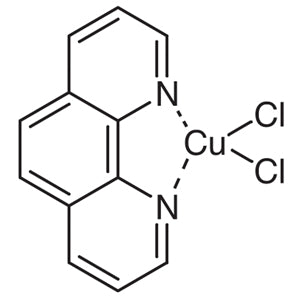
Dichloro(1,10-phenanthroline)copper(II) TCI D3891
Regular price From Rp 1.087.800,00Regular price -
Di-mu-hydroxo-bis[(N,N,N',N'-tetramethylethylenediamine)copper(II)]Chloride TCI D2542
Regular price From Rp 2.306.850,00Regular price


copper(I) - AMI Scientific](http://amiscientific.com/cdn/shop/files/TCI2510B3351_e8931cd7-8c99-4c22-8466-a4a766eb25fb.jpg?v=1767432375&width=533)

![Di-mu-hydroxo-bis[(N,N,N',N'-tetramethylethylenediamine)copper(II)] Chloride (CAS 30698-64-7) - TCI D2542 - AMI Scientific](http://amiscientific.com/cdn/shop/files/TCI2510D2542.jpg?v=1767104988&width=533)