copper(I)](http://amiscientific.com/cdn/shop/files/TCI2510B3351.jpg?v=1792661198&width=1946)
copper(I) - AMI Scientific](http://amiscientific.com/cdn/shop/files/TCI2510B3351_e8931cd7-8c99-4c22-8466-a4a766eb25fb.jpg?v=1767432375&width=1946)
copper(I)](http://amiscientific.com/cdn/shop/files/TCI2510B3351.jpg?v=1792661198&width=1445)
copper(I) - AMI Scientific](http://amiscientific.com/cdn/shop/files/TCI2510B3351_e8931cd7-8c99-4c22-8466-a4a766eb25fb.jpg?v=1767432375&width=1445)
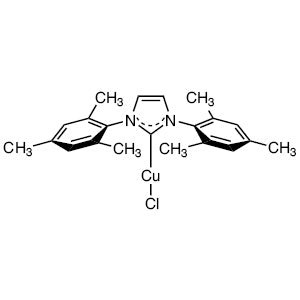
This material is a copper(I) complex used in C-H activation reactions, particularly within the field of inorganic catalysis. It is a key component in chemical research, enabling the selective activation of carbon-hydrogen bonds through its unique structural properties. The complex features an imidazol-2-ylidene ligand bound to a copper(I) ion, which enhances its catalytic activity and specificity. This compound plays a vital role in advancing synthetic methodologies and reaction mechanisms in both organic and inorganic chemistry.
The compound's high reactivity and structural complexity make it a preferred choice for modern catalytic applications. Its ability to interact specifically with substrates improves the efficiency of chemical reactions, especially in substitution and activation processes. The material exhibits stability under certain conditions but is sensitive to moisture and oxidation, which requires careful handling. These properties make it a valuable tool for researchers aiming to develop new synthetic routes and catalytic systems.
In Indonesian laboratories, this complex is widely used in scientific research related to catalysis and organic chemistry. It is commonly found in academic and research institutions where advanced chemical reactions are being explored. Its application in controlled laboratory environments ensures reliable results and supports innovation in chemical synthesis and catalytic processes.
TCI brochures (PDF)
- N-Heterocyclic Carbene (NHC) Ligands and Metal Complexes 2026-02-10 · p. 2
- C-H Bond Activation Reaction 2025-06-20 · p. 7
- Transition Metal Catalysts 2026-04-10 · p. 16
Related TCI products
- TCI C2304 578743-87-0 Chloro[1,3-bis(2,6-diisopropylphenyl)imidazol-2-ylidene]copper(I)
- TCI T1442 42152-46-5 Copper(I) Trifluoromethanesulfonate Benzene Complex
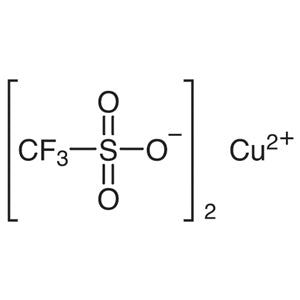
- TCI T1292 34946-82-2 Copper(II) Trifluoromethanesulfonate
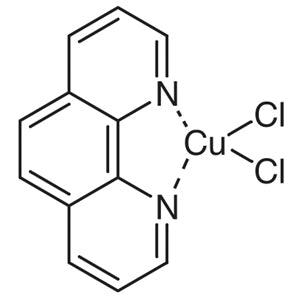
- TCI D3891 14783-09-6 Dichloro(1,10-phenanthroline)copper(II)
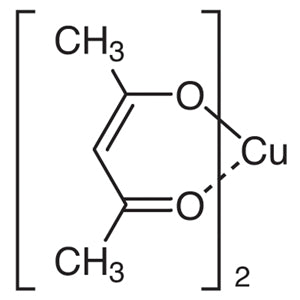
- TCI C0384 13395-16-9 Bis(2,4-pentanedionato)copper(II)
- TCI C2422 873779-78-3 Chloro(1,3-dimesitylimidazol-2-ylidene)copper(I)
- C-H Activation Reactions: This compound is ideal for C-H activation due to its ability to selectively activate carbon-hydrogen bonds, making it suitable for complex organic synthesis.
- Organic Synthesis Research: Its catalytic properties support the development of new synthetic methods, especially in the creation of complex organic molecules.
- Inorganic Catalysis Studies: The complex is used to investigate the behavior of copper-based catalysts in inorganic chemistry, contributing to the understanding of metal-ligand interactions.
- Reaction Mechanism Analysis: Its high reactivity allows for the study of reaction pathways and the identification of intermediates in catalytic processes.
- Controlled Chemical Processes: It is used in environments where precise control over reaction conditions is necessary to achieve desired chemical outcomes.
From the TCI brochure
- Three-component tandem reductive aldol reaction catalyst
| Brand | TCI |
|---|---|
| CAS number | 920739-11-3 |
| Molecular formula | — |
| Purity | — |
| Category | Chemistry > Catalysis and Inorganic Chemistry > C-H Activation [Catalysis] |
| Pack sizes | — |
| Physical form | — |
| Storage | Store in a dry, cool place away from moisture and oxidizing agents |
This compound should be stored in a dry, cool environment to prevent degradation due to moisture and oxidation. It is recommended to use airtight containers made of materials that do not react with the compound, such as glass or high-density polyethylene. Laboratory personnel should handle the material with care, using appropriate personal protective equipment to avoid direct contact. The compound is sensitive to environmental factors, so maintaining controlled storage conditions is essential for preserving its catalytic properties. Regular monitoring of storage conditions ensures the material remains effective for use in research applications.
—
Product Categories
- Catalysis and Inorganic ChemistryC-H Activation [Catalysis]Copper Compounds [C-H Activation]
- Catalysis and Inorganic ChemistryTransition Elements [Catalysis and Inorganic Chemistry]Copper [Catalysis and Inorganic Chemistry]
- Synthetic ReagentsC-X(Non-Halogen) Bond Formation [Synthetic Reagents]C-H Bond Activation Reaction [Synthetic Reagents]
Produk Terkait
-
Chloro[1,3-bis(2,6-diisopropylphenyl)imidazol-2-ylidene]copper(I) TCI C2304
Regular price From Rp 1.272.600,00Regular priceRp 905.100,00Sale price From Rp 1.272.600,00 -
Copper(I)TrifluoromethanesulfonateBenzeneComplex TCI T1442
Regular price From Rp 2.041.200,00Regular priceRp 1.426.950,00Sale price From Rp 2.041.200,00 -
Copper(II)Trifluoromethanesulfonate TCI T1292
Regular price From Rp 1.510.950,00Regular priceRp 1.056.300,00Sale price From Rp 1.510.950,00 -
Dichloro(1,10-phenanthroline)copper(II) TCI D3891
Regular price From Rp 1.140.300,00Regular priceRp 812.700,00Sale price From Rp 1.140.300,00 -
Bis(2,4-pentanedionato)copper(II) TCI C0384
Regular price From Rp 637.350,00Regular priceRp 445.200,00Sale price From Rp 637.350,00 -
Chloro(1,3-dimesitylimidazol-2-ylidene)copper(I) TCI C2422
Regular price From Rp 1.829.100,00Regular priceRp 1.294.650,00Sale price From Rp 1.829.100,00 -
Chloro[1,3-bis(2,6-diisopropylphenyl)imidazol-2-ylidene]gold(I) TCI C2405
Regular price Rp 2.757.300,00Regular priceRp 1.927.800,00Sale price Rp 2.757.300,00 -
[1,3-Bis(2,6-diisopropylphenyl)imidazol-2-ylidene]triphenylphosphineNickel(II)Dichloride TCI B3235
Regular price From Rp 2.518.950,00Regular priceRp 1.776.600,00Sale price From Rp 2.518.950,00