Chloro[1,3-bis(2,6-diisopropylphenyl)imidazol-2-ylidene]copper(I) is a copper-based chemical compound widely used in catalytic reactions, particularly in carbon-hydrogen (C-H) activation processes. This compound plays a crucial role in modern laboratory settings by enabling the efficient transformation of complex organic molecules. Its unique structure, containing a copper(I) ion and an imidazol-2-ylidene ligand, allows it to act as a highly effective catalyst in various synthetic pathways. Due to its stability and reactivity, it is an essential tool for researchers working in catalysis and inorganic chemistry.
The compound is favored for its exceptional catalytic activity and chemical stability. It maintains its structural integrity under a range of reaction conditions, making it suitable for both academic and industrial applications. Its ability to selectively activate C-H bonds makes it particularly valuable in the development of new synthetic methods. Additionally, its compatibility with a wide range of organic substrates enhances its versatility in laboratory settings. These properties make it a preferred choice for chemists seeking reliable and efficient catalytic solutions.
In Indonesian laboratories, this compound is frequently used in research focused on organic chemistry, catalysis, and inorganic chemistry. It supports the development of new chemical processes and the synthesis of complex molecules. Its application is especially relevant in academic and research institutions where advanced catalytic techniques are required. The compound’s reliability and performance make it a key component in the chemical research toolkit of Indonesian scientists.
TCI brochures (PDF)
- N-Heterocyclic Carbene (NHC) Ligands and Metal Complexes 2026-02-10 · p. 2
- C-H Bond Activation Reaction 2025-06-20 · p. 7
- Transition Metal Catalysts 2026-04-10 · p. 16
Related TCI products
- TCI B3351 920739-11-3 [1,3-Bis(2,6-diisopropylphenyl)imidazol-2-ylidene](1,3-diphenyl-1,3-propanedionato)copper(I)
- TCI T1442 42152-46-5 Copper(I) Trifluoromethanesulfonate Benzene Complex
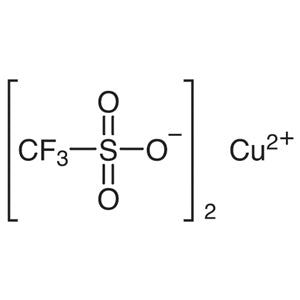
- TCI T1292 34946-82-2 Copper(II) Trifluoromethanesulfonate
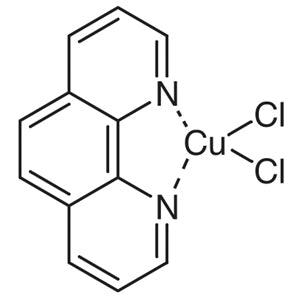
- TCI D3891 14783-09-6 Dichloro(1,10-phenanthroline)copper(II)
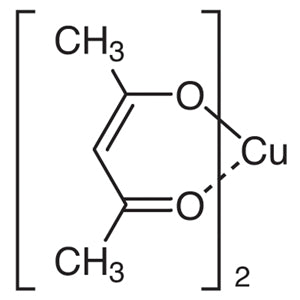
- TCI C0384 13395-16-9 Bis(2,4-pentanedionato)copper(II)
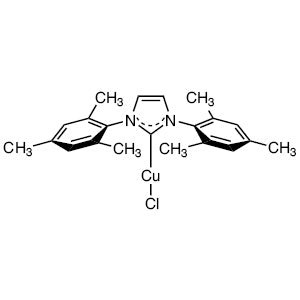
- TCI C2422 873779-78-3 Chloro(1,3-dimesitylimidazol-2-ylidene)copper(I)
- C-H Activation Reactions: This compound is ideal for C-H activation due to its ability to selectively activate carbon-hydrogen bonds, enabling the synthesis of complex organic molecules with high efficiency.
- Organic Synthesis: It is widely used in organic synthesis to facilitate various reactions such as substitution and oxidation, providing a stable and reactive catalytic environment.
- Catalytic Oxidation Processes: The compound's unique structure allows it to act as a catalyst in oxidation reactions, enhancing reaction rates and selectivity in laboratory settings.
- Inorganic Chemistry Research: Its role in inorganic chemistry is significant, particularly in the study of metal-ligand interactions and catalytic mechanisms.
- Advanced Catalytic Studies: Researchers use it to explore new catalytic pathways and improve existing synthetic methods, contributing to the advancement of chemical research.
From the TCI brochure
- Carboxylation catalyst with carbon dioxide
| Brand | TCI |
|---|---|
| CAS number | 578743-87-0 |
| Molecular formula | — |
| Purity | — |
| Category | Chemistry > Catalysis and Inorganic Chemistry > C-H Activation [Catalysis] |
| Pack sizes | — |
| Physical form | — |
| Storage | — |
This compound should be stored in a cool, dry place away from moisture and direct sunlight to maintain its stability and effectiveness. It is recommended to use airtight containers made of materials such as glass or polyethylene to prevent contamination and degradation. Due to its chemical nature, it should be handled with appropriate personal protective equipment, including gloves and safety goggles. In laboratory settings, it is important to ensure proper ventilation to minimize exposure to any potential vapors. Always follow standard safety protocols when working with catalytic materials to ensure a safe and controlled environment.
—
Product Categories
- Catalysis and Inorganic ChemistryC-H Activation [Catalysis]Copper Compounds [C-H Activation]
- Catalysis and Inorganic ChemistryTransition Elements [Catalysis and Inorganic Chemistry]Copper [Catalysis and Inorganic Chemistry]
- Synthetic ReagentsC-X(Non-Halogen) Bond Formation [Synthetic Reagents]C-H Bond Activation Reaction [Synthetic Reagents]
Produk Terkait
-
[1,3-Bis(2,6-diisopropylphenyl)imidazol-2-ylidene](1,3-diphenyl-1,3-propanedionato)copper(I) TCI B3351
Regular price From Rp 1.405.950,00Regular priceRp 998.550,00Sale price From Rp 1.405.950,00 -
Copper(I)TrifluoromethanesulfonateBenzeneComplex TCI T1442
Regular price From Rp 2.041.200,00Regular priceRp 1.426.950,00Sale price From Rp 2.041.200,00 -
Copper(II)Trifluoromethanesulfonate TCI T1292
Regular price From Rp 1.510.950,00Regular priceRp 1.056.300,00Sale price From Rp 1.510.950,00 -
Dichloro(1,10-phenanthroline)copper(II) TCI D3891
Regular price From Rp 1.140.300,00Regular priceRp 812.700,00Sale price From Rp 1.140.300,00 -
Bis(2,4-pentanedionato)copper(II) TCI C0384
Regular price From Rp 637.350,00Regular priceRp 445.200,00Sale price From Rp 637.350,00 -
Chloro(1,3-dimesitylimidazol-2-ylidene)copper(I) TCI C2422
Regular price From Rp 1.829.100,00Regular priceRp 1.294.650,00Sale price From Rp 1.829.100,00 -
Chloro[1,3-bis(2,6-diisopropylphenyl)imidazol-2-ylidene]gold(I) TCI C2405
Regular price Rp 2.757.300,00Regular priceRp 1.927.800,00Sale price Rp 2.757.300,00 -
[1,3-Bis(2,6-diisopropylphenyl)imidazol-2-ylidene]triphenylphosphineNickel(II)Dichloride TCI B3235
Regular price From Rp 2.518.950,00Regular priceRp 1.776.600,00Sale price From Rp 2.518.950,00
copper(I)](http://amiscientific.com/cdn/shop/files/TCI2510B3351.jpg?v=1792661198&width=533)
copper(I) - AMI Scientific](http://amiscientific.com/cdn/shop/files/TCI2510B3351_e8931cd7-8c99-4c22-8466-a4a766eb25fb.jpg?v=1767432375&width=533)