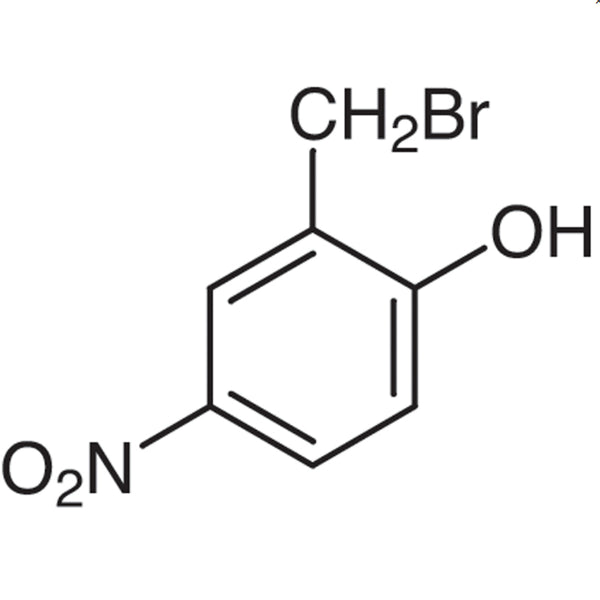
TCI H0601 2-Hydroxy-5-nitrobenzyl Bromide is a functionalized benzyl bromide reagent that carries both a hydroxyl group and a nitro group on its aromatic ring. In protein chemistry, this compound is widely recognized as a tryptophan residue labeling reagent, and it has long served as a classical tool for mapping the role of tryptophan residues at enzyme active sites. In the organic chemistry laboratory, it also functions as an electron-poor building block that can benzylate nucleophiles while simultaneously introducing nitro and phenol functionality in a single step, thereby saving synthetic stages.
The reactivity of this reagent originates from its benzylic carbon–bromine bond, which is highly susceptible to nucleophilic attack, reinforced by the electron-withdrawing nitro group positioned para to the hydroxyl group. This combination yields a reagent that reacts rapidly with soft nucleophiles such as the indole of tryptophan and the thiol of cysteine. The nitrophenol group left behind on the product is colored and pH-sensitive, so the degree of modification can be quantified spectrophotometrically without the need for complicated instrumentation. This property is what makes the reagent practical for determinative work.
In Indonesian laboratories, this reagent is typically used in university biochemistry and organic synthesis groups, in protein research units, and in institutional laboratories that study enzyme structure and function. Because the extent of modification can be read spectrophotometrically, the material fits well in settings where a UV-visible spectrophotometer is the mainstay instrument. It is equally at home in synthetic groups building functionalized aromatic intermediates on a research scale.
- Tryptophan residue labeling in proteins — the reagent reacts readily with the indole side chain, making it a long-established classical tool for chemically tagging tryptophan in purified protein samples.
- Enzyme active site mapping — by modifying tryptophan residues and observing the resulting loss or retention of activity, researchers can infer whether those residues participate in the catalytic site.
- Spectrophotometric quantification of protein modification — the nitrophenol group carried into the product is colored and pH-sensitive, allowing the extent of labeling to be measured on a routine UV-visible spectrophotometer.
- Benzylation of nucleophiles in organic synthesis — the highly reactive benzylic carbon–bromine bond allows rapid alkylation of nucleophilic partners under ordinary laboratory conditions.
- Introduction of nitro and phenol functionality in one step — the reagent installs an electron-poor aromatic fragment bearing both groups simultaneously, shortening multi-step routes to functionalized aromatic intermediates.
| Brand | TCI |
|---|---|
| CAS number | 772-33-8 |
| Molecular formula | — |
| Purity | — |
| Category | Chemistry > Building Blocks > Non-Heterocyclic Building Blocks |
| Pack sizes | available in the research-scale pack sizes listed for this catalog item |
| Physical form | — |
| Storage | store according to the manufacturer's stated conditions on the product label |
- Chemical name: 2-Hydroxy-5-nitrobenzyl Bromide
- Product code: H0601
Store the reagent in its original tightly closed container, kept dry and protected from light, and follow the storage conditions stated on the manufacturer's label. Benzylic bromides are reactive alkylating agents and moisture-sensitive, so containers should be resealed promptly after use and handled with dry glassware or spatulas. All weighing and transfer operations should be performed in a fume hood using gloves, safety goggles, and a laboratory coat, since the material is a lachrymator-class alkylating reagent that can irritate skin, eyes, and the respiratory tract. Avoid contact with strong bases and nucleophilic reagents during storage, keep the container away from incompatible chemicals, and dispose of residues and contaminated consumables through the laboratory's designated chemical waste stream in accordance with institutional procedures.
—
Produk Terkait
-
2-Hydroxy-5-nitrobenzylAlcohol TCI H1549
Regular price Rp 3.419.850,00Regular price -
4-NitrobenzylAlcohol TCI N0180
Regular price From Rp 1.035.300,00Regular price -
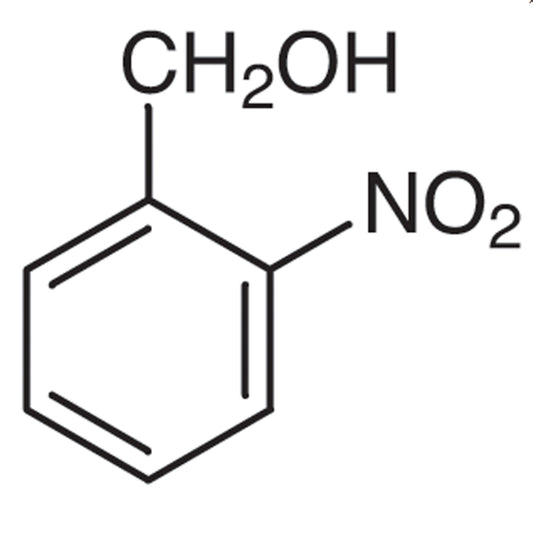
2-NitrobenzylAlcohol TCI N0179
Regular price Rp 1.246.350,00Regular price -
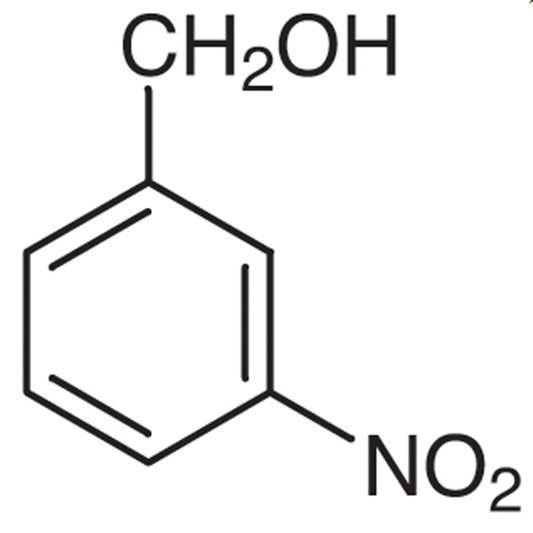
3-NitrobenzylAlcohol TCI N0178
Regular price From Rp 1.565.550,00Regular price -
4-Methyl-3-nitrobenzylAlcohol TCI M2916
Regular price From Rp 1.829.100,00Regular price -
3-Methyl-4-nitrobenzylAlcohol TCI M2915
Regular price From Rp 689.850,00Regular price -
4,5-Dimethoxy-2-nitrobenzylAlcohol TCI D4811
Regular price From Rp 1.353.450,00Regular price -
3,5-DinitrobenzylAlcohol TCI D4144
Regular price From Rp 3.075.450,00Regular price