TCI H0832 1,6-Diacetoxyhexane is the diacetate ester of 1,6-hexanediol, a straight six-carbon chain in which both terminal hydroxyl groups are capped as acetate esters. In the laboratory this compound plays a dual role. It serves first as a flexible-chain building block that provides a defined six-carbon spacing between two functional points, and second as a protected form of the corresponding diol, so that the hydroxyl groups can be revealed again through hydrolysis or methanolysis at whatever stage the researcher chooses.
The properties that make this material practical are its good solubility in common organic solvents together with the behaviour of the acetate groups, which remain relatively inert toward many reaction conditions yet are readily removed when required. The six-carbon methylene chain contributes conformational flexibility and hydrophobic character, qualities that prove useful when designing spacers in polymer materials and in supramolecular molecules. This combination of stability during synthesis and clean deprotection on demand is what makes the reagent a preferred choice for chemists building extended linear architectures.
The compound is also widely used as a model substrate in biocatalysis research, particularly for probing the activity and selectivity of lipase and esterase enzymes, because partial deacetylation of a symmetrical substrate is a clean transformation that is easy to follow as it progresses. In Indonesian laboratories the material is handled in this same context, supporting synthetic organic chemistry, polymer and materials work, and enzyme studies in university and institutional research settings.
- Flexible spacer synthesis: the six-carbon methylene chain sets a defined distance between two functional points, giving designers reliable conformational flexibility in linear target architectures.
- Protected diol chemistry: the compound carries 1,6-hexanediol in masked form, allowing hydroxyl groups to be liberated by hydrolysis or methanolysis only at the desired synthetic stage.
- Lipase activity screening: the symmetrical diester is a clean model substrate whose partial deacetylation is straightforward to monitor, making enzyme activity comparisons easy to interpret.
- Esterase selectivity studies: desymmetrisation of the two equivalent acetate groups provides a direct readout of enzyme selectivity under different buffer, temperature, and solvent conditions.
- Polymer and supramolecular design: the hydrophobic flexible chain serves as a linking segment when building polymer materials and host-guest assemblies that require a non-rigid connector.
| Brand | TCI (Tokyo Chemical Industry) |
|---|---|
| CAS number | 6222-17-9 |
| Molecular formula | — |
| Purity | — |
| Category | Chemistry > Building Blocks > Non-Heterocyclic Building Blocks |
| Pack sizes | available in standard TCI research-scale packaging; please confirm the exact sizes currently offered when ordering |
| Physical form | — |
| Storage | keep in a cool, dry place in a tightly closed container, away from moisture and direct sunlight |
- Chemical class: diacetate ester of 1,6-hexanediol (non-heterocyclic building block)
Store the container tightly closed in a cool, dry, well-ventilated area, away from direct sunlight, heat sources, and moisture, since ester groups are susceptible to slow hydrolysis when exposed to humid air. Keep the material in its original supplier container or in a compatible tightly sealed glass bottle, and close it promptly after each withdrawal to limit moisture pickup. Handle inside a fume hood using standard laboratory personal protective equipment, including safety glasses, chemical-resistant gloves, and a laboratory coat. Avoid contact with skin and eyes and avoid breathing vapours. Keep away from strong oxidising agents and strong bases, which can promote ester cleavage. Always consult the manufacturer's safety data sheet before use, and dispose of residues and contaminated materials through the institution's approved chemical waste procedures.
—
Produk Terkait
-
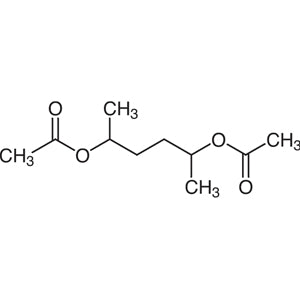
2,5-Diacetoxyhexane TCI D3496
Regular price From Rp 1.565.550,00Regular price -
Ethyl3-Acetoxyhexanoate TCI E1014
Regular price From Rp 1.565.550,00Regular price -
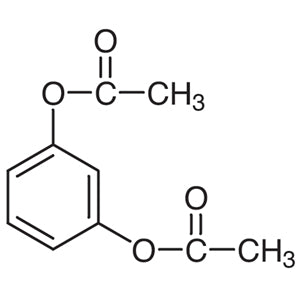
1,3-Diacetoxybenzene TCI R0046
Regular price From Rp 795.900,00Regular price -
1,2-Diacetoxybenzene TCI D2044
Regular price Rp 3.605.700,00Regular price -
3,4-Diacetoxybenzaldehyde TCI D2042
Regular price From Rp 2.466.450,00Regular price -
1,4-Diacetoxybenzene TCI D1803
Regular price From Rp 1.035.300,00Regular price -
1,4-Diacetoxybutane TCI B1232
Regular price From Rp 1.035.300,00Regular price -
1,2,4-Triacetoxybenzene TCI T0976
Regular price Rp 2.571.450,00Regular price