


TCI H0956 Methyl (R)-(+)-2-(4-Hydroxyphenoxy)propionate is a chiral methyl ester that combines a phenolic ring, an aryl ether bridge, and a stereogenic centre on the propionate chain with a defined R configuration. It is one of the best-known chiral starting materials in agrochemical chemistry, because the 2-(4-hydroxyphenoxy)propionate skeleton forms the core of a large family of aryloxyphenoxypropionate herbicidal active ingredients. In the laboratory it serves as a chiral building block that shortens asymmetric synthesis routes, since the chiral centre is already present in the correct configuration from the very start of the sequence.
The properties that make this compound a preferred choice are its controlled stereochemical purity together with a highly practical arrangement of functional groups. The phenolic hydroxyl group in the para position is well prepared to undergo nucleophilic aromatic substitution or etherification with heteroaryl halides, which is the key step in constructing the aryloxyphenoxypropionate framework. The methyl ester group, meanwhile, protects the carboxylic acid function while the sequence proceeds and can be hydrolysed or transesterified at a later stage as required. Just as importantly, the two functional groups operate independently enough to be addressed in a controlled order.
In Indonesian laboratories this material is typically handled in university research groups, agrochemical formulation and development laboratories, and process chemistry units that prepare herbicide intermediates on a small scale. It is also used in method development work where a compound with a defined stereochemistry is needed as a reference point for chiral separation or analytical confirmation. Because it is supplied as a catalogue chemical, it suits laboratories that need a reliable, ready-to-use chiral starting material rather than preparing one in house.
TCI brochures (PDF)
- Chiral Building Blocks 2025-04-14 · p. 11
Related TCI products
- TCI B5207 23116-94-1 1,5-Bis(2-hydroxyphenoxy)-3-oxapentane
- TCI B1485 5085-95-0 1,4-Bis(3-hydroxyphenoxy)benzene
- TCI B1484 126716-90-3 1,3-Bis(4-hydroxyphenoxy)benzene
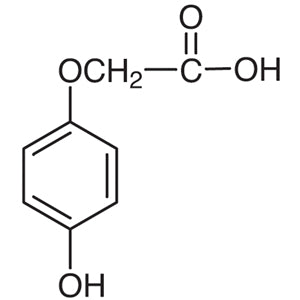
- TCI H0992 1878-84-8 (4-Hydroxyphenoxy)acetic Acid
- TCI H0642 500-76-5 4-(4-Hydroxyphenoxy)benzoic Acid
- TCI H0641 56183-35-8 4-(3-Hydroxyphenoxy)benzoic Acid
- Synthesis of aryloxyphenoxypropionate herbicide intermediates, where the para phenolic hydroxyl couples directly with heteroaryl halides to build the target framework in a single key step.
- Asymmetric synthesis route development, since the R configuration is already established and removes the need for a separate resolution or enantioselective catalysis stage.
- Chiral building block work in medicinal and fine chemical research, where the propionate stereocentre can be carried through multi-step sequences without being reconstructed.
- Etherification and nucleophilic aromatic substitution studies, because the phenolic group offers a clean, well-defined reaction site for exploring coupling conditions and leaving-group behaviour.
- Reference material for chiral analytical method development, where a compound with defined stereochemistry supports chromatographic separation trials and confirmation of enantiomeric assignment.
| Brand | TCI (Tokyo Chemical Industry) |
|---|---|
| CAS number | 96562-58-2 |
| Molecular formula | — |
| Purity | — |
| Category | Chemistry > Asymmetric Synthesis > Chiral Building Blocks |
| Pack sizes | available in standard TCI catalogue pack sizes; please confirm the option required when ordering |
| Physical form | — |
| Storage | store in a cool, dry place in a tightly closed container, away from light |
- Catalogue number: H0956
Store the container tightly closed in a cool, dry and well-ventilated area, protected from direct sunlight and away from strong oxidising agents. The original supplier bottle is the most suitable container; if transfer is necessary, use clean glass or another chemically compatible vessel with a secure closure and a clear label showing the compound name, CAS number and date of opening. Handle the material in a fume hood, wearing safety glasses, gloves and a laboratory coat, and avoid generating dust or contact with skin and eyes. Keep the container closed when not in use to prevent moisture uptake, and consult the manufacturer's safety data sheet before first use and before disposal of any residues.
—
Produk Terkait
-
1,5-Bis(2-hydroxyphenoxy)-3-oxapentane TCI B5207
Regular price Rp 1.618.050,00Regular price -
1,4-Bis(3-hydroxyphenoxy)benzene TCI B1485
Regular price Rp 3.578.400,00Regular price -
1,3-Bis(4-hydroxyphenoxy)benzene TCI B1484
Regular price From Rp 2.174.550,00Regular price -
(4-Hydroxyphenoxy)aceticAcid TCI H0992
Regular price From Rp 1.565.550,00Regular price -
4-(4-Hydroxyphenoxy)benzoicAcid TCI H0642
Regular price From Rp 3.710.700,00Regular price -
4-(3-Hydroxyphenoxy)benzoicAcid TCI H0641
Regular price From Rp 2.889.600,00Regular price -
Bis[2-(4-methoxyphenoxy)ethyl]Ether TCI B1479
Regular price Rp 1.298.850,00Regular price -
1,3-Bis(4-methoxyphenoxy)benzene TCI B1454
Regular price Rp 3.446.100,00Regular price




![104104-12-3 Bis[2-(4-methoxyphenoxy)ethyl] Ether - AMI Scientific](http://amiscientific.com/cdn/shop/files/TCI2510B1479.jpg?v=1769141601&width=533)
