Bis[2-(4-methoxyphenoxy)ethyl] Ether is a chemical compound widely used in organic synthesis reactions within laboratory settings. As a key building block in chemical research, it serves as a versatile intermediate in the creation of complex molecules, particularly in the synthesis of heterocyclic compounds and phenolic structures. Its molecular structure provides a stable foundation for various chemical transformations, making it an essential component in synthetic pathways. This compound is valued for its ability to act as an electron donor or a bridging agent in chemical reactions, contributing to the development of new materials and pharmaceuticals.
The compound's non-heterocyclic nature simplifies its synthesis and manipulation, offering researchers a more straightforward approach compared to more complex molecules. Its chemical neutrality ensures that it does not interfere with other reagents or reaction conditions, making it a reliable choice in diverse experimental setups. This stability and predictability make it a preferred option for both academic and industrial laboratories, where reproducibility and safety are paramount.
In Indonesian laboratories, Bis[2-(4-methoxyphenoxy)ethyl] Ether is commonly used in both fundamental and applied chemical research. It is frequently employed in the development of new compounds in fields such as pharmaceuticals and materials science. Its availability supports a wide range of research activities, contributing to the advancement of scientific knowledge and innovation in the region.
Related TCI products
- TCI B5207 23116-94-1 1,5-Bis(2-hydroxyphenoxy)-3-oxapentane
- TCI B1485 5085-95-0 1,4-Bis(3-hydroxyphenoxy)benzene
- TCI B1484 126716-90-3 1,3-Bis(4-hydroxyphenoxy)benzene
- TCI B1454 13118-91-7 1,3-Bis(4-methoxyphenoxy)benzene
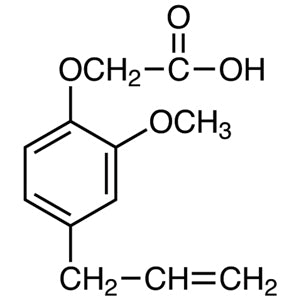
- TCI A3037 6331-61-9 (4-Allyl-2-methoxyphenoxy)acetic Acid
- TCI M3883 13794-15-5 2-(4-Methoxyphenoxy)propanoic Acid
- Organic synthesis of heterocyclic compounds due to its stable molecular structure and reactivity.
- Development of phenolic derivatives as a building block for complex molecular frameworks.
- Pharmaceutical research for the synthesis of novel drug candidates and bioactive molecules.
- Material science applications in the creation of advanced polymers and functional materials.
- Educational use in academic institutions for teaching and research in chemical synthesis techniques.
| Brand | TCI |
|---|---|
| CAS number | 104104-12-3 |
| Molecular formula | — |
| Purity | — |
| Category | Chemistry > Building Blocks > Non-Heterocyclic Building Blocks |
| Pack sizes | Available in standard laboratory quantities as per supplier specifications |
| Physical form | Liquid or solid, depending on the specific formulation |
| Storage | Store in a cool, dry place away from direct sunlight and incompatible materials |
Bis[2-(4-methoxyphenoxy)ethyl] Ether should be stored in a cool, dry environment to maintain its chemical stability. It is recommended to keep it in a tightly sealed container to prevent exposure to moisture and air. Due to its chemical neutrality, it generally does not react with common laboratory materials, but it is still important to avoid contact with strong oxidizing agents. Proper labeling and secure storage are essential to ensure safe handling. In laboratory settings, it should be handled with standard personal protective equipment to minimize any potential exposure. Regular monitoring of storage conditions ensures the compound remains in optimal condition for use in research applications.
—
Produk Terkait
-
1,5-Bis(2-hydroxyphenoxy)-3-oxapentane TCI B5207
Regular price Rp 1.670.550,00Regular priceRp 1.183.350,00Sale price Rp 1.670.550,00 -
1,4-Bis(3-hydroxyphenoxy)benzene TCI B1485
Regular price Rp 3.630.900,00Regular priceRp 2.554.650,00Sale price Rp 3.630.900,00 -
1,3-Bis(4-hydroxyphenoxy)benzene TCI B1484
Regular price From Rp 2.227.050,00Regular priceRp 1.572.900,00Sale price From Rp 2.227.050,00 -
1,3-Bis(4-methoxyphenoxy)benzene TCI B1454
Regular price Rp 3.446.100,00Regular priceRp 2.409.750,00Sale price Rp 3.446.100,00 -
(4-Allyl-2-methoxyphenoxy)aceticAcid TCI A3037
Regular price From Rp 2.093.700,00Regular priceRp 1.479.450,00Sale price From Rp 2.093.700,00 -
2-(4-Methoxyphenoxy)propanoicAcid TCI M3883
Regular price From Rp 1.087.800,00Regular priceRp 775.950,00Sale price From Rp 1.087.800,00 -
2-[(4-Methoxyphenoxy)methyl]oxirane TCI M3638
Regular price From Rp 1.776.600,00Regular priceRp 1.242.150,00Sale price From Rp 1.776.600,00 -
1-(4-Methoxyphenoxy)-2-propanol TCI M1062
Regular price Rp 2.147.250,00Regular priceRp 1.517.250,00Sale price Rp 2.147.250,00