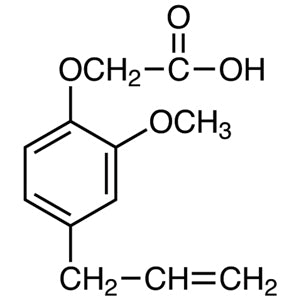
1,3-Bis(4-hydroxyphenoxy)benzene is a chemical compound widely used in organic synthesis as a foundational building block for the development of complex molecules. This compound plays a crucial role in laboratory settings, serving as a versatile intermediate in the creation of pharmaceuticals, polymers, and industrial chemicals. Its unique structure, featuring two phenolic groups attached to a central benzene ring, allows for multiple chemical reactions, making it an essential tool for chemists. Due to its reactivity and stability, it is frequently employed in synthetic pathways that require precise control over molecular structures.
The compound’s polar nature and solubility in organic solvents such as ethyl acetate and dimethyl sulfoxide make it ideal for reactions that do not involve aqueous media. Its symmetric molecular structure also enhances predictability in chemical reactions, enabling researchers to achieve consistent and reproducible results. These properties contribute to its popularity among scientists working in both academic and industrial research environments. Additionally, its compatibility with various synthetic methods ensures its widespread use in diverse chemical applications.
In Indonesian laboratories, 1,3-Bis(4-hydroxyphenoxy)benzene is commonly used for research and development purposes. It is a key component in experiments related to drug discovery, material science, and chemical engineering. Many educational institutions and research centers in Indonesia rely on this compound to conduct experiments that yield accurate and relevant data. Its availability and reliability make it a preferred choice for both teaching and applied research.
TCI brochures (PDF)
- Monomers 2025-05-28 · p. 23
Related TCI products
- TCI B1485 5085-95-0 1,4-Bis(3-hydroxyphenoxy)benzene
- TCI M3638 2211-94-1 2-[(4-Methoxyphenoxy)methyl]oxirane
- TCI B5207 23116-94-1 1,5-Bis(2-hydroxyphenoxy)-3-oxapentane
- TCI H0641 56183-35-8 4-(3-Hydroxyphenoxy)benzoic Acid
- TCI B1479 104104-12-3 Bis[2-(4-methoxyphenoxy)ethyl] Ether
- TCI B1454 13118-91-7 1,3-Bis(4-methoxyphenoxy)benzene
- Organic synthesis applications benefit from this compound's reactivity and structural versatility, enabling the creation of complex molecules with precise functional groups.
- Pharmaceutical research utilizes it as a building block for the development of new drugs, offering a stable and predictable platform for chemical modifications.
- Polymer science experiments rely on its ability to form stable intermediates, facilitating the design of advanced polymeric materials with tailored properties.
- Industrial chemical production leverages its solubility in organic solvents, making it suitable for large-scale synthesis processes in chemical manufacturing.
- Educational laboratories use it as a teaching tool to demonstrate fundamental chemical reactions and synthetic strategies in undergraduate and graduate courses.
| Brand | TCI |
|---|---|
| CAS number | 126716-90-3 |
| Molecular formula | — |
| Purity | — |
| Category | Chemistry > Building Blocks > Non-Heterocyclic Building Blocks |
| Pack sizes | Available in various quantities as per standard laboratory supply formats |
| Physical form | Solid, typically in crystalline or powder form |
| Storage | Store in a cool, dry place away from light and moisture |
This compound should be stored in a cool, dry environment, away from direct light and moisture to maintain its stability and reactivity. It is recommended to use airtight containers made of glass or high-density polyethylene to prevent contamination and moisture absorption. Due to its polar nature, it is important to handle it with appropriate personal protective equipment, such as gloves and safety goggles, to ensure laboratory safety. The compound is non-hazardous under normal storage conditions but should be kept out of reach of children and not exposed to incompatible substances. Proper labeling and storage practices are essential to maintain the integrity of the material and ensure safe handling in laboratory settings.
—
Produk Terkait
-
1,4-Bis(3-hydroxyphenoxy)benzene TCI B1485
Regular price Rp 3.630.900,00Regular priceRp 2.554.650,00Sale price Rp 3.630.900,00 -
2-[(4-Methoxyphenoxy)methyl]oxirane TCI M3638
Regular price From Rp 1.776.600,00Regular priceRp 1.242.150,00Sale price From Rp 1.776.600,00 -
1,5-Bis(2-hydroxyphenoxy)-3-oxapentane TCI B5207
Regular price Rp 1.670.550,00Regular priceRp 1.183.350,00Sale price Rp 1.670.550,00 -
4-(3-Hydroxyphenoxy)benzoicAcid TCI H0641
Regular price From Rp 2.942.100,00Regular priceRp 2.072.700,00Sale price From Rp 2.942.100,00 -
Bis[2-(4-methoxyphenoxy)ethyl]Ether TCI B1479
Regular price Rp 1.298.850,00Regular priceRp 908.250,00Sale price Rp 1.298.850,00 -
1,3-Bis(4-methoxyphenoxy)benzene TCI B1454
Regular price Rp 3.446.100,00Regular priceRp 2.409.750,00Sale price Rp 3.446.100,00 -
(4-Allyl-2-methoxyphenoxy)aceticAcid TCI A3037
Regular price From Rp 2.093.700,00Regular priceRp 1.479.450,00Sale price From Rp 2.093.700,00 -
2-(4-Methoxyphenoxy)propanoicAcid TCI M3883
Regular price From Rp 1.087.800,00Regular priceRp 775.950,00Sale price From Rp 1.087.800,00